Nuclear warmed spacesuit could keep moon astronauts warm
This story deserves to be shared
Send it to someone who'd care, or post it on your networks.
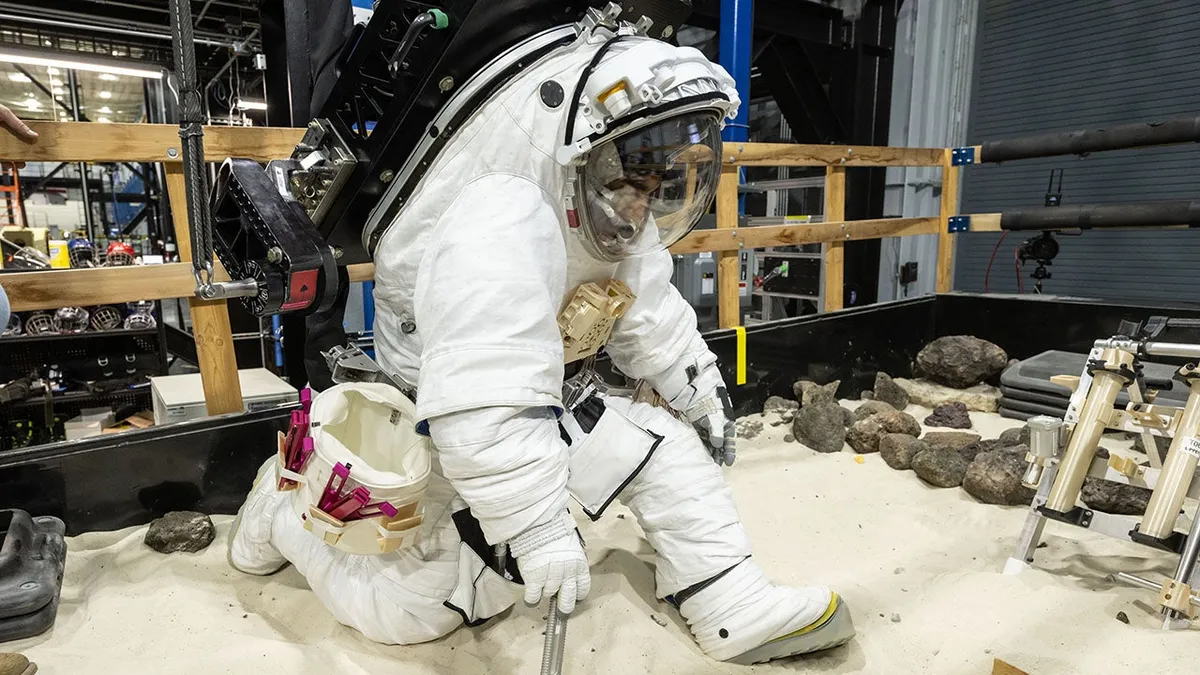
A NASA crew member practices using lunar tools to collect geology samples at NASA’s Johnson Space Center during an elevated suit pressure test where teams evaluate how well crew perform tasks in different suit pressure levels while wearing the Artemis III lunar spacesuit developed by Axiom Space called the AxEMU (Axiom Extravehicular Mobility Unit).(NASA/Bill Stafford)Astronauts may utilize spacesuits with small nuclear heaters in future missions to the Moon and Mars to protect against extreme cold. NASA awarded a $175,000 nine-month grant through its Innovative Advanced Concepts program to Zeno Power Systems to investigate using small radioactive heaters to keep astronauts warm on the Moon. As part of Project EARENDIL (Extended Astronaut Radioisotope-EVA in Nighttime and Deep-space Icy Landscapes), the study will investigate whether compact americium-241 thermal heaters are feasible to use in spacesuits. Americium-241 is a common radioactive byproduct of nuclear reactors. Temperatures in areas of the moon that never receive direct sunlight, such as the base of craters, and in other areas during the two-week lunar night can plunge as low as -410 degrees.
This article is an excerpt. To read the full content, visit the original source. The Weather Channel
Related articles
The Beef Industry Knew: Cattle Trade Group Knew Cows Warmed the Planet Since 1989. It Tried to Bury the Science - ZME Science
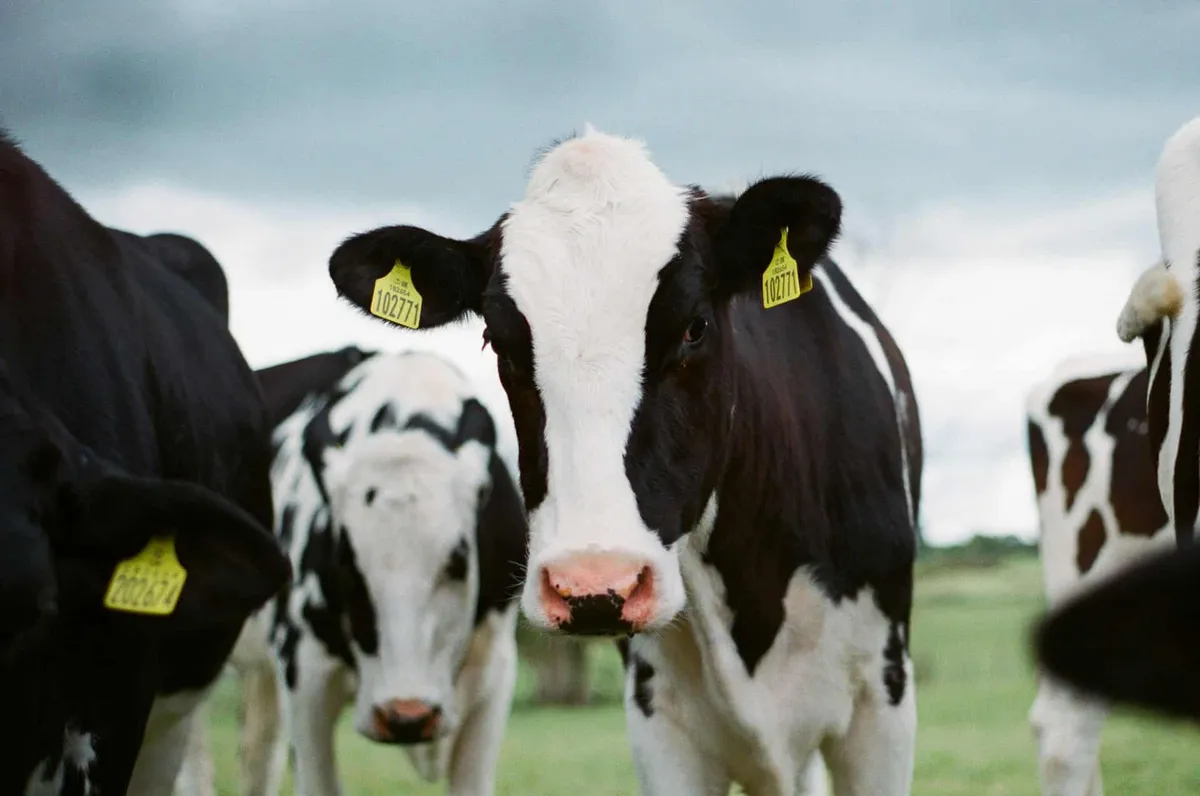
In 1991, the Teenage Mutant Ninja Turtles stumbled into a fight with the American beef industry. A children’s alphabet book featuring the cartoon heroes warned about methane from cattle warming the planet and urged readers to eat less meat. The National Cattlemen’s Association made a big fuss out of it and Random House, the publisher of the book in question, agreed not to reprint it.
Astronaut Christina Koch trades spacesuit for desk in new role at NASA - Yahoo News Canada
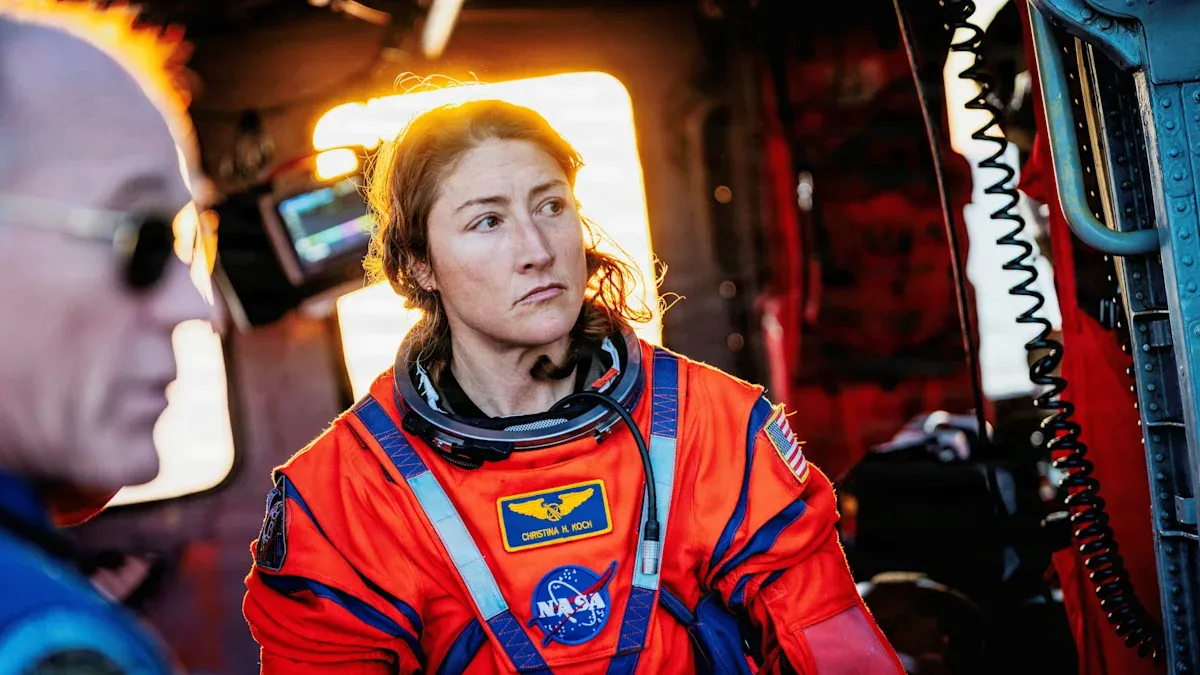
NASA astronaut Christina Koch is taking a new role at the agency after making history as the first woman to fly near the moon during the Artemis II mission in April. Thirteen years after being selected as an astronaut, Koch plans to trade her spacesuit for a desk, NASA announced. The news comes about six months after Koch was part of the four-person Artemis II crew that rode a NASA spacecraft on a 10-day journey toward the moon. The mission marked a landmark moment in U. S. spaceflight, becoming not just the first crewed moon mission in half-a-century, but taking the astronauts farther from Earth than anyone had ever been. With Koch's announcement, all four of those astronauts have now stepped away from spaceflight to eye new career opportunities. Here's what to know about Koch, as well as what's next for the record-setting NASA astronaut. Rocket launches: Rocket launches due to surge in next decade across USArtemis II astronaut takes on new role at NASAEffective Nov. 1, Koch will become NASA's acting deputy chief engineer, NASA announced in an Oct. 13 press release. Koch will replace Katherine Van Hooser, who served in the role for 35 years.

Spooky and safe: Halloween decorations that won't harm wildlife
With Halloween around the corner, here are some simple swaps to make your display a treat for the neighbourhood...without tricking our wildlife. Skip the stretchy, fake spider webs outdoors. Birds and bats can get tangled in them. Try window clings or indoor webs instead. Keep lighting low and warm. Avoid bright spotlights and flashing lights, and turn decorations off overnight. Secure your decorations. Loose strings, fishing line and dangling decorations can entangle wildlife or blow away. (Marta Czurylowicz/The Weather Network)To prevent potential fires, choose battery-operated candles or lights instead of open flames. Be mindful of noise and motion. Loud, startling props can disturb animals, especially at night. Clean up daily. Pick up loose plastic, check for fallen decorations and make sure nothing has become a hazard. When you're done with those gourds, diispose of them responsibly so they don't attract wildlife, potentially putting them in harm's way on roads or in spaces near humans. The goal is to keep things spooky for the neighbours, not dangerous for nature.
U.S. East Coast bracing for nor'easter this week. Will Canada be impacted?
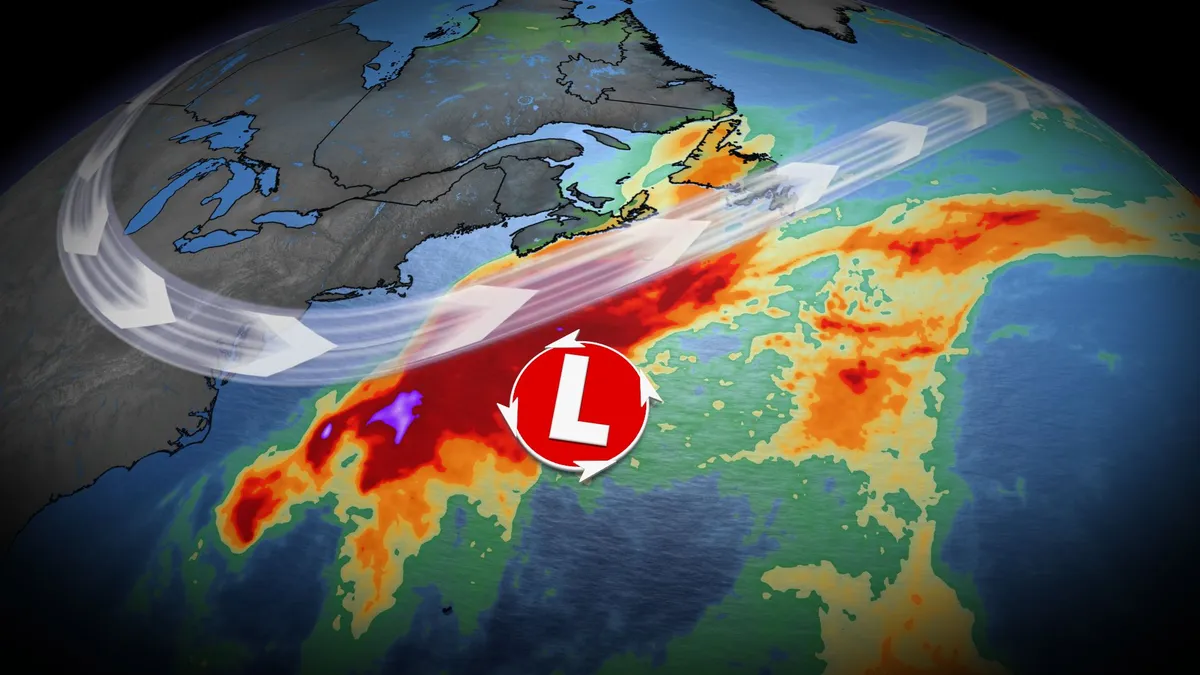
Atlantic Canada may be in for a rough middle of the or late week, with forecasters keeping a close eye on the formation of a nor'easter. A non-tropical, low-pressure system between the U. S. East Coast and Bermuda will meander for the next few days, and evolve into a hybrid system with some subtropical characteristics. DON'T MISS: Canada's Winter Sneak Peek: El Niño puts record warmth in playThis system is expected to intensify, track northeast, and may become a nor’easter for Atlantic Canada late week. Widespread winds and rainy conditions, especially for eastern Nova Scotia and Newfoundland, are possible. However, there is still a high amount of uncertainty right now. Here is what we know so far. Nor'easter in development this weekThe U. S. National Hurricane Center (NHC) has a 40 per cent chance of a storm-force, non-tropical low development along a frontal boundary. The area will continue to develop and remain near stationary for the early part of this week. Strong winds and surf expected to impact parts of the U. S. Eastern Seaboard, stretching from the Carolinas to New Jersey. Most showers will remain offshore, but could clip a swath of regions from Virginia to North Carolina
0 comments
No comments yet. Be the first to share your thoughts!