Kids and tweens are developing lifelong issues because of their skin care routines, warns derm — the No. 1 culprit - New York Post
This story deserves to be shared
Send it to someone who'd care, or post it on your networks.
This article is an excerpt. To read the full content, visit the original source. New York Post
Related articles
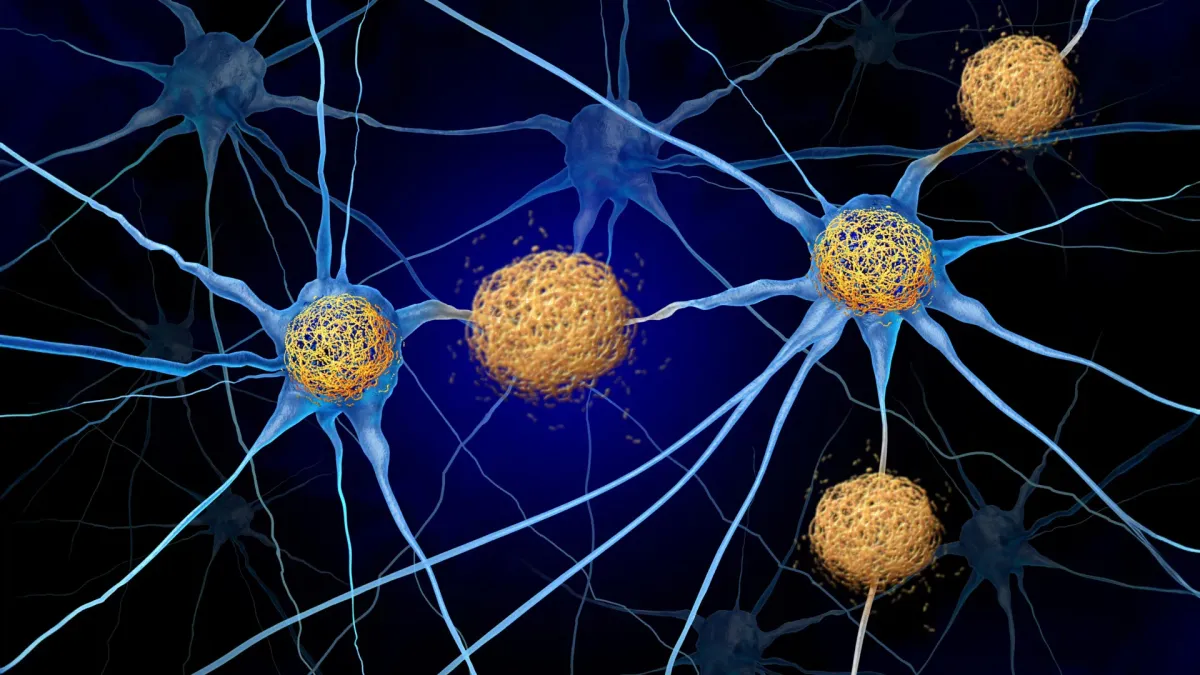
Scientists may have overlooked a hidden Alzheimer's culprit for decades - Science Daily
For decades, researchers have invested billions of dollars in Alzheimer's treatments designed to target amyloid beta, a peptide that forms harmful deposits in the brain. But a biochemist at the University of California, Santa Cruz, believes scientists may have overlooked another potential contributor to the disease: a smaller, closely related peptide that was long considered harmless. In a new commentary published in ChemBioChem, UC Santa Cruz professor Jevgenij Raskatov highlights research suggesting that this lesser-known peptide, called P3, can form microscopic clumps and threadlike structures known as fibrils. Evidence also suggests that P3 may interact with amyloid beta (Aβ), potentially influencing how it accumulates in the brain and how toxic it becomes. These findings raise the possibility that P3 contributes to the nerve cell damage associated with Alzheimer's disease.

Alison Pritchard, Ph.D., on bedtime routines for kids with ADHD - Managed Healthcare Executive
Consistent bedtime routines, screen-free bedrooms and therapist support for night waking help children with ADHD sleep better, said Alison Pritchard, Ph. D. Structure is the first step toward better sleep for children with ADHD, according to Alison Pritchard, Ph. D., a child clinical psychologist and co-director of the Center for Neuropsychological and Psychological Assessment at Kennedy Krieger Institute in Baltimore. “I think number one is just having a schedule and sticking to it is really helpful,” she said. “As in many areas of life for kids with ADHD, having a bit more structure can be helpful.”For children who have trouble falling asleep, a bedtime routine done “the same way, at the same time, every night” can make a substantial difference in sleep onset, she said. She also recommends removing phones, TVs and video games from the bedroom because they are too tempting. “Most of us adults have a hard time getting off our phones when it’s time to go to bed at night,” Pritchard said. “So, kids can’t be expected to do that for themselves.”For children who wake at night and have difficulty falling back asleep, Pritchard suggests working with a counselor or therapist.

A new dino may be the culprit in an ancient murder mystery - Science News Explores
The newly described species may have snacked on birds 120 million years ago This illustration shows the newly described dinosaur, Jian changmaensis (left) ambushing an early Cretaceous bird, Gansus yumenensus (right). It remains a mystery just how well this gliding predator might have snagged prey in the air.

B.C's flu season starts early, with 'more severe' symptoms - CHEK News
A sick person is shown in this file photo. Health Canada data shows flu season has arrived early in B. C., and pharmacists say symptoms are more severe this year.

Is Pregnancy Riskier for Living Kidney Donors? With Amit X. Garg, MD, PhD - HCPLive
News|Videos|October 22, 2026 A Canadian cohort found modestly greater preeclampsia risk after donation, though most pregnancies were uncomplicated. A Canadian matched cohort study weighs whether pregnancies after living kidney donation carry added hypertensive risk. About 65% of living kidney donors are female, and roughly 75% are of childbearing age at donation, making the effect of donation on future pregnancies a central question during donor evaluation.¹Presented at American Society of Nephrology (ASN) Kidney Week 2026 by Amit X. Garg, MD, PhD, and published simultaneously in JAMA, a new matched cohort study offers more precise estimates than earlier, smaller studies. Most donor pregnancies were uncomplicated, though investigators observed a modest increase in hypertensive disorders of pregnancy.¹ Why Evaluate Pregnancy in Living Kidney Donors? For people with kidney failure, a living donor transplant improves both life expectancy and quality of life, but transplant teams also have a responsibility to understand long-term outcomes for donors. Garg noted that consensus guidance from 2004 was reassuring that donor nephrectomy would not adversely affect future pregnancies.

Advances in Spinal Cord MRI for Multiple Sclerosis: Julien Cohen-Adad, PhD - NeurologyLive
A professor at Polytechnique Montreal discussed advances in brain and spinal cord MRI for multiple sclerosis, including improved lesion detection, imaging standardization, and the opportunities and challenges of AI. [WATCH TIME: 5 minutes] Advances in MRI are creating new opportunities to improve the detection and characterization of lesions in multiple sclerosis (MS). However, imaging the spinal cord remains challenging because of its small size and motion-related artifacts, which can obscure lesions with potential implications for disease prognosis and disability. Improvements in MRI hardware, image processing, and acquisition protocols may help address these limitations and improve the consistency of imaging across sites. At the 10th Joint ACTRIMS-ECTRIMS Meeting (MSToronto), held October 21 to 23 in Toronto, Canada.¹, Julien Cohen-Adad, PhD, professor at Polytecnhique Montreal, discussed advances in brain and spinal cord imaging and their potential implications for MS research and clinical care. He highlighted the role of higher-field MRI and improved processing techniques in enabling more detailed visualization of lesions.
0 comments
No comments yet. Be the first to share your thoughts!