Investigating the analytical robustness of the social and behavioural sciences - Nature
This story deserves to be shared
Send it to someone who'd care, or post it on your networks.
This article is an excerpt. To read the full content, visit the original source. Nature
Related articles
Coupled analytical and finite element investigation of dynamic and cyclic response in cracked functionally graded beams - Nature
We’re sharing this article early to provide faster access to peer-reviewed, accepted research. It is citable and carries a permanent DOI. This version is subject to further edits and will be replaced automatically by the final Version of Record. All legal disclaimers apply. AbstractOffshore and marine structures increasingly utilise Functionally Graded Materials (FGMs) because of their superior stiffness and enhanced resistance to damage under combined vibration and cyclic loading induced by waves, wind and operational conditions. This study presents a combined analytical and finite element investigation into the dynamic behaviour of a cracked FGM cantilever beam compared with eight conventional offshore structural steels. A fracture-mechanics-based analytical model, incorporating crack-induced flexibility and stiffness degradation under cyclic loading within a continuum damage mechanics framework, was developed to predict the beam’s natural frequencies and validated against finite element results, with deviations below 2%. The postulated cracks were represented by predefined notches to simulate pre-existing structural damage or defects, with crack depth ratios of a/h = 0.233, 0.
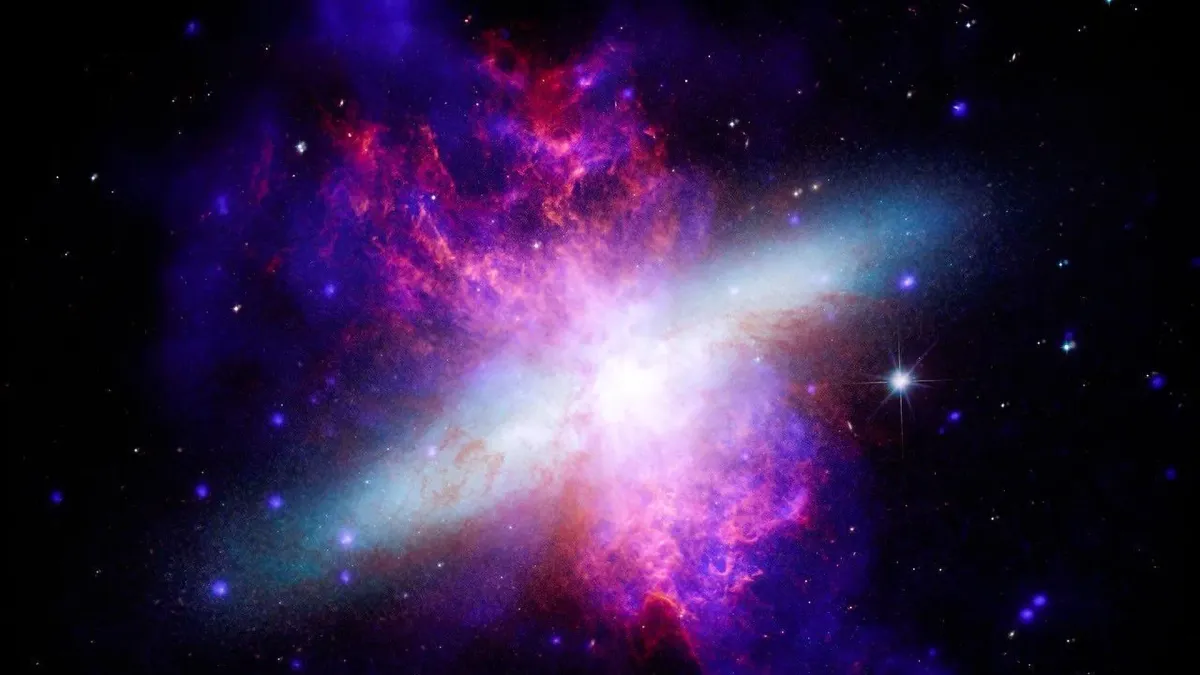
NASA reveals 16 stunning galaxies hiding cosmic chaos - Science Daily
Some galaxies glow with sweeping spiral arms, while others are shaped by violent collisions, powerful black holes, and explosive bursts of star formation. A newly released collection of 16 images from NASA's Chandra X-ray Observatory and other telescopes reveals the extraordinary diversity of these cosmic structures. Like precious gemstones, galaxies come in many shapes and sizes, each with characteristics that tell a story about its history. Astronomers generally classify them into three major groups. Spiral galaxies, including our Milky Way, have winding arms extending from their centers. Elliptical galaxies typically contain older stars and are often thought to form through galactic mergers. Irregular galaxies have less orderly structures and can display a wide variety of cosmic activity.
0 comments
No comments yet. Be the first to share your thoughts!