I thought I was dying but it was health anxiety - here's how to recognise the signs - BBC
This story deserves to be shared
Send it to someone who'd care, or post it on your networks.

1 hour agoEmily HoltHollie SharmanHollie Sharman spent hours searching symptoms, feeling panicked and isolatedHollie Sharman was convinced she was dying. She would go to hospital "four to five times a week" complaining of excruciating chest pain. "I think the longest I spent in A&E was 13 hours," says the 25-year-old. But despite numerous tests, doctors could never find anything wrong. Sharman says she had "always worried" about her health as a child and remembers "making up any excuse" to get sent home from school and get into bed. Her 22nd birthday meal was spent in the restaurant toilets "having the worst panic attack I've ever had". That triggered years of health anxiety, with hours spent searching symptoms, feeling panicked and isolated. Constantly Googling symptoms "I was constantly Googling and using ChatGPT, every source I could get that could tell me what was wrong," she says. "I spent so long in the hospital. They'd tell me it's nothing, they'd check everything. "I'd go home, but then my legs would feel weak, so I'd Google that and then it would say it's a sign of heart failure. So I'd go back, it was literally a constant cycle.
This article is an excerpt. To read the full content, visit the original source. BBC
Related articles
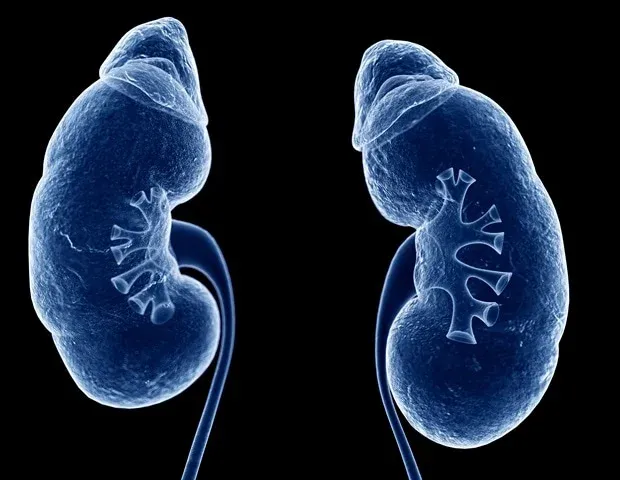
New clinical decision support tool aims to improve chronic kidney disease care - News-Medical
Investigators have developed and validated a clinical decision support tool to improve the diagnosis and treatment of chronic kidney disease (CKD) at the point of care. The research will be presented at ASN Kidney Week 2026 October 22–25. Called Treat CKD, the tool draws on electronic health records data to identify CKD, classify risk by Kidney Disease: Improving Global Outcomes criteria, calculate kidney failure risk using the Kidney Failure Risk Equation, estimate cardiovascular risk using American Heart Association PREVENT equations, and provide recommendations for albuminuria testing, blood pressure management, cholesterol-lowering therapy, cardio-kidney therapies, and nephrology referral.
Counseling Kidney Donors on Future Pregnancy, With Amit Garg, MD, PhD - HCPLive
Future pregnancy plans don’t preclude living kidney donation, but candidates should be counseled on gestational hypertension risk. Future pregnancy plans need not rule out living kidney donation, but candidates should be counseled on hypertensive risk. New data on pregnancy after living kidney donation give transplant teams clearer numbers to share with donor candidates who may want children in the future.¹In a matched cohort study from 3 Canadian provinces, presented at American Society of Nephrology (ASN) Kidney Week 2026 by Amit X. Garg, MD, PhD, and published simultaneously in JAMA, most donor pregnancies were uncomplicated, with a modest increase in hypertensive disorders of pregnancy.¹ Will Donating a Kidney Affect Future Pregnancies? In 2024, more than 40,000 living kidney donations were reported across 88 countries.¹ For donors who may become pregnant later, Garg said the central question is whether donation will affect those pregnancies.

Interpreting Kidney Donor Pregnancy Signals, With Amit Garg, MD, PhD - HCPLive
News|Videos|October 22, 2026 Chance, biology, and shared genetics may explain more small for gestational age births after living kidney donation. Small for gestational age births and shared donor-recipient genetics complicate the picture of pregnancy after living kidney donation. Investigators behind a new Canadian study of pregnancy after living kidney donation are weighing why donors had more small for gestational age (SGA) births than matched nondonors, and whether shared genetics with recipients could play a role.¹The matched cohort study, presented at American Society of Nephrology (ASN) Kidney Week 2026 by Amit X. Garg, MD, PhD, and published simultaneously in JAMA, spanned 3 provinces and also found a modest increase in hypertensive disorders of pregnancy among donors.¹ How Did the Study Compare Donors and Nondonors? Using linked administrative health databases from Ontario, British Columbia, and Alberta, investigators compared 385 pregnancies in 252 living kidney donors with 1,540 matched pregnancies in 1,535 nondonors.¹ To reflect donors’ healthier baseline profile, nondonors with any of 35 conditions that would preclude donation were excluded.
0 comments
No comments yet. Be the first to share your thoughts!