How to See the Orionid Meteor Shower and Other Upcoming Astronomical Events - WIRED
This story deserves to be shared
Send it to someone who'd care, or post it on your networks.
This article is an excerpt. To read the full content, visit the original source. WIRED
Related articles
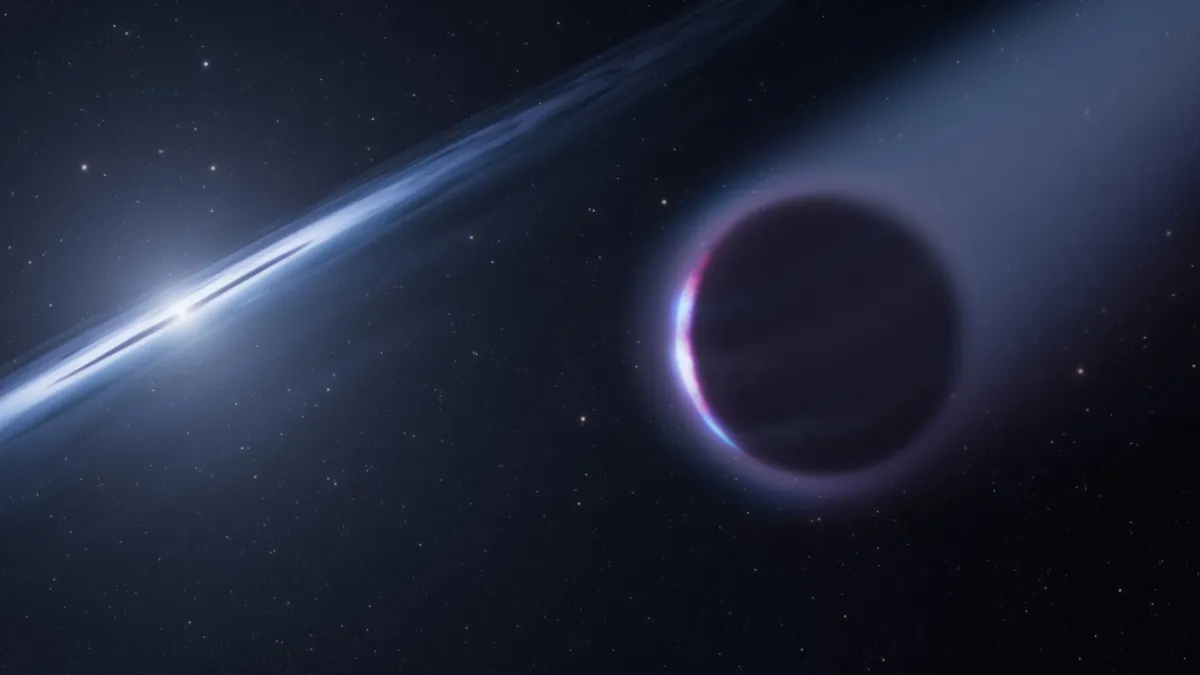
A Scorching Phoenix Planet May Solve a 3-Decade-Old Astronomical Cold Case - ScienceAlert
After being born of mostly just hydrogen and helium, a scant 14-ish billion years later the Universe is full of weird planets of wildly varying makes, shapes, and sizes. Well, maybe not shapes, because they're all pretty rotund – it's in the definition of planet. Yet some are truly alien, including oddballs as dense as iron and teeny-tiny 'next door neighbors' that make our modest Venus seem like a giant. Upping the alien ante, astronomers have just announced a suspected exoplanet like no other entity, either in astronomy or in legend: a "phoenix planet" that arose not from its own ashes, but from those of its burned-out mother star. Artist's illustration of the second-generation planet that has formed around white dwarf HS 0209+0832. (Dr Snehalata Sahu/University of Warwick)After nearly three decades of uncertainty, a team led by researchers from the University of Warwick has finally characterized what may be the first second-generation planet ever detected around a white dwarf, one named HS 0209+0832 and located only 270 light-years away. White dwarfs are the cooling cores of formerly Sun-like stars that have exhausted their nuclear fuel.
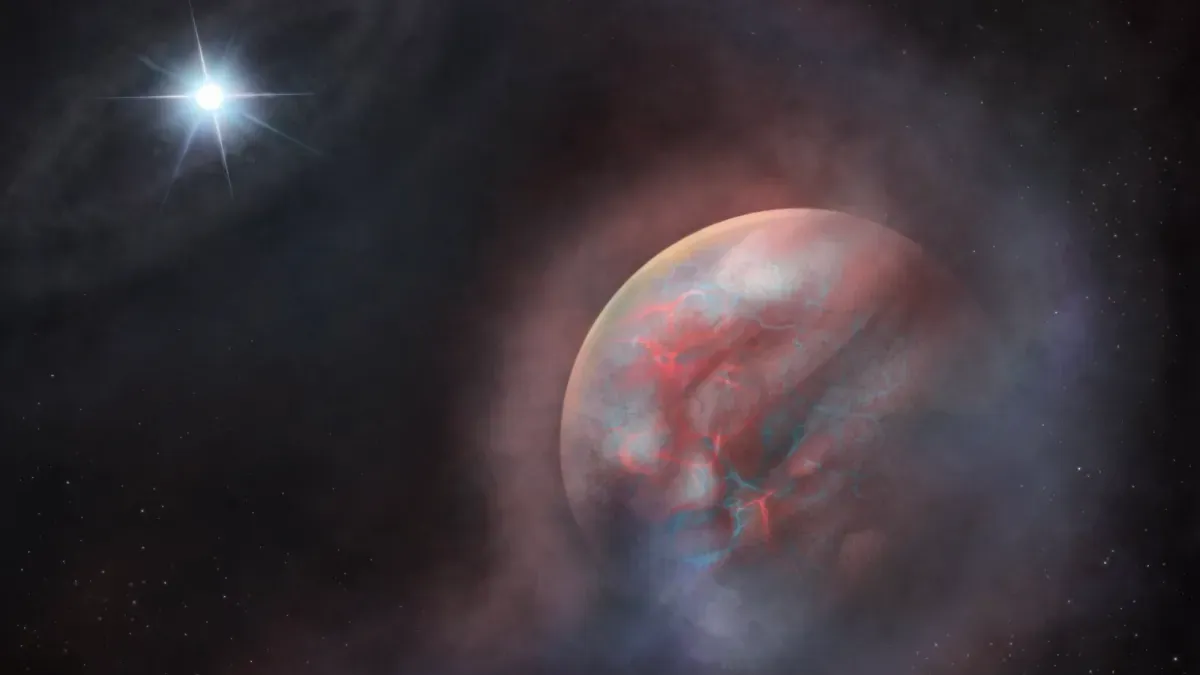
Dead star likely birthed a new planet, in astronomical first - Popular Science
An artist's impression of the second-generation planet orbiting HS 0209+0832, the first such planet to be found orbiting a white dwarf. A star’s explosive death is often apocalyptic for its closest planets. In our solar system, the sun’s expansion into a red giant about five billion years from now will spell doom for Mercury, Venus, and possibly even Earth. But a dead star isn’t only capable of destruction. Astronomers suspect that gravity from highly magnetized, fast-spinning neutron stars known as pulsars can sometimes assemble enough material to form second-generation planets. But for the first time, scientists have detected a potential planet birthed from a white dwarf—and it may only be the first of more to come
Orionid meteor shower peaks this week - DiscoverAirdrie
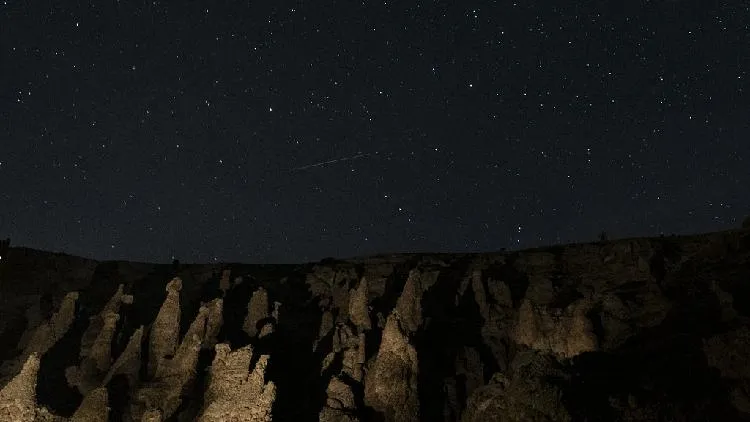
Starwatch: Orionid meteor shower to peak on night skies - CGTN
The Orionid meteor shower observed in the Gelin Kayalari area of Sakaeli village in Cankiri, Türkiye, October 21, 2025. /VCG The Orionid meteor shower observed in the Gelin Kayalari area of Sakaeli village in Cankiri, Türkiye, October 21, 2025. /VCG
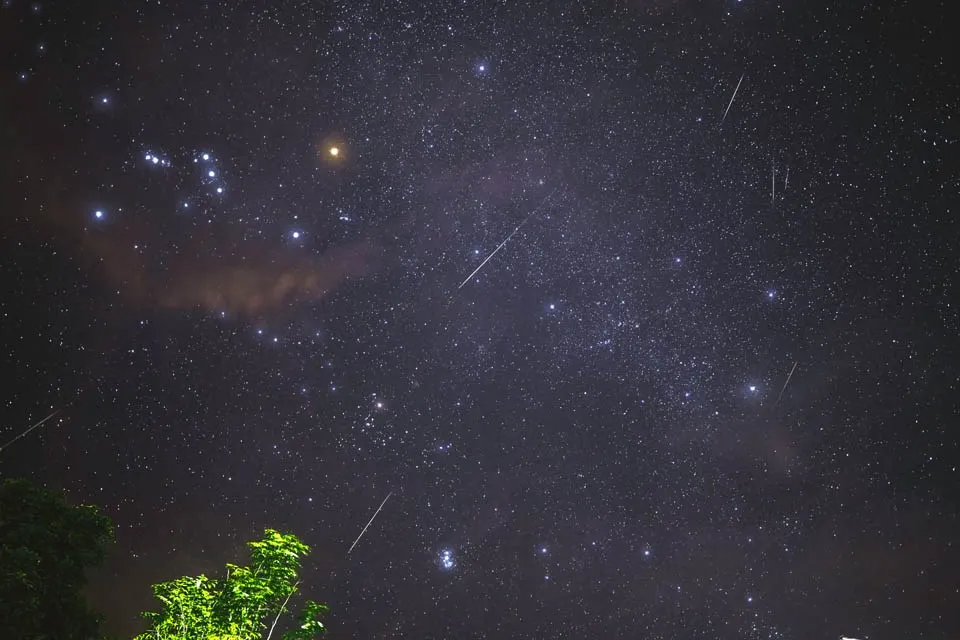
Orionid meteor shower: When to watch in Saskatchewan - GX94 Radio
FORT McMURRAY, Alta. — There is just one week to go until the peak of the Orionid meteor shower. Skywatchers could see some of the fastest meteors of the year streaking across the predawn sky. The Orionids peak overnight Oct. 21 and 22 and can produce up to 20 meteors per hour under dark, favourable conditions. The shower is active from Oct. 2 through Nov. 7. The meteors are comprised of debris left behind by Halley’s Comet, which last passed by in 1986. As Earth passes through the comet’s debris stream each October, the particles strike the atmosphere at about 68 kilometres per second. Richard Covey, amateur astronomer, published astrophotographer and member of the Royal Astronomical Society of Canada, says the Orionids are especially appealing because of their speed and their connection to one of astronomy’s best-known comets. “You’re literally watching tiny pieces of Halley’s Comet burn up in the atmosphere. They’re moving incredibly fast, so the Orionids can produce some very sharp, impressive streaks across the sky.”Moonlight will make this year’s peak more challenging. The Moon will be bright around Oct. 21 and 22, washing out many of the fainter meteors for much of the night
0 comments
No comments yet. Be the first to share your thoughts!