Hot plasma may explain how rapidly feeding black holes launch powerful jets - Phys.org
This story deserves to be shared
Send it to someone who'd care, or post it on your networks.
This article is an excerpt. To read the full content, visit the original source. Phys.org
Related articles
Feeding and fasting reveal appetite-linked genes in Siberian sturgeon | Newswise - Newswise
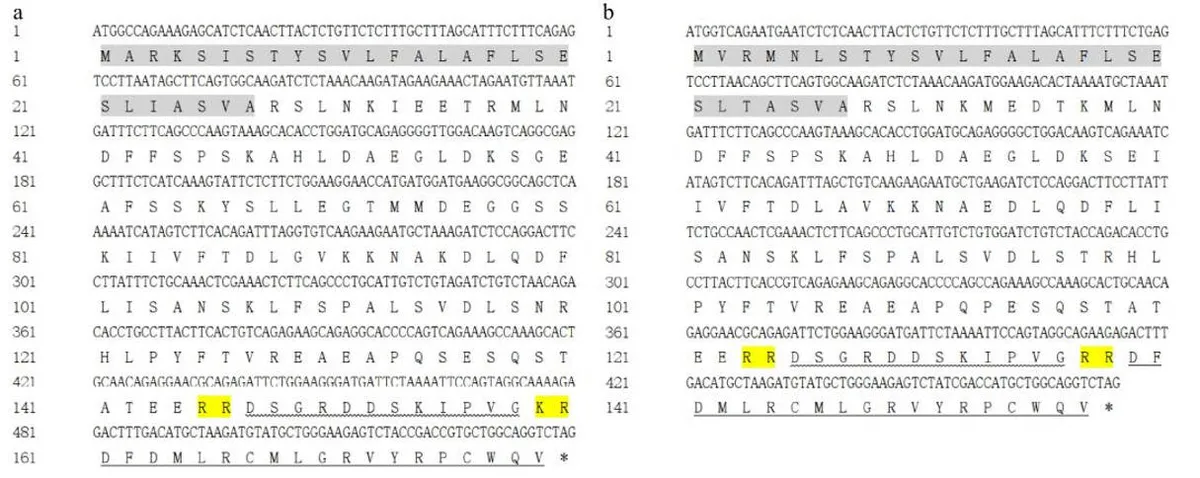
Newswise — Fish rely on signals from the brain and other organs to balance food intake with their energy needs. One such signal, melanin-concentrating hormone (MCH), was first discovered in salmon and has since been studied across vertebrates. In mammals, MCH generally promotes eating, but studies in fish have produced mixed results: its associated gene appears to respond differently to feeding and fasting in different species. Siberian sturgeon are widely farmed for meat and caviar, yet little was known about their pmch genes, where those genes are active, or how they respond when food becomes available or scarce. A study (DOI: 10.48130/jai-0026-0004) published in Journal of Applied Ichthyology on 30 July 2026 by Zhiqiong Li's & Ni Tang's team, Chengdu Agricultural College, reports two pmch forms whose expression patterns suggest possible roles in appetite regulation and liver energy metabolism. The researchers first isolated and sequenced two pmch transcripts, named pmcha and pmchb, from Siberian sturgeon. Their sequences encode precursor proteins of 179 and 158 amino acids, respectively.

Close social bonds help wild jackdaws hold feeding spots but come with waiting costs - Phys.org
A pair of jackdaws foraging together. Credit: Céline Giorgetti. Close social relationships are known to contribute to the survival of many animals, including humans. Maintaining social bonds over time, however, can also require effort and sacrifices.
[Science Through Covers] Young orangutans learn ‘spoon-feeding’ through lessons and review - DongA Science
This week’s cover of the international journal 'Science' features a young orangutan striking an awkward pose as it imitates an adult orangutan. An international research team from the Max Planck Institute of Animal Behavior in Germany, Universitas Nasional (UNAS) in Indonesia, and the University of St Andrews in the United Kingdom analyzed how young Sumatran orangutans (scientific name Pongo abelii) acquire new behaviors as they grow, through social relationships and individual exploration, and published their findings on the 24th (local time) in the journal 'Science'.

Can Science Keep Feeding the World? - group.ntt
"Population, when unchecked, increases in a geometrical ratio. Subsistence increases only in an arithmetical ratio. "— Thomas Robert Malthus, An Essay on the Principle of Population (1798)Can we keep producing enough food for everyone? In 1798, English economist, cleric and scholar Thomas Malthus argued that our population had the potential to grow more rapidly than the food supply, which led him to a depressing conclusion: famine and hardship would always act as checks on human numbers. The Green RevolutionMore than a century later, science changed the equation. During the 20th century, the Green Revolution combined advances in plant breeding with irrigation, fertilizers, pesticides and improved farming practices. And the results of using new technology were dramatic, with crop yields increasing around the world and helping food production keep pace with a rapidly growing global population. Producing more food remains essential in the 21st century, now that global population has topped eight billion. Our added challenge is to keep doing so while reducing agriculture's environmental burden and helping crops withstand increasingly difficult growing conditions.
0 comments
No comments yet. Be the first to share your thoughts!