Historic Globe Used by Dwight D. Eisenhower Broken by Pete Hegseth’s Staff
This story deserves to be shared
Send it to someone who'd care, or post it on your networks.

In a scene that could have been ripped out of Stanley Kubrick’s Dr. Strangelove or: How I Learned to Stop Worrying and Love the Bomb, a historic floor globe used by General Dwight D. Eisenhower during World War II was broken when Pentagon staff tried to move it, according to The Washington Post.
As reported by the paper, the globe caught the eye of Defense Secretary Pete Hegseth, who ordered for it to be moved into his office to ogle on his own.
This article is an excerpt. To read the full content, visit the original source. ARTnews
Related articles
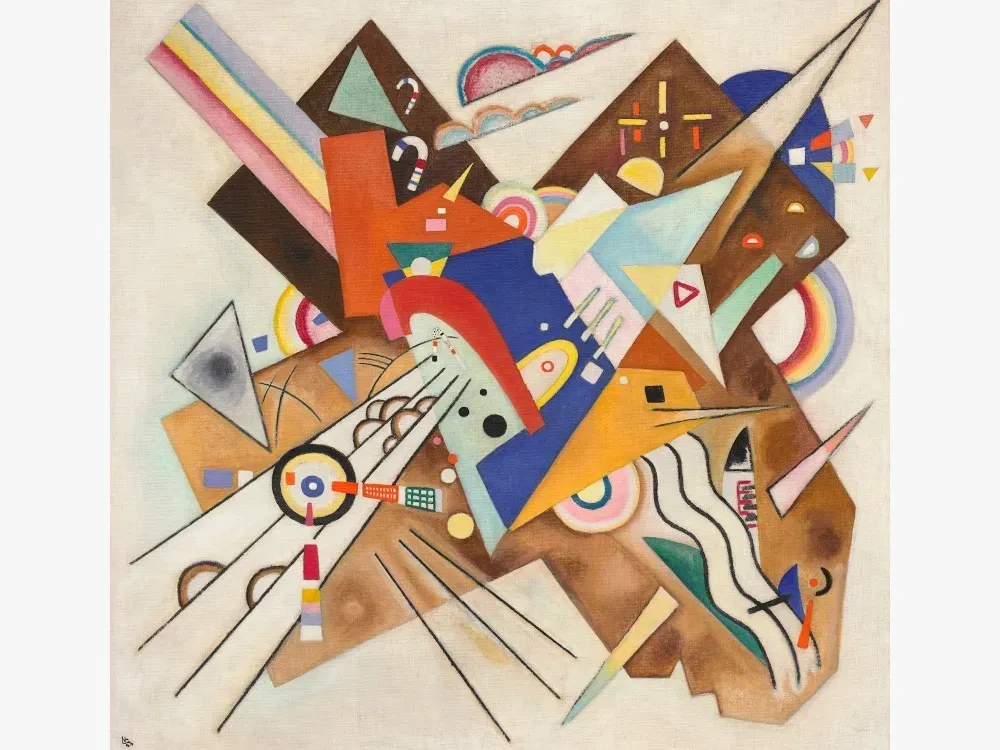
An $80 M. Kandinsky, Once Owned by the Guggenheim, Is Guaranteed to Beat a Record at Christie’s
Russian-born abstraction pioneer Wassily Kandinsky‘s painting Betonte Ecken (1922–23) will come to the auction block at Christie’s New York on November 17, carrying a $60 million to $80 million estimate. The anonymous seller acquired the work at Sotheby’s New York in 1986. The painting is guaranteed to sell at a record-setting level, the house told ARTnews. Kandinsky’s auction record currently stands at $44.8 million, paid for the artist’s 1910 painting Murnau mit Kirche II (Murnau with Church II) at Sotheby’s London in 2023. Just last month, Christie’s London notched the third-highest price for the artist with his 1907 canvas Das bunte Leben (La vie mélangée), which sold for $41.5 million against a $30 million estimate. That work had recently been restituted to the heirs of a Jewish Dutch collector family whose art was lost during the Nazi era. The artist’s top 14 works at auction all exceed the $20 million mark, and 10 of those prices have been set in the past decade.
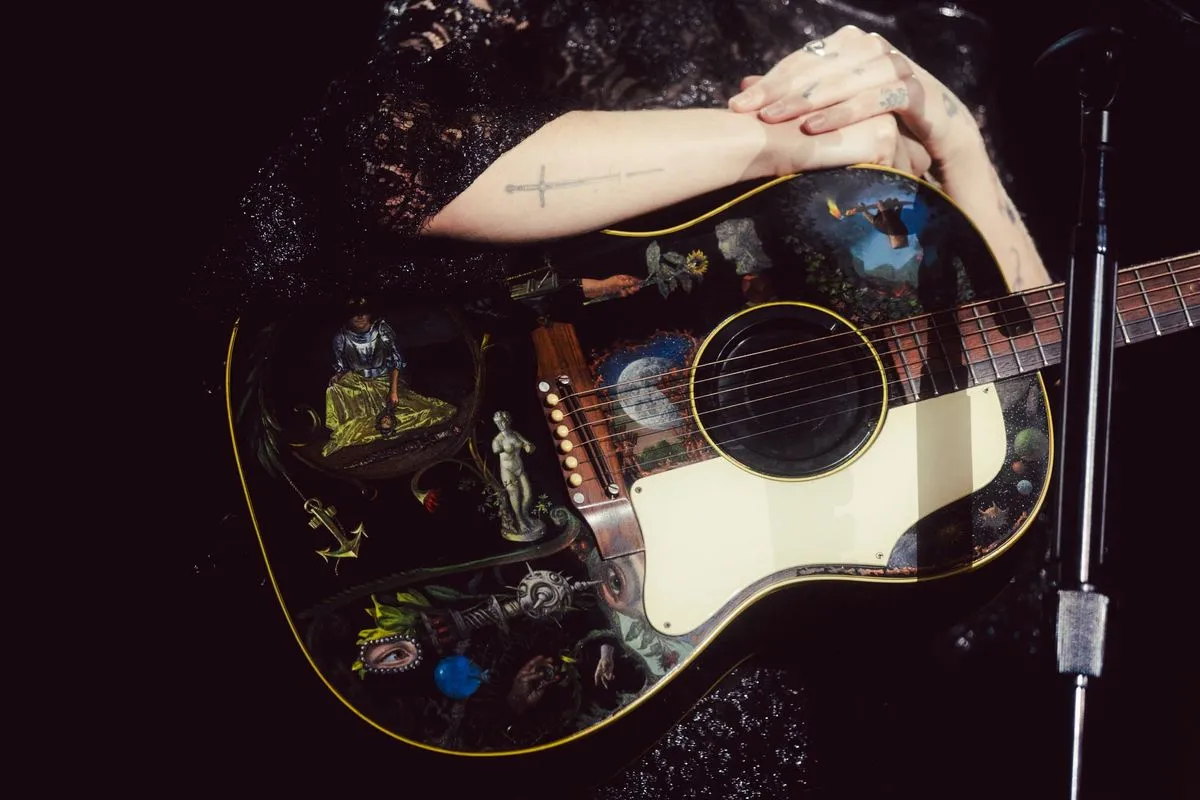
Meet the Painter Adorning Phoebe Bridgers’s Guitars
The musician and indie darling was drawn to John Griswold's intimate tableaux evoking Renaissance and Baroque iconographies. Phoebe Bridgers's guitar custom-painted by John Griswold (photo by and courtesy Wes Ellis)
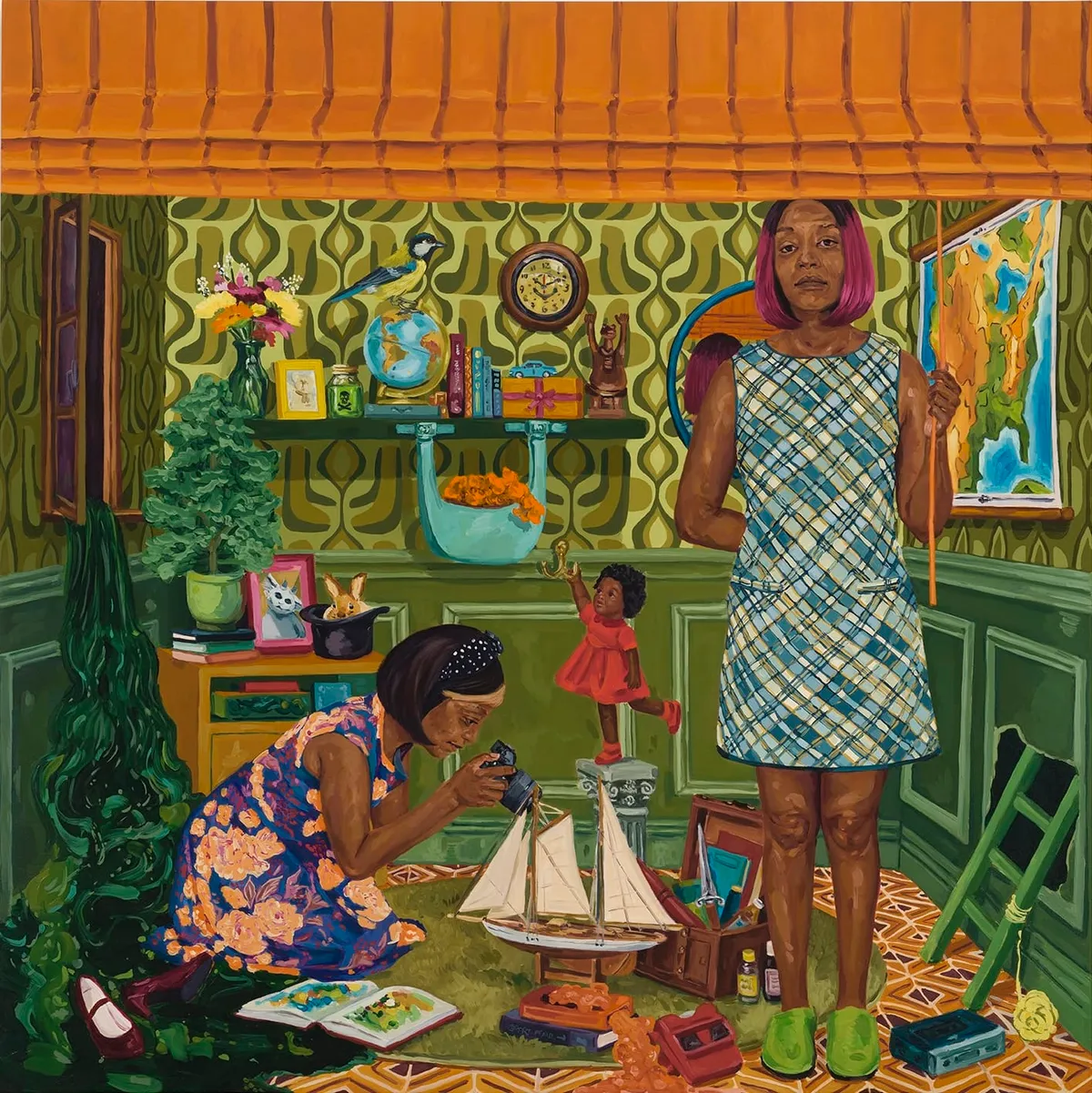
Wangari Mathenge’s Vibrant Paintings Tap into Kenya’s Paradigm Shift in the 1960s
In 1963, following nearly 70 years of British colonial rule, Kenya declared independence. The nation was not alone on the African continent; in the 1960s, Gambia, Guyana, Malawi, Nigeria, and others freed themselves from Britain’s control in a watershed period of democratic redevelopment and socio-cultural shifts. Wangari Mathenge, who was born in Nairobi, looks to the not-so-distant past in an ongoing series of vivid oil paintings. Many of the works shown here are part of the artist’s current solo exhibition, Re-membering at Lévy Gorvy Dayan. Inspired in part by scholar Ngũgĩ wa Thiong’o’s 2009 book Something Torn and New: An African Renaissance, Mathenge examines her own cultural identity through the lens of Kenya in the first half of the 20th century. Something Torn and New focuses on the long-lasting impacts of colonialism and slavery in Africa.

Flo & Joan: With Feeling review – sisters turn an old rock setlist into hilariously neurotic songs
The last time Flo & Joan played Shepherd’s Bush Empire, they found a setlist on stage left by beloved indie-rock band the Feeling on the previous night. It made the sisters contemplate their own relationship to the music industry. Are Flo & Joan a proper band or doomed for ever to remain “musical comedy”? The problem with which, they deadpan here, is that “no one takes it seriously”. Cue this new show, its structure inspired by that chance discovery. Tonight, the duo play a suite of new songs that, title by title, matches the setlist of the band who preceded them four years ago. And so goes the first half of With Feeling, which by turns delivers on and subverts that challenge – and proves handsomely entertaining either way. In the sisters’ hands, Fill My Little World becomes a neurotic number about the surfeit of stuff (cheap food, fast fashion, AI slop). Never Be Lonely returns to a favoured topic, Flo & Joan’s toxic co-dependency – with an added sight gag involving Joan (AKA Rosie Dempsey)’s questionable trumpet skills. Further numbers address the risks of poor punctuation and the need, in a society giddy on unfiltered self-expression, to “bring back shame”.

The Celebrity Traitors: episode seven – live
After a very long bit where a camera operator gets to show off the drone they apparently got for Christmas, we skip to breakfast. Michael, Maya and Blunt walk in, and Maya hints that the murder went off without a hitch. Recap time: Jerry holds a glass. Joanne holds a glass. The money next tot he round table still looks a bit like it’s made of chocolate. Joe Lycett jumps in a bear trap of his own construction. The traitors get told to make someone yawn. Let’s go. Now that EastEnders has ended (tonight’s cliffhanger: Max Branning makes a brief telephone call), it is time for episode seven of The Celebrity Traitors to begin. And of course, on Friday we said goodbye to dear old Joe Lycett. And in retrospect, he might have had the most interesting trajectory of anyone on the entire show. You will remember that basically his first act in the castle was to provoke Richard E Grant into admitting that he was a traitor, prompting one of the greatest unforced errors in the show’s history. And then, a few episodes later, he told everyone that he wanted to be recruited. And then, when he wasn’t recruited, everyone assumed that he had been recruited anyway and banished him.
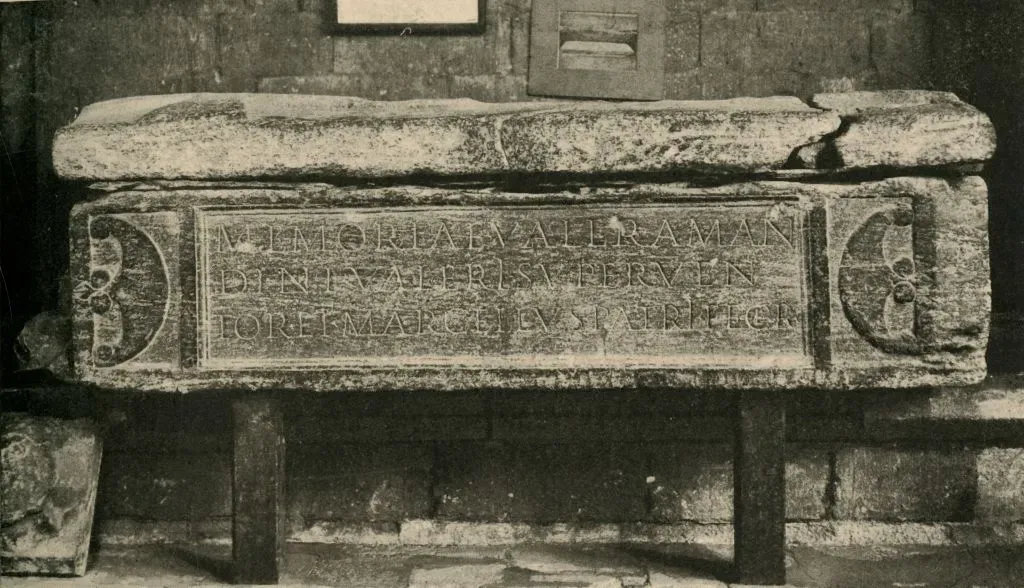
Mystery Skeleton in Roman Sarcophagus Beneath Westminster Abbey May Be a Medieval Abbot, Study Says
For two centuries, Westminster Abbey has harbored a mystery: Whose skeleton was discovered within a Roman sarcophagus unearthed beneath its foundations? Two Anglo-Saxon abbots are in the running, according to a new archaeology study. The limestone sarcophagus was discovered in 1820 and officially excavated in 1869 from what is now a grassy strip along the north side of the abbey’s nave. In the Middle Ages, it was the yard of the Great Sacristy, built during the reign of Henry III. How, then, did a fourth-century Roman sarcophagus end up beneath the yard? Deepening the mystery, no Roman artifacts were found in successive investigations of the site, even though the sarcophagus bears a Latin inscription to one Valerius Amandinus.
0 comments
No comments yet. Be the first to share your thoughts!