Functional MRI looks beyond the brain to reveal spinal cord activity - Medical Xpress
This story deserves to be shared
Send it to someone who'd care, or post it on your networks.
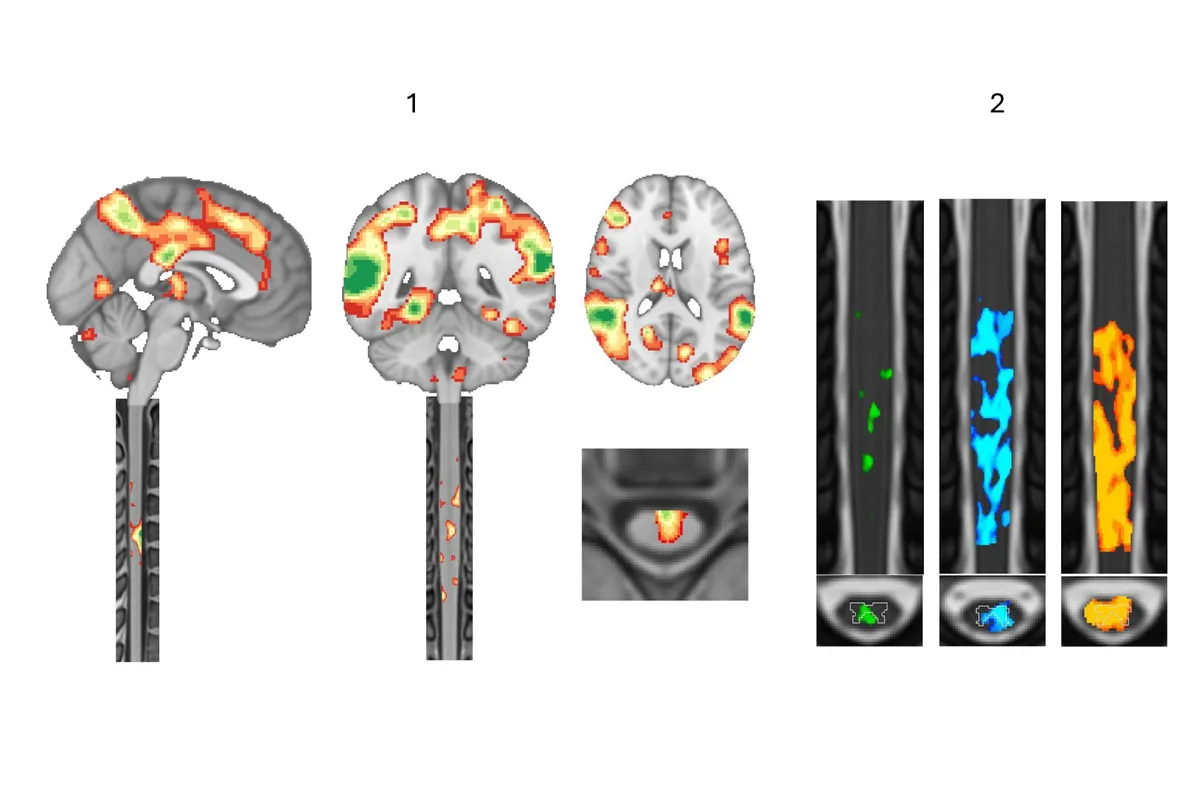
Functional MRI now maps activity beyond the brain. (1) Brain and cervical spinal cord imaged together in the same scan. (2) Spinal cord responses to magnetic pulses delivered to the motor cortex at increasing strength, from left to right: the stronger the pulse, the wider the activity spreads. Credit: EPFL/MIP:Lab - CC-BY-SA 4.0
Several EPFL labs are converging around an idea that began as a doctoral researcher's hunch: The spinal cord revealed by functional magnetic resonance imaging might unlock new therapies.
This article is an excerpt. To read the full content, visit the original source. Medical Xpress
Related articles
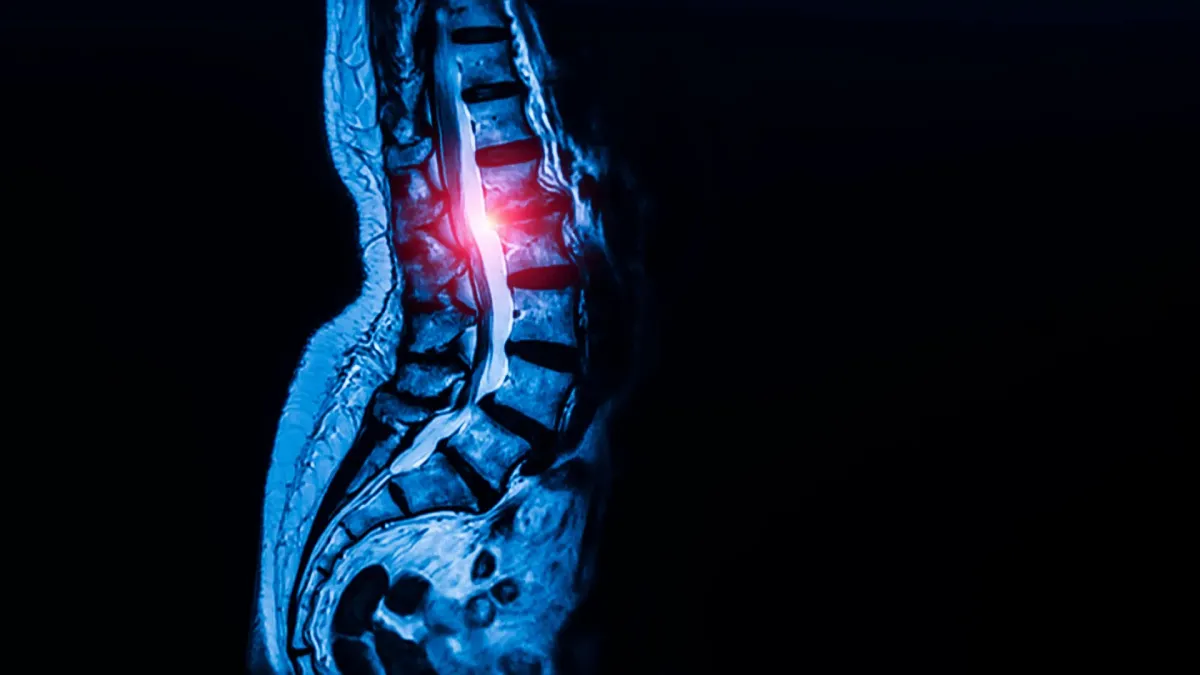
Hidden stem cells may be fueling spinal stenosis - Science Daily
Researchers at Weill Cornell Medicine and Hospital for Special Surgery have identified a previously elusive population of stem cells that appears to produce the body's tendons and ligaments, the connective tissues that link muscles and bones. The scientists also found evidence that these cells can become overactive in the lower spine, where they may contribute to lumbar spinal stenosis. The condition affects an estimated 103 million people worldwide and develops when thickened ligaments reduce space inside the spinal canal. This narrowing can put pressure on nerves and lead to pain, numbness and difficulty walking.
Ontogeny of the spinal cord dorsal horn - Science | AAAS

A rock plunged 90 kilometers into Earth and revealed something unexpected - Science Daily
A remarkable rock discovered in Papua New Guinea has revealed an unexpected temperature pattern deep beneath Earth's surface, challenging scientists' understanding of how tectonic plates move into the planet's interior. An international research team led by Göttingen University found that the rock traveled more than 90 kilometers (56 miles) underground about four million years ago. Along the way, it experienced unusually high temperatures at shallower depths before entering conditions associated with a relatively cooler type of subduction.
Prioritizing heat stress indices for cognitive performance assessment using a Fuzzy Delphi–FAHP framework - Nature
We’re sharing this article early to provide faster access to peer-reviewed, accepted research. It is citable and carries a permanent DOI. This version is subject to further edits and will be replaced automatically by the final Version of Record. All legal disclaimers apply. AbstractOccupational heat exposure induces physiological strain and can impair cognitive performance, exacerbating occupational error and accident risks. Although numerous heat stress indices exist, their theoretical and practical suitability for cognitive-related assessments remains ambiguous. This study established a structured multicriteria decision-making framework integrating the Fuzzy Delphi Method (FDM) and Fuzzy Analytic Hierarchy Process (FAHP) to prioritize candidate heat stress indices for occupational cognitive risk evaluation. Candidate indices and screening criteria identified via literature review and expert consensus (\(n=25\)) were evaluated using FDM, followed by FAHP with Chang’s extent analysis to derive criteria weights and overall index priorities. A one-at-a-time \(+10\%\) sensitivity analysis was performed to verify model stability.
Prognostic significance and clinicopathologic prediction of tumor deposits in non-metastatic colon mucinous adenocarcinoma - Nature
ORCID: orcid.org/0000-0002-3625-04371,2,5 We’re sharing this article early to provide faster access to peer-reviewed, accepted research. It is citable and carries a permanent DOI. This version is subject to further edits and will be replaced automatically by the final Version of Record. All legal disclaimers apply.
0 comments
No comments yet. Be the first to share your thoughts!