From Superconductors to Black Holes, USU's Science Unwrapped Tackles Big Questions on Jan. 23 - Utah State University
This story deserves to be shared
Send it to someone who'd care, or post it on your networks.
This article is an excerpt. To read the full content, visit the original source. Utah State University
Related articles
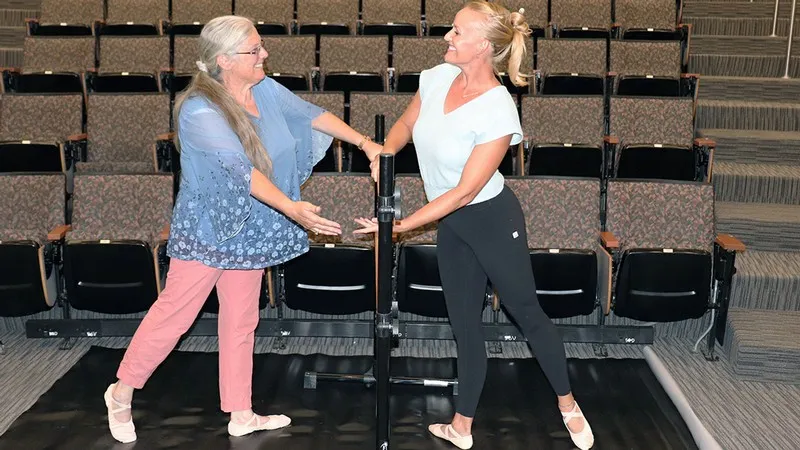
USU's Science Unwrapped Explores 'Physics of Ballet' on Oct. 16 - Utah State University
What do physics and ballet have in common? A lot! Utah State University physicist Tonya Triplett and Cache Valley dancer Becky Erickson will team up Friday at USU’s Science Unwrapped to demonstrate the beautiful, complex interplay of science and dance. They will present “The Physics of Ballet” at 7 p.m. in the Eccles Science Learning Center Emert Auditorium, Room ESLC 130, on the Logan campus. All ages are invited to the free gathering, hosted by USU’s College of Arts and Sciences (ArtSci). Hands-on learning activities led by USU student groups and community volunteers, along with refreshments, follow the half-hour presentation. “Ballet is physics in motion,” says Triplett, principal lecturer in USU’s Department of Physics. “Together, we’ll explore how every movement — each extension, leap, and spin — relies directly on mechanical laws, force distribution and momentum. We’ll also get to move a bit and it will be great fun.”“Our Oct.
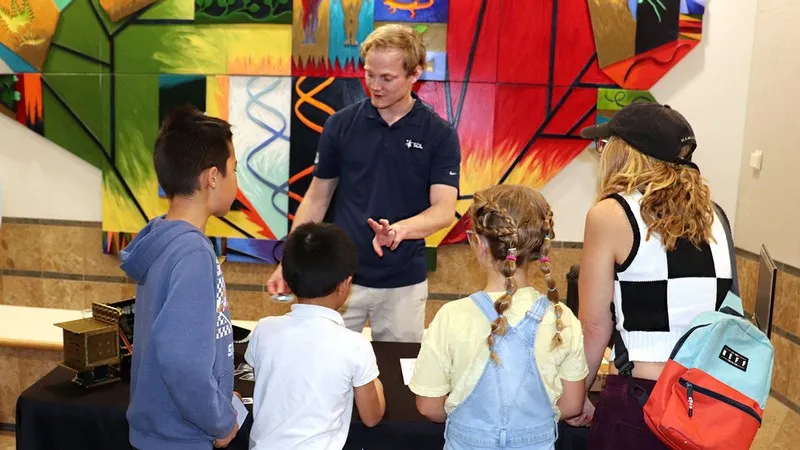
USU's Science Unwrapped Announces New 'InterPLAY of Art & Science' Series - Utah State University
After a summer break, Utah State University’s Science Unwrapped, the College of Arts and Sciences’ popular public STEM outreach program, is returning with its new Fall 2026-Spring 2027 “InterPLAY of Art & Science” series. “In our new series, we’ll explore how art and science complement each other, enrich each other, depend on each other and spark innovation in each other,” said Brynja Kohler, Science Unwrapped chair, ArtSci associate dean, and professor in the Department of Mathematics and Statistics. “This is an energizing, synergistic series and we can’t wait to share it.”The series kicks off Sept. 18 with the presentation “The Hidden Science Behind Artistic Expression” with physicist David Smith, senior lecturer in USU’s Department of Physics. Swanson will speak at 7 p.m. in the Emert Auditorium, Room ESLC 130 of the Eccles Science Learning Center on campus. Admission is free and all ages are welcome. “I won’t give away all the talk’s surprises, but get ready to make music together,” Kohler said. “It will be an evening of super-fun learning.”The InterPLAY of Art & Science series schedule is as follows:Sept.
Pervasive electronic nematicity across the doping-tuned phase diagram of Kagome superconductors - Nature
We’re sharing this article early to provide faster access to peer-reviewed, accepted research. It is citable and carries a permanent DOI. This version is subject to further edits and will be replaced automatically by the final Version of Record. All legal disclaimers apply. AbstractKagome superconductors AV3Sb5 (A = Cs, K, Rb) host intertwined orders arising from electronic correlations and lattice geometry, but the nature of the high-temperature electronic state from which these phases emerge remains poorly understood. Although numerous experiments have reported rotational symmetry breaking, it is still intensely debated whether this may be a simple consequence of the symmetry of the underlying 2 × 2 charge density wave (CDW) or an entirely different mechanism. Here we use spectroscopic imaging scanning tunneling microscopy to track the evolution of electronic structure in CsV3Sb5 as the CDW is intentionally suppressed through two distinct chemical substitution routes—Sn on the Sb site and Ti on the V site.
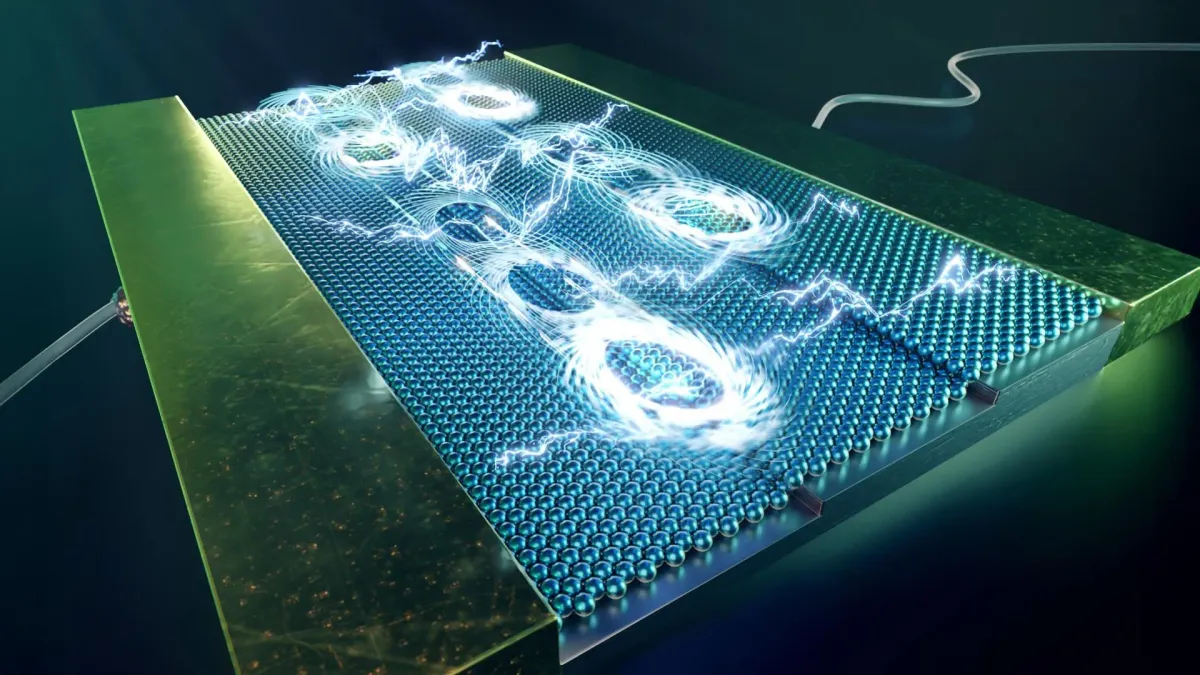
A quantum highway just one atom high could transform superconductors - Science Daily
Scientists in Japan have discovered that tiny steps just one atom high can act like microscopic railroad tracks, guiding the movement of quantum vortices inside an ultrathin superconductor. Under certain conditions, these vortices moved more than 1,000 times more easily along the steps than across them. Researchers also found that they could adjust this remarkable effect simply by changing the temperature or magnetic field. The discovery was made by researchers at the Research Center for Materials Nanoarchitectonics (MANA), part of Japan's National Institute for Materials Science (NIMS). Their findings offer a promising new approach to controlling quantum behavior and could eventually help engineers develop superconducting electronics that use far less energy while processing information more efficiently.
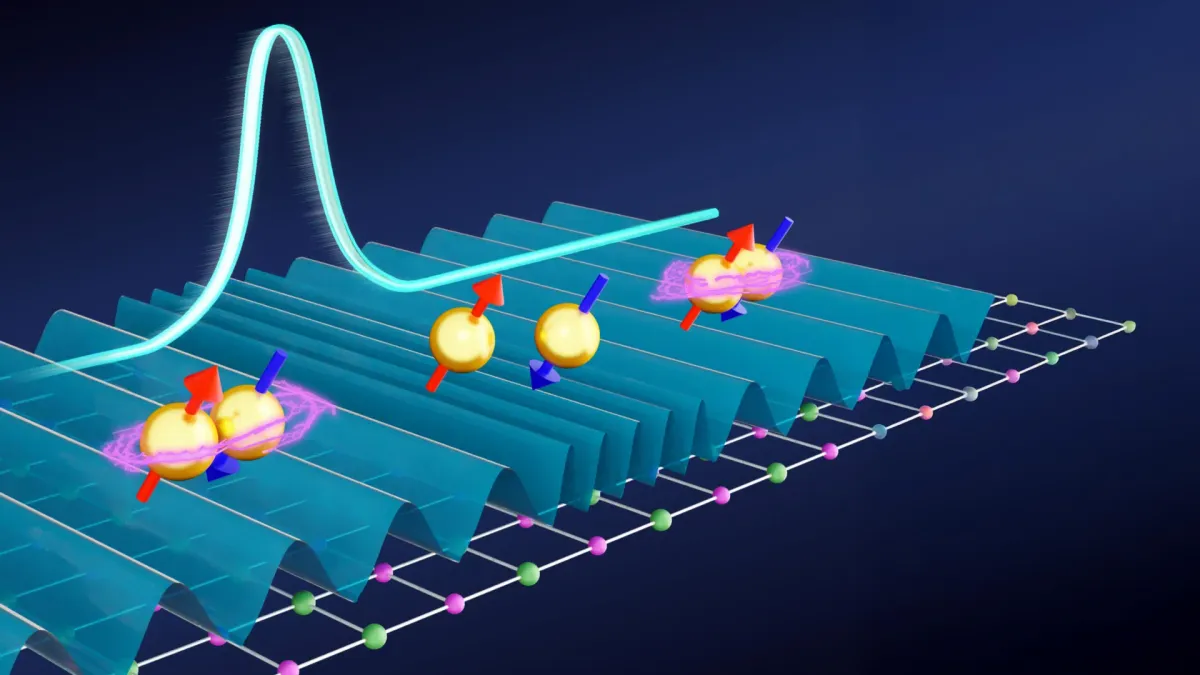
Scientists just pushed superconductors beyond their usual current limit - Science Daily
Superconductors are among the most remarkable materials in quantum physics. When certain materials are cooled below a specific transition temperature, their electrical resistance disappears. Electricity can then flow through them without losing energy as heat. This happens because electrons form correlated pairs called Cooper pairs. Instead of moving independently, these pairs act collectively, somewhat like a wave traveling through the material. This unusual property makes superconductors promising for applications including powerful magnets, highly sensitive detectors, and quantum circuits.
0 comments
No comments yet. Be the first to share your thoughts!