A quantum highway just one atom high could transform superconductors - Science Daily
This story deserves to be shared
Send it to someone who'd care, or post it on your networks.

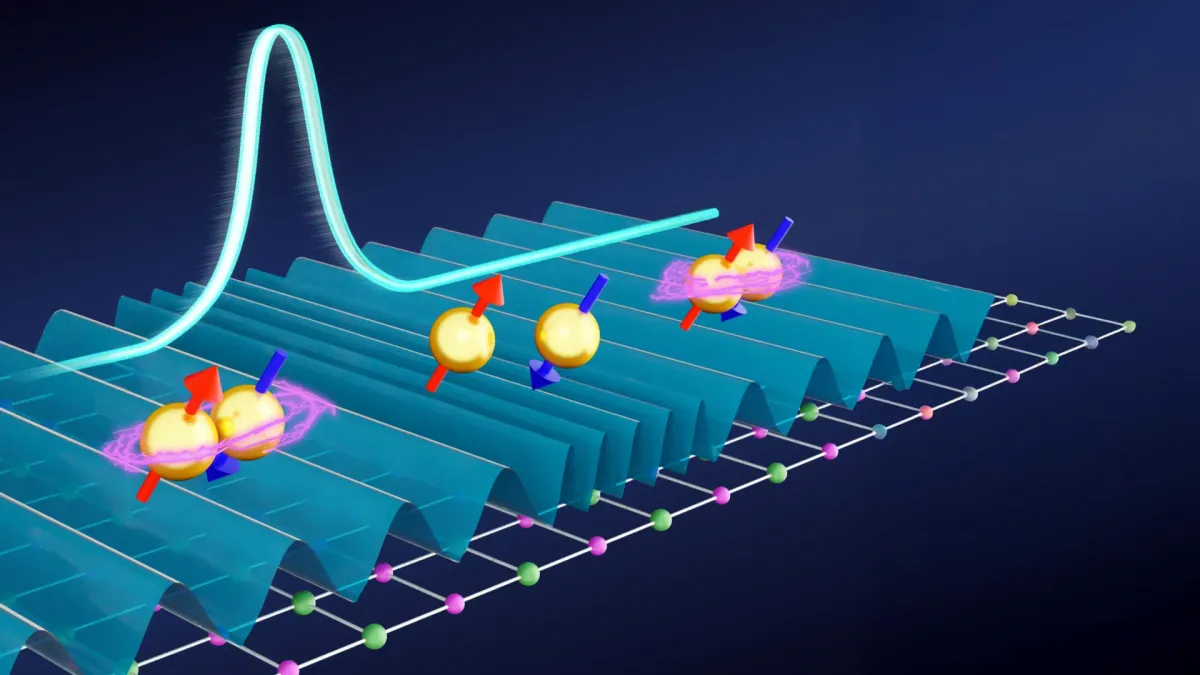
Scientists in Japan have discovered that tiny steps just one atom high can act like microscopic railroad tracks, guiding the movement of quantum vortices inside an ultrathin superconductor. Under certain conditions, these vortices moved more than 1,000 times more easily along the steps than across them. Researchers also found that they could adjust this remarkable effect simply by changing the temperature or magnetic field.
The discovery was made by researchers at the Research Center for Materials Nanoarchitectonics (MANA), part of Japan's National Institute for Materials Science (NIMS). Their findings offer a promising new approach to controlling quantum behavior and could eventually help engineers develop superconducting electronics that use far less energy while processing information more efficiently.
This article is an excerpt. To read the full content, visit the original source. Science Daily
Related articles
Building the future, atom by atom — NSF deploys $108M for materials science at 6 research centers - U.S. National Science Foundation (.gov)
Scientists just pushed superconductors beyond their usual current limit - Science Daily
Superconductors are among the most remarkable materials in quantum physics. When certain materials are cooled below a specific transition temperature, their electrical resistance disappears. Electricity can then flow through them without losing energy as heat. This happens because electrons form correlated pairs called Cooper pairs. Instead of moving independently, these pairs act collectively, somewhat like a wave traveling through the material. This unusual property makes superconductors promising for applications including powerful magnets, highly sensitive detectors, and quantum circuits.

SpaceX Sent 6,300 Pounds to the Space Station. The Strangest Cargo Was Grown in a Lab - Inc.com
The spacecraft delivered materials and equipment for new research studies to the station.
Integrating hippopotamus optimization algorithm into machine learning frameworks for predicting suspended sediment concentrations - Nature
ORCID: orcid.org/0000-0001-8061-88361, Yaser Mehri2, Ali Abdolrazaq Sabbar3, Mohammad Javad Nahvinia3 & … Mohammad Hosein Omid2 We’re sharing this article early to provide faster access to peer-reviewed, accepted research. It is citable and carries a permanent DOI. This version is subject to further edits and will be replaced automatically by the final Version of Record. All legal disclaimers apply.
Did an eruption of poop trigger the biggest explosion of life and diversity Earth has ever seen? - BBC Wildlife Magazine
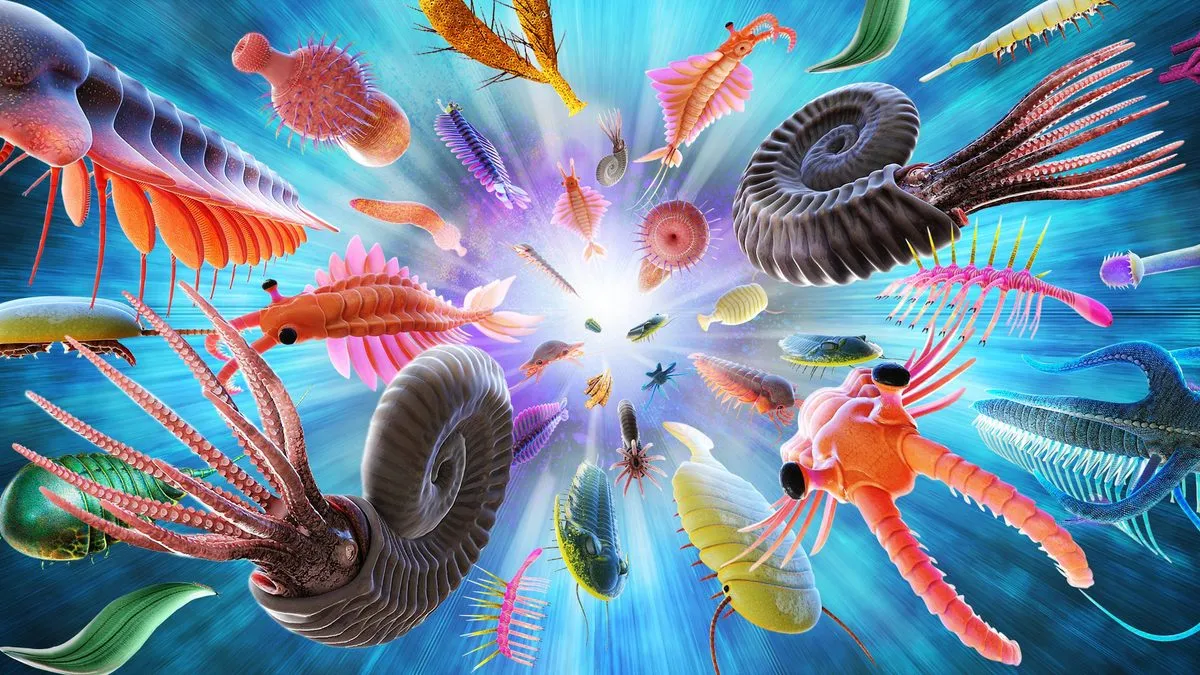
The history of life on Earth doesn’t start with the Cambrian Explosion. However, this was the point in time that nearly all major animal groups appeared, proliferated, and diversified. It wiped out 90% of life on Earth, turned the oceans into graveyards – and it very nearly ended life on our planet entirely
0 comments
No comments yet. Be the first to share your thoughts!