Building the future, atom by atom — NSF deploys $108M for materials science at 6 research centers - U.S. National Science Foundation (.gov)
This story deserves to be shared
Send it to someone who'd care, or post it on your networks.
This article is an excerpt. To read the full content, visit the original source. U.S. National Science Foundation (.gov)
Related articles
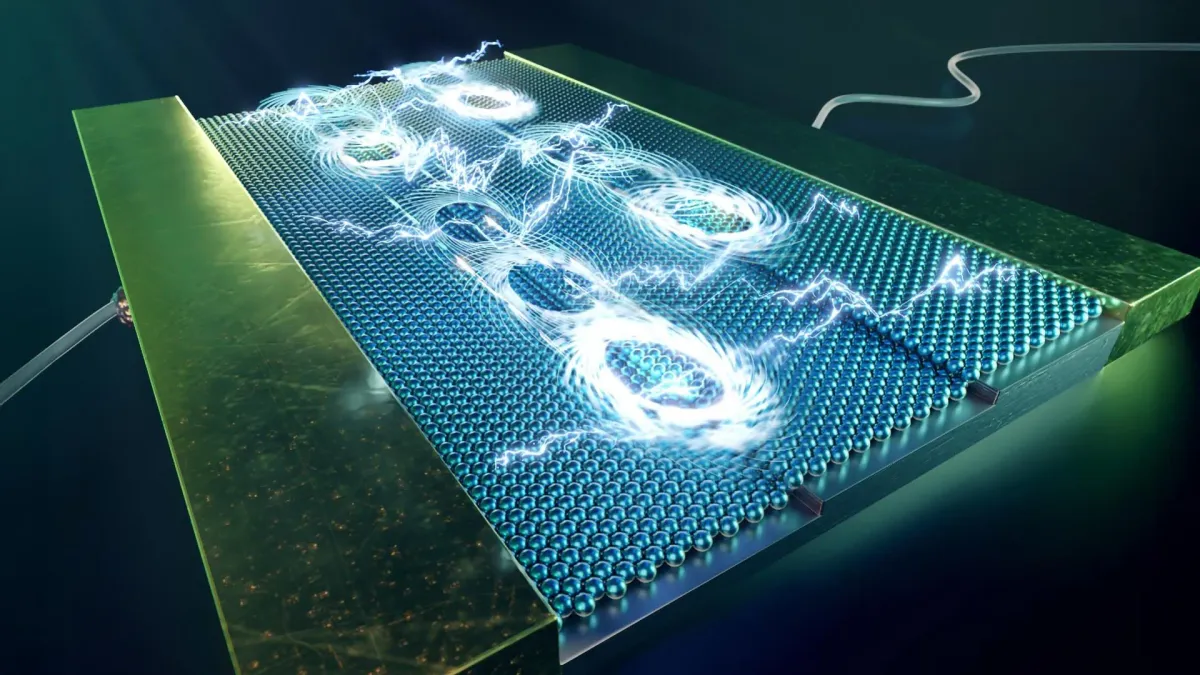
A quantum highway just one atom high could transform superconductors - Science Daily
Scientists in Japan have discovered that tiny steps just one atom high can act like microscopic railroad tracks, guiding the movement of quantum vortices inside an ultrathin superconductor. Under certain conditions, these vortices moved more than 1,000 times more easily along the steps than across them. Researchers also found that they could adjust this remarkable effect simply by changing the temperature or magnetic field. The discovery was made by researchers at the Research Center for Materials Nanoarchitectonics (MANA), part of Japan's National Institute for Materials Science (NIMS). Their findings offer a promising new approach to controlling quantum behavior and could eventually help engineers develop superconducting electronics that use far less energy while processing information more efficiently.
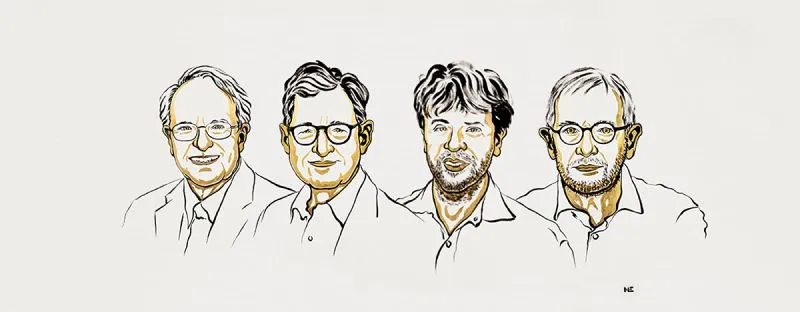
NSF-supported researchers honored with 2026 Nobel Prizes | NSF - U.S. National Science Foundation - U.S. National Science Foundation (.gov)
Four NSF-supported researchers are among the 2026 Nobel Prize laureates, recognized for breakthroughs that transformed neuroscience, created a new way to explore the universe, and improved understanding of economic stability The bottom lineKarl Deisseroth, Peter Hegemann, and Georg Nagel, physiology or medicine — Pioneered optogenetics, a technique that uses light-sensitive proteins to control nerve-cell activity and investigate brain function. NSF supported Deisseroth's research advancing optogenetic tools. Francis Halzen, physics — For major contributions to the NSF IceCube Neutrino Observatory and its discoveries of elusive neutrino particles. NSF invested in the design, construction, and ongoing operations of NSF IceCube, which has enabled greater understanding of astrophysical neutrinos and their origins. Robert E. Hall and Michael Woodford, Nobel Memorial Prize in Economic Sciences — Developed economic models explaining how the decisions of households and businesses influence economic fluctuations, helping improve policies to stabilize inflation, employment, and economic activity. NSF supported both laureates' research on economic fluctuations and stabilization policy.
0 comments
No comments yet. Be the first to share your thoughts!