From Animal Camouflage to AI: The Evolving Science of Staying Unseen | Newswise - Newswise
This story deserves to be shared
Send it to someone who'd care, or post it on your networks.

https://doi.org/10.1093/nsr/nwag601Newswise — Nature’s game of hide and seek is entering the age of intelligent machines. A new article in National Science Review traces how animal camouflage, advanced materials and artificial intelligence are converging to reshape the contest between detecting an object and keeping it concealed. Prepared by a team at the National University of Defense Technology in Changsha, China, the article brings together three domains: biomimetics, spectral physics and AI. Its central message is that concealment increasingly involves controlling both the signals reaching a sensor and the way intelligent systems interpret them. In nature, survival depends on more than matching a background. Snow leopard markings disrupt visual recognition, while cephalopods use responsive skin structures to change their appearance. These biological strategies are inspiring engineered materials that adjust colour, reflect light and manage heat. The review highlights a transition from copying outward appearances toward reproducing the coordinated functions behind natural camouflage. Modern sensors, however, see far beyond human vision.
This article is an excerpt. To read the full content, visit the original source. Newswise
Related articles
"The Great Camouflage" Rockbund Museum of Art / Shanghai - Flash Art International

Moon phase today explained: What the Moon will look like on October 23, 2026 - Mashable
The Moon is getting closer to its full phase, with more of its surface visible as the days go by. Here's what you can look for when you look up at the sky tonight. What is today's Moon phase? As of Friday, Oct. 23, NASA's Daily Moon Guide tracker tells us the Moon is in the Waxing Gibbous phase, with 90% of its surface visible. Tonight, without the use of visual aids you should be able to spot the Copernicus Crater, the Mare Serenitatis, and Mare Fecunditatis. If you have binoculars you'll also see the Endymion Crater, the Alphonsus Crater, and the Clavius Crater. Plus, if you have a telescope, you'll also see the Linne Crater, Rima Ariadaeus, and the Apollo 17 landing spot. When is the next Full Moon? The next Full Moon will take place on October 25 or 26, depending on your timezone. What are Moon phases? The Moon takes around 29.5 days to travel around Earth, and its appearance changes throughout the month. As it moves around our planet, we see different amounts of its sunlit side, from a slim crescent to the quarter phases and eventually a Full Moon. It then begins the cycle again.
The ‘Exotic Physics’ Behind a Mysterious 1,000-Mile Cloud on Mars - WIRED
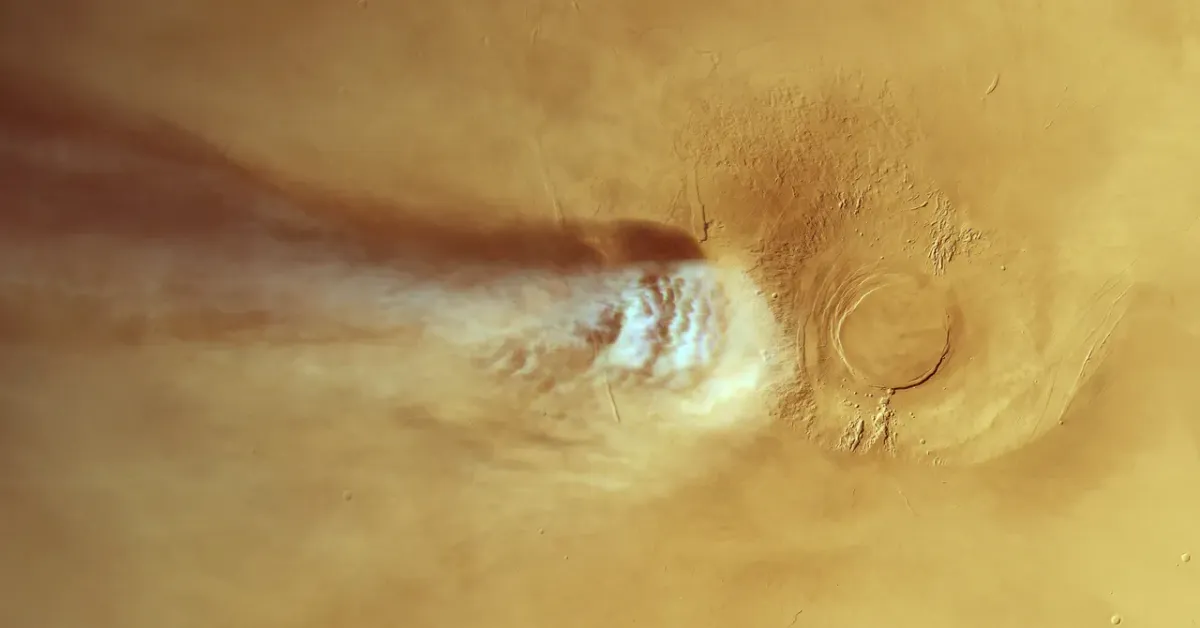
Every morning during the Martian spring and summer, a thin and extremely long cloud emerges, only to disappear again. The wispy formation appears near the volcano Arsia Mons and gradually elongates until it reaches over 1,000 miles—about the distance from New York to Kansas City as the crow flies—before dissipating. This cycle then repeats for several months. Since it was first recorded by a probe in 2018, scientists have been unable to find a plausible explanation for the existence of this cloud, often referred to as the Arsia Mons Elongated Cloud (AMEC). Until now. Recently, researchers successfully modeled the cloud’s formation for the first time, their results suggesting that it may be driven by a physical process that has never been directly observed in any planet's atmosphere. "We found that we needed to include some exotic physics … physics that, while included in textbooks, is treated as theoretical and usually thought not to happen in nature. It certainly hasn’t been seen in action before," Jorge Hernández-Bernal, a planetary scientist at Paris’ Sorbonne Université and lead author of the study, said in a press release.
Levitated nanoparticle detects single-atom collisions - Physics World
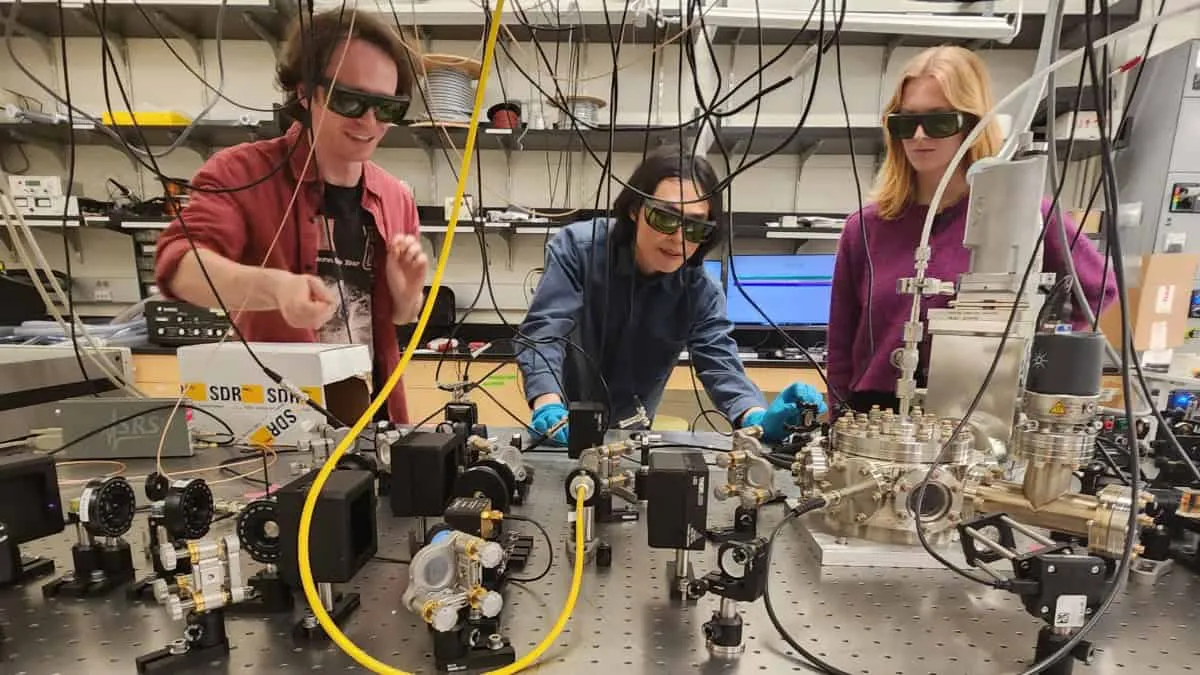
The experiment Thomas Penny, Yu-Han Tseng and Cecily Lowe observe nanoparticle collisions at Yale University. (Courtesy: Yale Wright Lab) A silica nanoparticle levitated in an optical trap could be used as a tiny pressure sensor that detects collisions with individual atoms and molecules – according to researchers in the US. Their proof-of-principle demonstration originated in the team’s work in developing novel neutrino and dark-matter detectors. It could lead to the development of a background pressure sensor to work alongside other optomechanical sensors.

Carbon Nanotubes Demonstrate Antibacterial Activity - European Medical Journal
CARBON nanotubes synthesised using ferrocene have demonstrated antibacterial activity against Escherichia coli in laboratory experiments, suggesting potential applications for nanomaterials in antimicrobial research. Researchers found that multi-walled carbon nanotubes (MWCNTs) inhibited bacterial growth in a concentration-dependent manner, with both minimum inhibitory and bactericidal concentrations of 256 µg/mL. The findings highlight the antibacterial properties of the experimental preparation, although further research is needed to determine the mechanisms responsible and whether these effects could translate into practical applications.
The Sky Today on Friday, October 23: Nab Neptune near the Moon - Astronomy Magazine
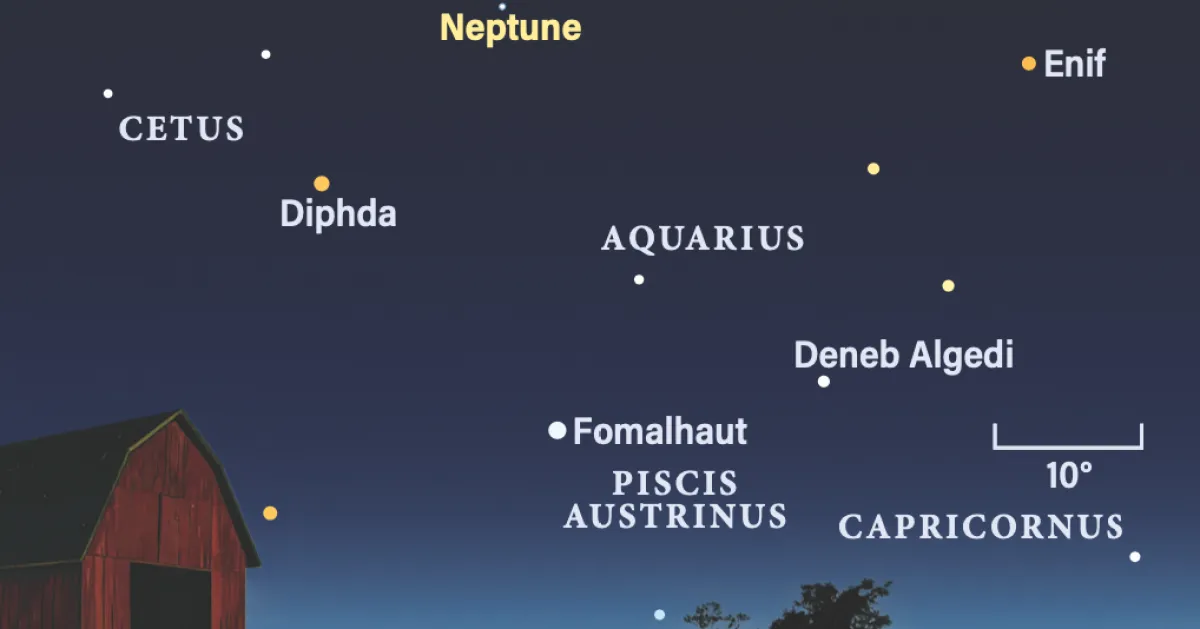
The solar system’s most distant planet shares the sky with the nearly Full Moon this evening, with Saturn standing nearby. Late in the month, the Moon forms a triangle with Saturn and Neptune — note the latter requires binoculars or a telescope to spot. Credit: Astronomy: Roen Kelly
0 comments
No comments yet. Be the first to share your thoughts!