Écoute Audio Introduces TH2 Wireless Headphones with Dual Nutube Gain Stages - audioXpress
This story deserves to be shared
Send it to someone who'd care, or post it on your networks.
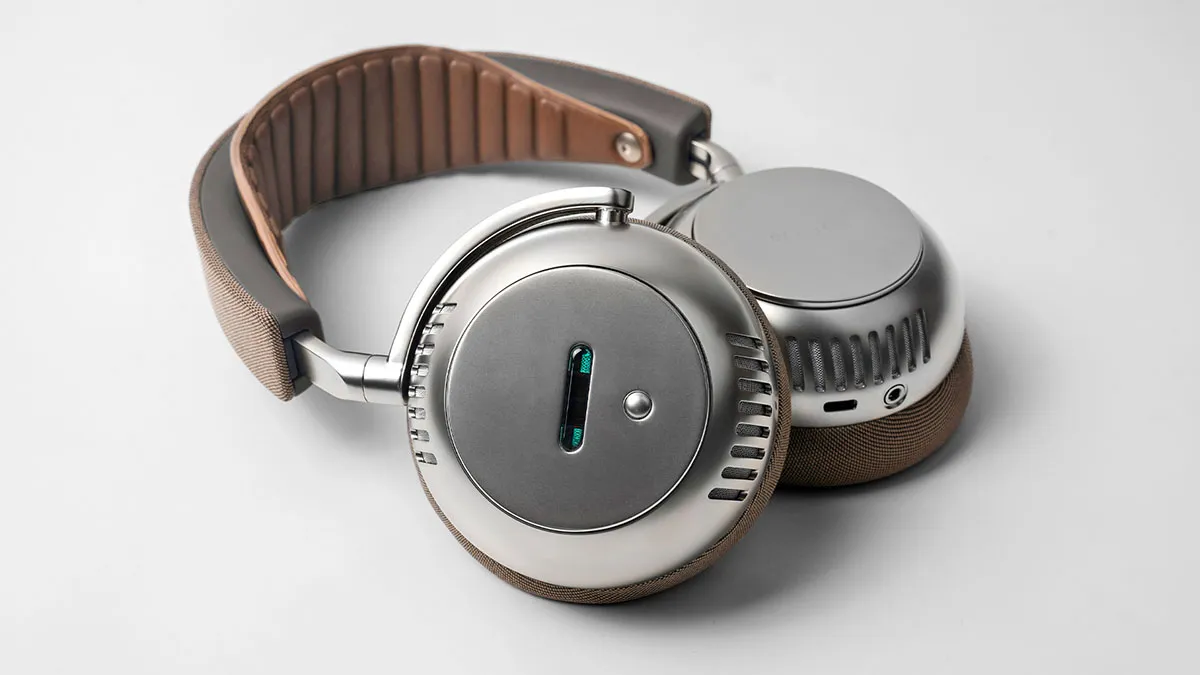
Écoute audio has announced the TH2, second-generation wireless over-ear headphones that combine dual Korg Nutube 6P1 preamp stages with independent DAC cores and discrete Class A/B amplification. Building on the TH1, the new design adds improved tube-stage shielding, quieter hybrid active noise cancellation, eight-band sound tuning, and a modular chassis. The $999 headphones are scheduled for North American availability in November 2026. Écoute audio has announced the TH2, second-generation wireless over-ear headphones that combine dual Korg Nutube 6P1 preamp stages with independent DAC cores and discrete Class A/B amplification. Building on the TH1, the new design adds improved tube-stage shielding, quieter hybrid active noise cancellation, eight-band sound tuning, and a modular chassis. The $999 headphones are scheduled for North American availability in November 2026.
The interesting part of the écoute audio proposition remains the decision to build a complete playback system into wireless headphones, with an analog gain stage between digital conversion and the power amplifiers.
This article is an excerpt. To read the full content, visit the original source. audioXpress
Related articles

Sound Sculpture Inc. celebrates 30 years of shaping perception - blooloop
Sound Sculpture Inc. (SSI), leading sound artists in themed entertainment, is celebrating its 30th anniversary and reaffirming its conviction that sound, when treated as a foundational design element rather than a finishing layer, shapes guests' perception of the entire experience. A pulley array being built in the Sound Sculpture Inc. shopImage courtesy of Sound Sculpture Inc. Spanning three decades and daily audiences of tens of thousands, SSI's work has consistently pursued what sound empowers, not simply what it sounds like. When Ben Herrington founded the company in 1996, he recognised that as many studios were discarding large collections of physical sound props in favour of offices and edit bays, the methods, devices, and techniques of classic sound artists were at risk of being lost. His brother, Roy Herrington, joined him in 2003, deepening the studio's commitment to the physical, performance-based approach that defines SSI's work, drawing on early sonic traditions largely shaped by their father, Walt Disney Imagineering media designer Joe Herrington. See also: Creating immersive worlds with Sound Sculpture Inc. Ben Herrington established the company with the belief
Dopamine amplifies subthalamic long-latency responses to cortical stimulation in patients with Parkinson’s disease - Nature
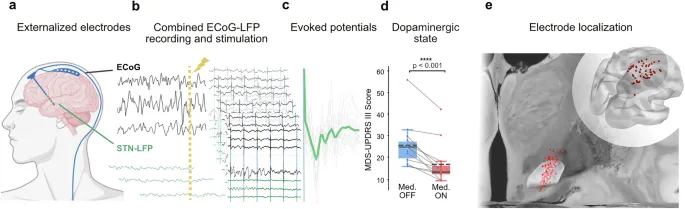
IntroductionParkinson’s disease (PD) is the most rapidly expanding neurodegenerative condition1,2, characterized by the progressive degeneration of dopaminergic neurons within the substantia nigra3. Dopamine replacement therapy with levodopa, together with high-frequency deep brain stimulation (DBS) of the subthalamic nucleus (STN), remain the most effective interventions for alleviating PD-related motor symptoms4,5. Yet despite their widespread clinical use, the neural circuit mechanisms through which these treatments exert their therapeutic effects are still not fully understood6. One of the proposed target circuits of STN-DBS is the monosynaptic cortico-subthalamic hyperdirect pathway, which has been implicated in rapid movement cancellation, in the emergence of pathological synchronization, and as a key substrate through which STN-DBS may influence network dynamics7,8,9,10. Although computational models and animal experiments have highlighted the importance of this pathway11,12,13, direct causal evidence for how dopaminergic state shapes hyperdirect STN excitation in humans remains scarce9,14.
0 comments
No comments yet. Be the first to share your thoughts!