Dolphins and orcas crossed an evolutionary threshold millions of years ago: Science confirms they can never go back - Futura, le média qui explore le monde
This story deserves to be shared
Send it to someone who'd care, or post it on your networks.
This article is an excerpt. To read the full content, visit the original source. Futura, le média qui explore le monde
Related articles
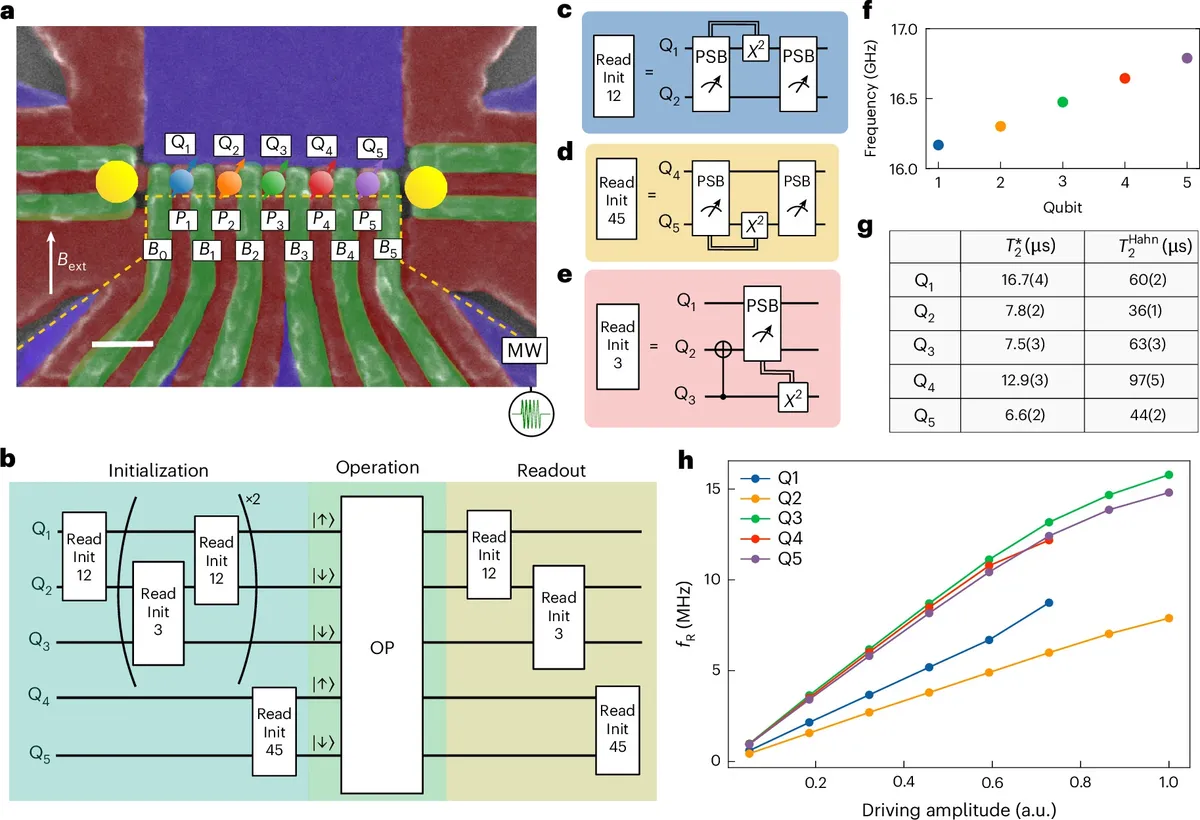
RIKEN Demonstrates High-Fidelity Simultaneous Control of Silicon Spin Qubits Above 99.9% Threshold - Quantum Computing Report
In a study published in Nature Physics, researchers from RIKEN, National Taiwan University, ETH Zurich, and TU Delft have demonstrated simultaneous high-fidelity single-qubit operations across a five-qubit silicon (28Si/SiGe) quantum dot array using a single, shared microwave control line. Detailed in the paper (“Simultaneous high-fidelity single-qubit gates in a spin qubit array“, the team identified AC-Stark shifts as the main source of parallel drive crosstalk and introduced an N(N-1) pairwise calibration protocol that preserves gate fidelities above 99.9% during simultaneous 5-qubit operation.
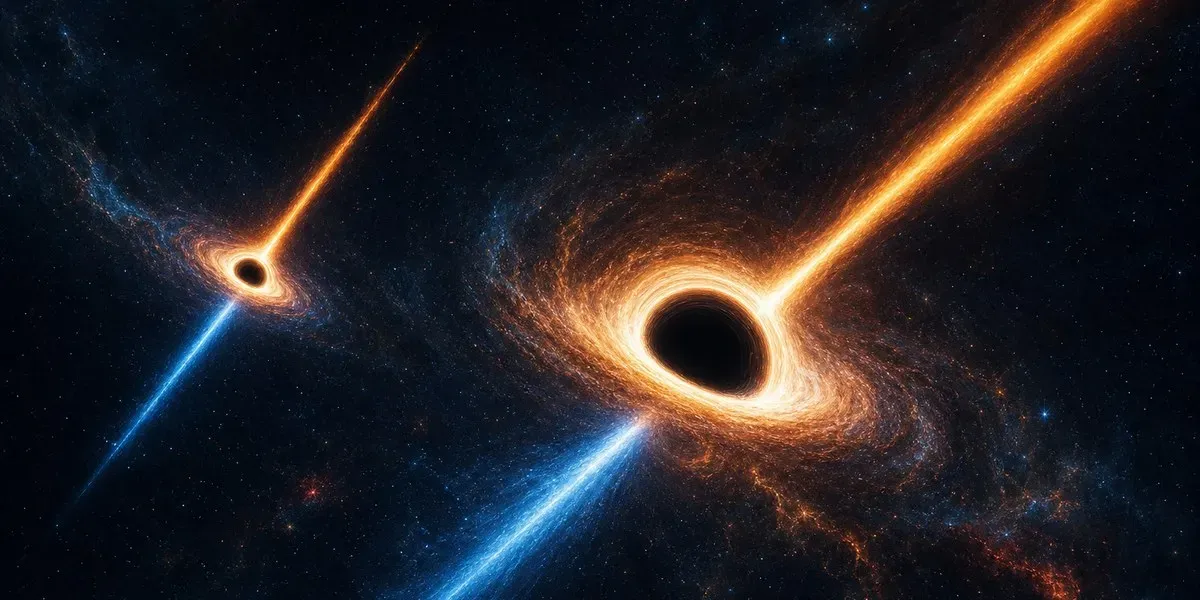
Astronomers identify 2% threshold for delayed black hole jets — ScienceDaily - UA.NEWS
Astronomers have found that supermassive black holes can launch delayed jets of matter when their rate of matter accretion falls to about 2% of the Eddington limit. The same relative threshold was previously associated with jet formation in much smaller black holes in the Milky Way, ScienceDaily reports. The study’s results were published in Nature Astronomy. The work was led by astrophysicist Adele Goodwin of the Curtin University node of the International Centre for Radio Astronomy Research, together with Andrew Mummery of the Institute for Advanced Study in Princeton. The scientists studied why, after a star is destroyed by a supermassive black hole, a radio jet sometimes appears almost immediately and sometimes only months or years later. Data on stellar disruptionsThe researchers analyzed 20 tidal disruption events — phenomena in which a star passes too close to a supermassive black hole and is torn apart by its gravity. Part of the stellar debris falls into the black hole, temporarily increasing its feeding rate. More current news is available on the UA. News Telegram channel Telegram.
Metabolic characteristics and evolutionary history of the nitrogen-fixing cyanobacterial endosymbionts of pennate diatoms - Nature
We’re sharing this article early to provide faster access to peer-reviewed, accepted research. It is citable and carries a permanent DOI. This version is subject to further edits and will be replaced automatically by the final Version of Record. All legal disclaimers apply. AbstractNitrogen-fixing cyanobacteria are important sources of bioavailable nitrogen on Earth. Some nitrogen-fixing cyanobacteria are endosymbionts of algae, and recently one of them, UCYN-A2, was shown to be an early-stage organelle (nitroplast) of haptophytes. These biological associations are important models for studying co-evolution and organellogenesis. Endosymbioses between Rhopalodiaceae diatoms and nitrogen-fixing cyanobacteria (spheroid bodies, SBs) are widespread in marine and freshwater ecosystems, but their adaptation and evolution remain unclear. We found that the genomes and metabolic characteristics of marine and freshwater SBs are remarkably similar. Purifying selection pressures dominated SB diversification both within marine and freshwater habitats and across habitat boundaries.
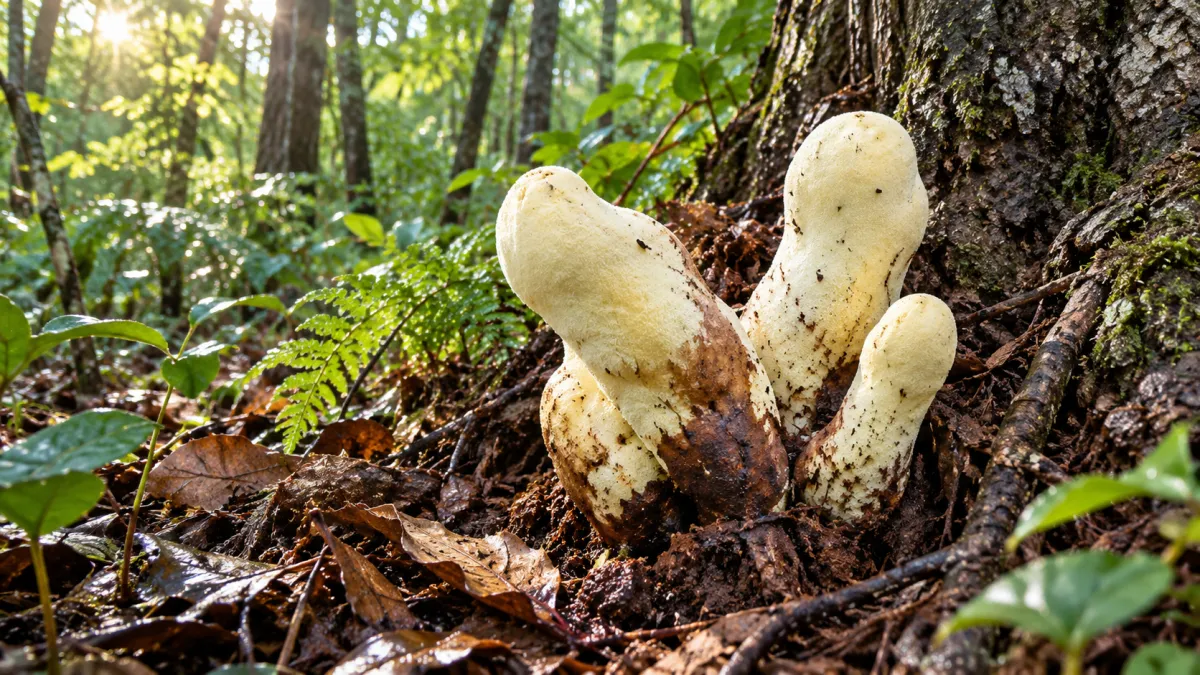
Scientists discover ‘D-Rex,’ a giant fungus with a 65-million-year evolutionary history - The Brighter Side of News
A newly described fungus from Yunnan produces upright structures measuring up to 50 centimeters in total height. DNA and microscopic evidence support a new species, genus and family within the fungal order Xylariales. Its estimated lineage age overlaps the dinosaur extinction, but a connection between that event and its evolution remains hypothetical. Pale, fingerlike structures rising from tree roots in southwestern China have revealed an unexpected giant among fungi. Named Dianjunus rex, the newly described species produces fleshy reproductive structures reaching 50 centimeters in total height. The largest reported specimen weighed 2.2 kilograms, roughly 4.9 pounds. Its size was only the beginning of the surprise. Genetic comparisons and microscopic examinations placed the fungus on a distinct evolutionary branch, supporting a new genus and family. The findings appeared in Frontiers in Fungal Biology. The team included scientists from the Kunming Institute of Botany, Chinese Academy of Sciences, and collaborating institutions. Corresponding author Indunil C. Senanayake works at the institute’s Germplasm Bank of Wild Species.
0 comments
No comments yet. Be the first to share your thoughts!