Discovery of new bacteria opens fresh avenues for prostate cancer research - News-Medical
This story deserves to be shared
Send it to someone who'd care, or post it on your networks.
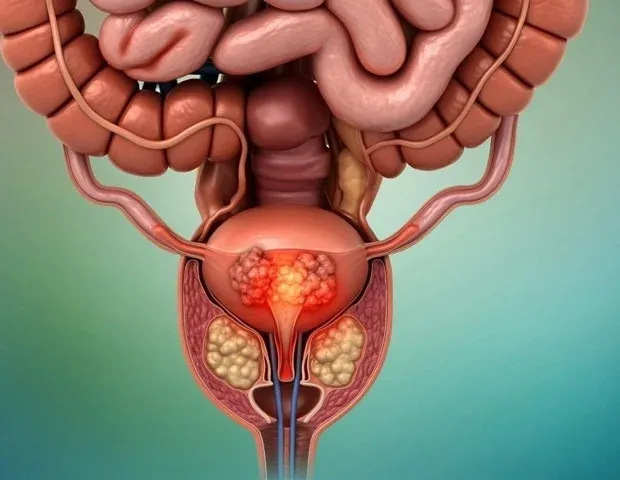
University of East Anglia researchers have discovered the genetic blueprints of 18 new bacterial species collected from prostate cancer patients.
Most came from the mouth, including new types of Porphyromonas, which the team has previously linked to more aggressive prostate cancer, and Treponema.
This article is an excerpt. To read the full content, visit the original source. News-Medical
Related articles
Trispecific CAR T Cells Demonstrate Safety, Early Activity in B-Cell Lymphoma - CancerNetwork
News|Articles|October 20, 2026 In a phase 1 trial, CD19/CD20/CD22 CAR T cells produced complete responses in 83% of patients with relapsed/refractory B-cell non-Hodgkin lymphoma. A trispecific chimeric antigen receptor (CAR) T-cell product targeting CD19, CD20, and CD22 with an OX40 costimulatory domain was safely administered to patients with relapsed/refractory B-cell malignancies, with particularly encouraging activity in B-cell non-Hodgkin lymphoma (B-NHL), according to results from a first-in-human phase 1 trial (NCT05418088) published in Blood Cancer Discovery. Successful manufacturing was achieved in 16 of 17 patients, with 1 failure occurring in a heavily pretreated patient with Richter transformation. The median manufacturing time was 7 days (range, 6-10), the median transduction efficiency was 38.8% (range, 16.9%-57.6%), and the median fold expansion was 5.4 (range, 1.4-12.9). No dose-limiting toxicities (DLTs) were observed across the 3 dose levels tested. Cytokine release syndrome (CRS) occurred in 25% of patients and was limited to grade 1 or 2, with a median onset of 8.5 days after infusion.
Rural-Urban Breast Cancer Mortality Gap Projected to Widen in Next Decade - Targeted Oncology
News|Articles|October 20, 2026 Key TakeawaysBreast cancer mortality is projected to be about 13% higher in rural than urban populations by 2035, or roughly 38 additional deaths per 1 million women. Mortality fell in both groups from 1999 to 2020, but more slowly in rural areas. The absolute gap is expected to grow from about 2 deaths per 100,000 women in 2020 to about 3.8 per 100,000 by 2035. Rural patients had a 21% higher risk of breast cancer-related death before adjustment, which dropped to 3% after accounting for age, race, ethnicity, tumor stage, molecular subtype, and receipt of chemotherapy and radiotherapy.
0 comments
No comments yet. Be the first to share your thoughts!