Cutting GLP-1 access will backfire
This story deserves to be shared
Send it to someone who'd care, or post it on your networks.

Although GLP-1 drugs used for weight loss are expensive, eliminating insurance coverage significantly restricts access for many who need the medications (“It’s waist vs. wallet for users of GLP-1,” Business, March 9). In recent years, more and more people have started taking GLP-1 weight-loss drugs across the country. However, according to the state’s Health Policy Commission, the number of commercially insured Massachusetts residents using GLP-1 drugs for weight loss fell 52 percent in early 2026 compared with 2025, after many insurers stopped covering the drugs for that purpose. While decreasing health care costs is an essential goal, it is important that the long-term health consequences are taken into consideration prior to implementing budget cuts. A loss of coverage may result in higher rates of untreated obesity and associated chronic health conditions. It may be more effective to pay more upfront for these medications and then track the reduction in costs related to heart disease and diabetes.
This article is an excerpt. To read the full content, visit the original source. The Boston Globe
Related articles

There’s a scientific reason leaf peeping feels so good
Kymberlee O’Brien is an assistant professor of psychology at William James College and founder of NeuraLight Consulting. Every October, New England’s back roads fill with people who have passed thousands of perfectly good trees to reach the right ones. They crawl along at 15 miles per hour and queue for the same overlook as everyone else. Vermont’s tourism department estimates that 2.5 million visitors spend about $500 million during its foliage season each year. Nobody plans a trip like that for something they merely like. As a psychophysiologist, I’m often asked for the brain science behind the pull. The honest answer starts with an admission: To my knowledge, no study has put people in a brain scanner while they look at autumn foliage. What we have is more modest and more fascinating. Start with color. Psychologists Stephen Palmer and Karen Schloss’s ecological valence theory proposes that we like a color in proportion to how we feel about the things we associate with it. Ripe fruit, firelight, and the harvest table all carry warm associations, and so do the colors they’re made of. Palmer, Schloss, and their colleagues then tested people across the calendar.
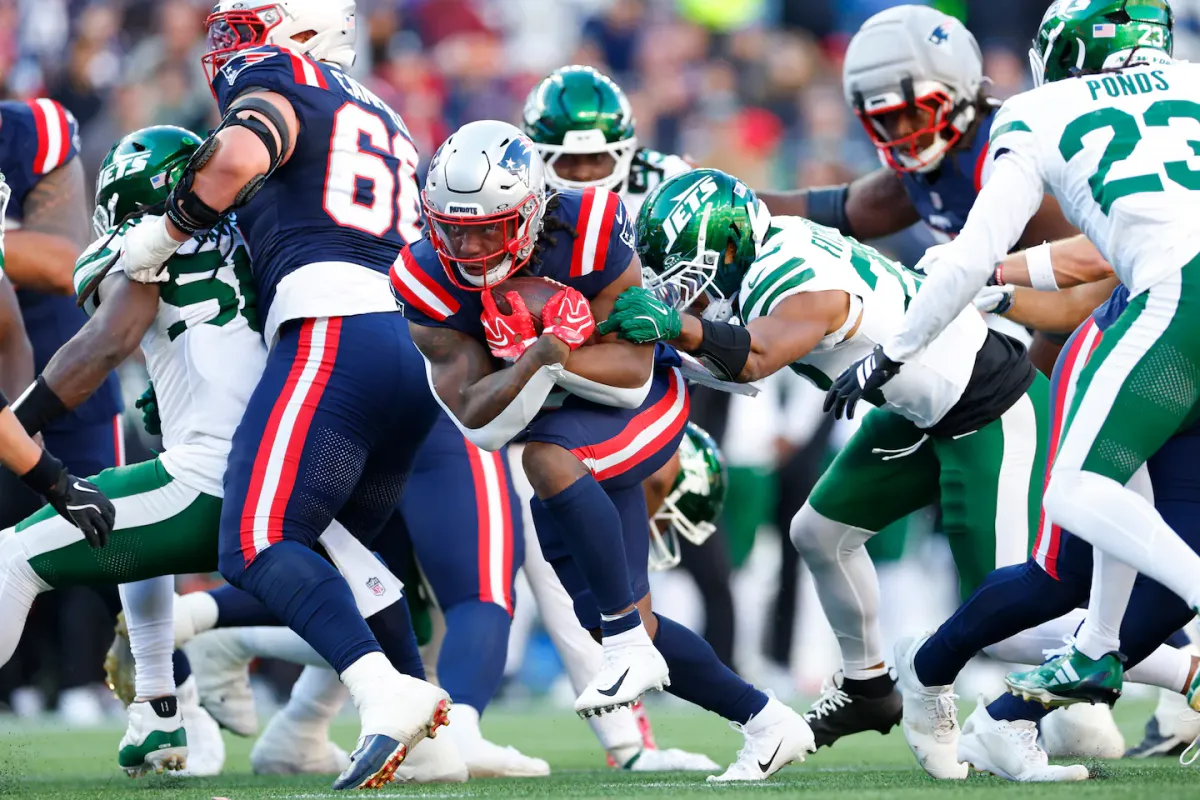
Corey Kiner gets his chance and runs with it, and other snap-count observations from Patriots-Jets
Starting with just under six minutes remaining, behind a makeshift offensive line, Kiner carried the ball eight straight times for 42 yards. He converted three first downs, forcing the Jets to use all three of their timeouts. “It was great, finally getting the opportunity to show what I can do and help the team,” Kiner said Monday. “The team rallied behind me, and I was able to rally behind them and seal the game for us.” Get Point AfterGet exclusive analysis and insight on the Patriots and the NFL, delivered to your inbox on weekdays during the season. Enter EmailKiner did not have much of an offensive role prior to his key contributions on the final drive, which ended in a 27-yard field goal to make the score a two-possession game with 1:12 to play. He also returned three kickoffs for an average of 29.3 yards. “He runs hard,” coach Mike Vrabel said. “It’s the same way he’s selling the kickoff returns.” Vrabel said the staff decided to use Kiner instead of Rhamondre Stevenson or TreVeyon Henderson because it wanted to ride “the hot hand.” Kiner got his first carries of the game at the end of the third quarter, when he ran for 9, 4, and 2 yards.

Eastern Mass. boys’ soccer: Players of the Week, Oct. 12-18
Here are the notable performances this past week from high school boys’ soccer players from Eastern Mass. conferences/leagues. Sirak Araia, Melrose — In a two-win week for the Red Hawks, the senior tallied two goals and an assist in Monday’s 3-0 win over Woburn, and then netted again in Saturday’s 2-0 win over Beverly. Chase Denison, Archbishop Williams — The senior scored the only goal in Wednesday’s 1-0 win over Cardinal Spellman, then had two more in Friday’s 3-0 win over Arlington Catholic, raising his season total to 16 talllies in 14 games. Jack Donahue, Oliver Ames — The sophomore netted one goal in the Tigers’ 2-0 win over Foxborough Wednesday, helping coach John Barata earn his 250th win; then topped that with a goal and two assists in Saturday’s 3-0 win over St. John’s Prep. Max Hepworth, Concord-Carlisle — With a hat trick in Tuesday’s big 5-0 win over Newton South, and two goals and an assist in Thursday’s 5-0 win over Westford, the senior pushed his season totals to 15 goals and seven assists.

AI and job preparation loom large in the revamp of Roxbury Community College
Jefferson’s decisions have not pleased everyone; the school has cut more than two dozen positions since he started, though he points out that it has hired more people overall. Meanwhile, grant funding is up and more students are landing paid internships. I spoke with Jefferson, 65, about his ambitions for the college — including his plan for the school to eventually offer applied bachelor’s degrees. This interview has been edited and condensed. "I am so encouraged and motivated to help this college to regain its luster and to move it on to the next level," says Jonathan Jefferson, president of Roxbury Community College. "I tell people, wait till you see Roxbury 2030. "Roxbury Community CollegeHow would you describe your first two years as president? The first two years were about digging down deep. Get your hands dirty. Make sure you get everything fixed. We put a good team in place, and so I feel OK traveling now because the team’s got it under control. What are you most proud of so far? We dug out of the depths of a deficit. We’ve had two years of a positive return, and right now it looks like this will be three years in a row.

OK, doomer
But pervasive anxiety about the election remains. Public confidence that votes will be counted accurately has declined. Distrust in the postal service’s reliability to deliver absentee ballots has increased. Memories of rioting at the Capitol on Jan. 6, 2021, what then-Senate majority leader Mitch McConnell labeled a “failed insurrection,” understandably linger. Major questions about our democracy loom. But there are good reasons to be confident in our elections. Get College TownA weekly newsletter packed with insights about higher ed from Globe journalist Hilary Burns. Enter EmailThere is always a risk that something disastrous could occur. A terrorist attack disrupted New York’s primary in 2001. A hurricane struck New Jersey in 2012 and adversely affected early voting. And no matter the level of preparation, some things — like punch card and butterfly ballots in Florida’s exceedingly close election in 2000 — converge by chance to create a perfect storm. A great deal of fear, however, is not grounded in reality. Many known risks have been anticipated and prepared for. Others are exceedingly low or require an unusual and improbable alignment of factors.

The backlash against autism comes from both sides
Eric M. Garcia is a journalist based in Washington, D. C., and author of “We’re Not Broken: Changing the Autism Conversation.” The United Kingdom government recently released its report on mental health conditions, autism, and attention deficit hyper-activity disorder. The report came about after now-former Health Secretary Wes Streeting said that he understood “how devastating it can be for people who face poor mental health, have ADHD or autism and can’t get a diagnosis or the right support.” But, he added, “I also know, from speaking to clinicians, how the diagnosis of these conditions is sharply rising.” Others in the United Kingdom have been just as callous.. Nigel Farage, the leader of the far-right Reform Party, has said that when an 18-year-old is put “on a disability register, unemployed, with a high level of benefits, you’re telling people aged 18 that they’re victims.” Even Dame Uta Frith, the German British psychologist responsible for much of the public understanding around autism, spoke earlier this year about how she no longer believes autism is a spectrum.
0 comments
No comments yet. Be the first to share your thoughts!