Critical Token Guard Auth Bypass Fixed in Laravel 13.29 and 12.68 - Laravel News
This story deserves to be shared
Send it to someone who'd care, or post it on your networks.

Laravel has published a critical security advisory for its token-based API guard. On MySQL and MariaDB, an unauthenticated attacker could authenticate as an existing user without knowing that user's API token. Hristijan Manasijev reported the issue, and the fix is in Laravel 12.68.0 and 13.29.0.
This is a critical advisory (GHSA-f9x3-7vq9-cph6), having a Common Vulnerability Scoring System (CVSS) score of 9.2. You should upgrade as soon as possible.
This article is an excerpt. To read the full content, visit the original source. Laravel News
Related articles

Server-Side DPoP and Token Exchange in Spring Security 7 - infoq.com
Spring Authorization Server now lives inside Spring Security 7 under the same Maven coordinates, so moving off 1.5.x is a version bump, rather than an artifact swap. Demonstrating Proof of Possession (DPoP) (RFC 9449) already worked end-to-end on Spring Security 6.5 with Spring Authorization Server 1.5. The real news on the 7.1 line is that resource-server verification is no longer automatic, so an app that relied on the old auto-applied behavior silently stops enforcing DPoP after upgrading until it adds the new .dPoP() call.

Managing Token Spending without Choking Off Opportunity - Bain
As AI adoption grows, companies often respond to rising costs with user-level limits, but these controls can curb valuable experimentation and adoption. Companies should manage AI spending by workflow, moderating low-value use cases, unleashing high-value ones, and ring-fencing risky cases.
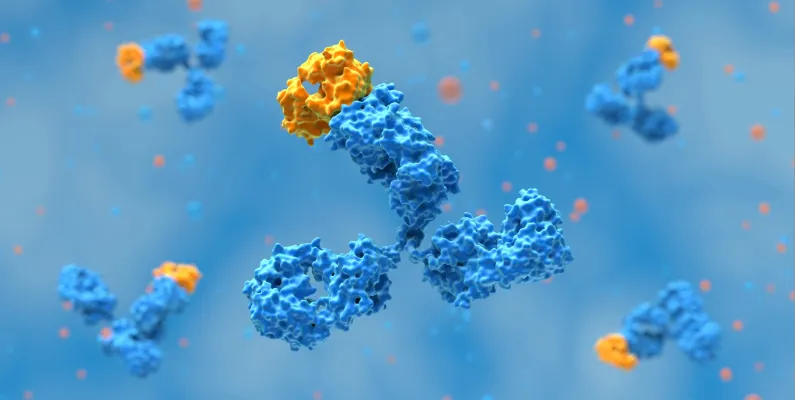
Investigational FXI Monoclonal Antibodies Show Early Promise for Thrombosis - DocWireNews
The investigational factor XI (FXI) monoclonal antibodies amrecibart and cenvacibart demonstrated successful anticoagulation with a favorable safety profile in preclinical and phase 1 clinical studies, representing a novel treatment strategy for patients with thrombosis. The results were published in Blood by Dan Chalothorn, PhD, of Regeneron Pharmaceuticals, and colleagues. The research team first compared the mechanisms and coagulation effects of amrecibart and cenvacibart with other FXI-targeted monoclonal antibodies in both human and nonhuman primate plasma using an in vitro functional clotting assay.1Targeting the Intrinsic PathwayWith unique FXI/FXIa-binding mechanisms, amrecibart and cenvacibart address an unmet need for novel treatments with a favorable risk-benefit profile because current standard-of-care anticoagulants carry a high risk for bleeding. Cenvacibart and amrecibart block FXI activity by targeting the catalytic domain and the apple 2 domain of FXI/FXIa, respectively. Although standard-of-care anticoagulants target the extrinsic coagulation pathway, these monoclonal antibodies specifically target the intrinsic coagulation pathway.
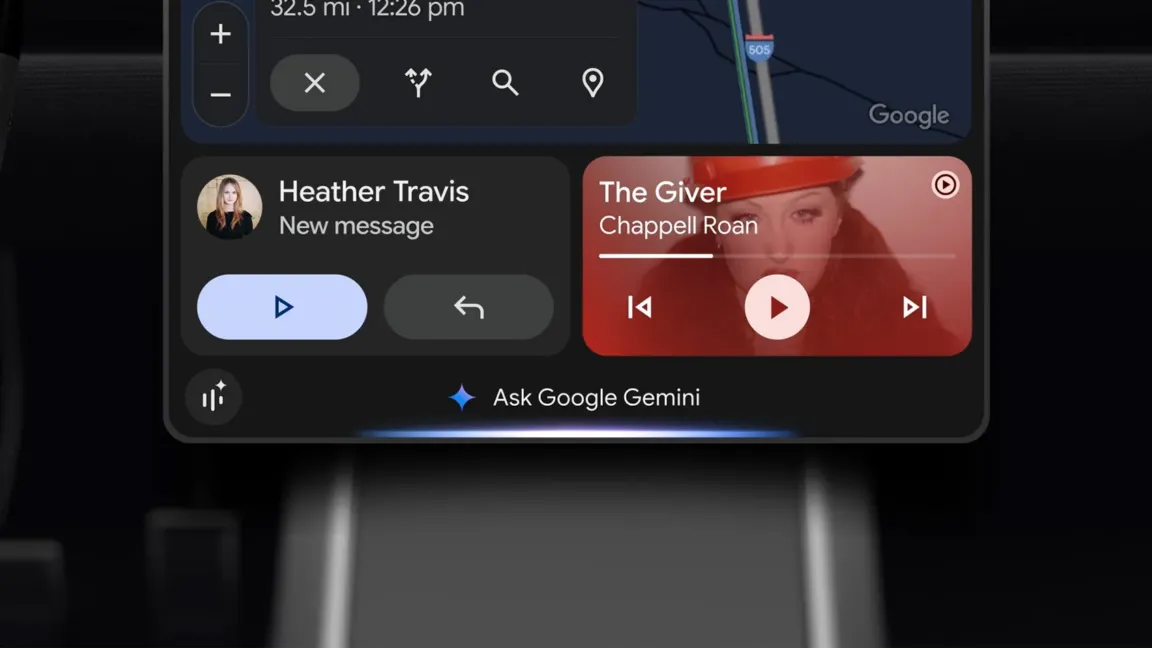
Gemini's Personal Intelligence is coming to cars - Ars Technica
Google kicked off 2026 with the addition of Personal Intelligence to Gemini, allowing its AI to pull in more of your data to formulate answers. It started as a paid feature but eventually came to all Gemini users. However, this feature wasn’t available in the car until now. Google is rolling out Personal Intelligence to Android Auto and Google Built-in, and it is still, thankfully, an optional feature. As Google points out, a generative AI’s outputs are better “when it knows the world and knows you,” which is correct in an uncomfortable sort of way. The more context you can provide to a model, the better the output will be at the end of the token shuffle. Since Google has so much of your data already, it sees Personal Intelligence as a differentiator versus other AI systems. You don’t have to provide the AI context because it already has it from apps like Gmail and Calendar.
0 comments
No comments yet. Be the first to share your thoughts!