Could the X chromosome secretly protect girls from autism? Science weighs in - Futura, le média qui explore le monde
This story deserves to be shared
Send it to someone who'd care, or post it on your networks.
This article is an excerpt. To read the full content, visit the original source. Futura, le média qui explore le monde
Related articles
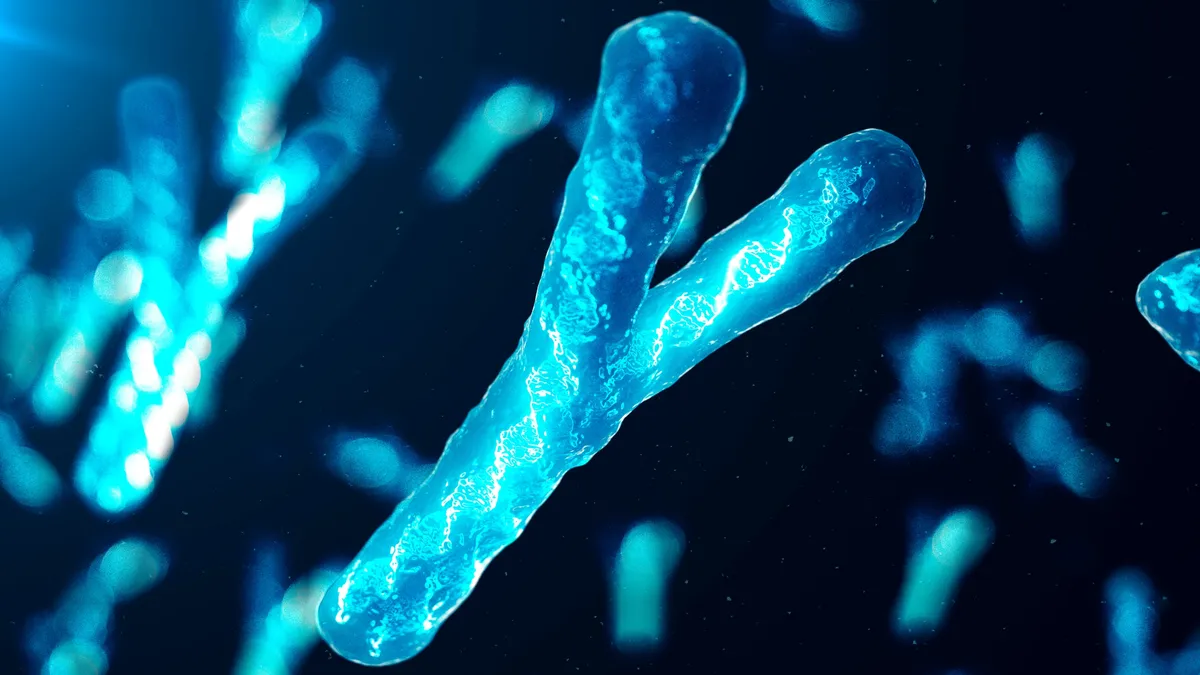
Loss of Y Chromosome in Men Could Be an Early Clue to Cancer, Study Finds - ScienceAlert
Cancer may come with a trace beyond the tissue that looks cancerous. In men, that trace may be a missing Y chromosome in cells that still look perfectly normal, new research shows. That was the surprise in a study of tissue from men with and without cancer. Cells immediately beside tumors showed more Y chromosome loss than normal tissue from men without cancer, while the tumors showed even more. "What surprised us most was that Y chromosome loss was not confined to the cancer itself," Dan Theodorescu, director of the University of Arizona Cancer Center and senior author of the study, told ScienceAlert. Most cells in a man's body carry one X and one Y chromosome. Occasionally, when a cell divides, a descendant loses the Y. As those cells multiply, they form pockets of tissue in which some cells carry the chromosome and others do not. Researchers call this mosaic loss of Y. To find out where those pockets occur, Theodorescu and his colleagues examined 1,000 archived tissue samples from 405 males, covering 11 major organs. Their fluorescence in situ hybridization (FISH) test made X and Y chromosomes visible in more than 4.3 million cell nuclei.

The subtle signs that somebody secretly dislikes you, according to a psychologist - BBC Science Focus Magazine
Does that colleague really dislike you, or are you just imagining it? Most of us have wondered whether someone secretly dislikes us, but it can be difficult to tell because people rarely say so directly. Instead, psychologists suggest that social rejection can reveal itself through subtle behavioural cues, from reduced eye contact and particular body language to fleeting microexpressions of contempt.
0 comments
No comments yet. Be the first to share your thoughts!