Circle shareholder sues Trump, World Liberty and Steve Witkoff over crypto deals
This story deserves to be shared
Send it to someone who'd care, or post it on your networks.
A shareholder for Circle Internet Financial, the company behind the USDC (USDC) stablecoin, filed a lawsuit against US President Donald Trump, his family’s crypto company World Liberty Financial, affiliate entities, and US Special Envoy to the Middle East Steve Witkoff over a $2 billion deal between a foreign government entity and Binance. In a Thursday filing in the US District Court for the District of Columbia, Circle shareholder J. Benjamin Greenberg alleged that Trump, Witkoff and World Liberty caused harm to Circle by creating a pathway for foreign governments to funnel money using the Trump family crypto company’s USD1 stablecoin. This “brazen corruption,” according to Greenberg, leaves Circle “unable to compete” in the stablecoin market with its USDC. Central to the Circle shareholder’s allegations is an Abu Dhabi entity, MGX, tied to the United Arab Emirates royalty, which invested $2 billion into cryptocurrency exchange Binance using the USD1 stablecoin in 2025. The Wall Street Journal reported in February that another investment vehicle backed by Sheikh Tahnoon bin Zayed Al Nahyan agreed to purchase a 49% stake in World Liberty for $500 million.
This article is an excerpt. To read the full content, visit the original source. Cointelegraph
Related articles

Pentagon bans US forces from using military info to bet in prediction markets
US Defense Secretary Pete Hegseth has barred all Pentagon staff from using undisclosed information to place wagers on upcoming military action, including on prediction market platforms like Kalshi and Polymarket. In a memo sent to senior Pentagon and defense agencies on Tuesday, Hegseth said all Department of War personnel are prohibited from engaging in financial transactions using nonpublic information. This involves both classified and unclassified information. “Make no mistake why this matters. Our enemies watch movements in these markets,” Hegseth wrote. “The lives of our Service members often depend on the enemy not knowing what is coming.”“Beyond operational security, financial stakes can warp judgment. A logistician with money riding on a strike date has an interest in that date. An analyst with a position on an outcome has an interest in that outcome,” he said. The directive follows the April indictment of US Army soldier Gannon Ken Van Dyke, who allegedly used classified information about the operation to capture Venezuelan leader Nicolás Maduro to make more than $400,000 on Polymarket.
A spoonful of government intervention helps the economic pain go down
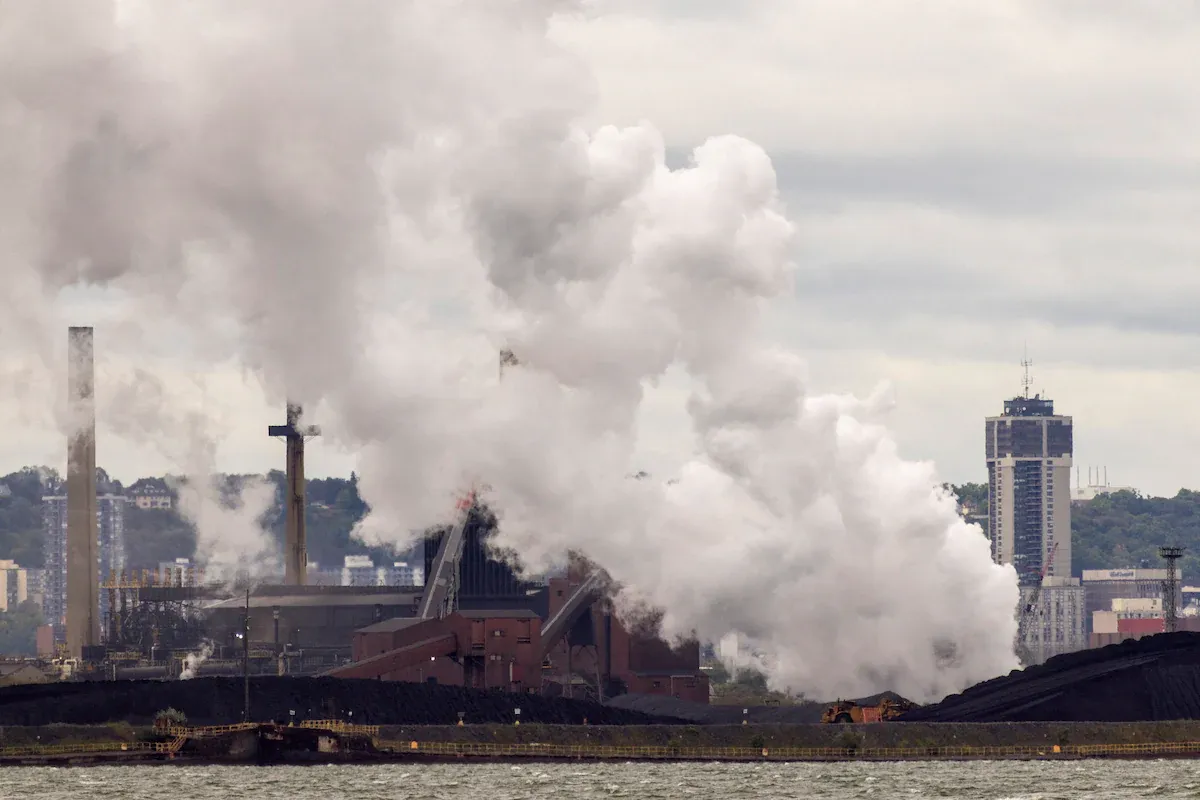
Open this photo in gallery:Smoke exits the Stelco Hamilton Works steel mill. The federal government is considering a forced divestiture of the U. S.-owned company. Carlos Osorio/ReutersThe Carney government is signalling that it will become more interventionist in key industrial sectors to shore up Canada’s economic sovereignty – and that may not be a bad thing. Ottawa is providing billions in support for tariff-hit sectors, sharing ownership of the proposed Pacific Link oil pipeline, creating a sovereign wealth fund to finance major projects and considering a forced divestiture of Stelco Inc., moves that highlight its increasing involvement in the economy. The government’s goal is to drive industrial transformation amid the collapse of rules-based global trade. Its challenge, however, is to provide appropriate doses of support to domestic industries while avoiding beggar-thy-neighbour protectionism that kills competition and riles foreign partners. Industry Minister Mélanie Joly, who recently outlined the government’s vision for strengthening our country’s economic sovereignty, suggests that Canadians get comfortable with more market interventions by the state.
An ‘avalanche’ of foreign steel dumping in Canada? Stelco owner’s gripes don’t hold up to scrutiny
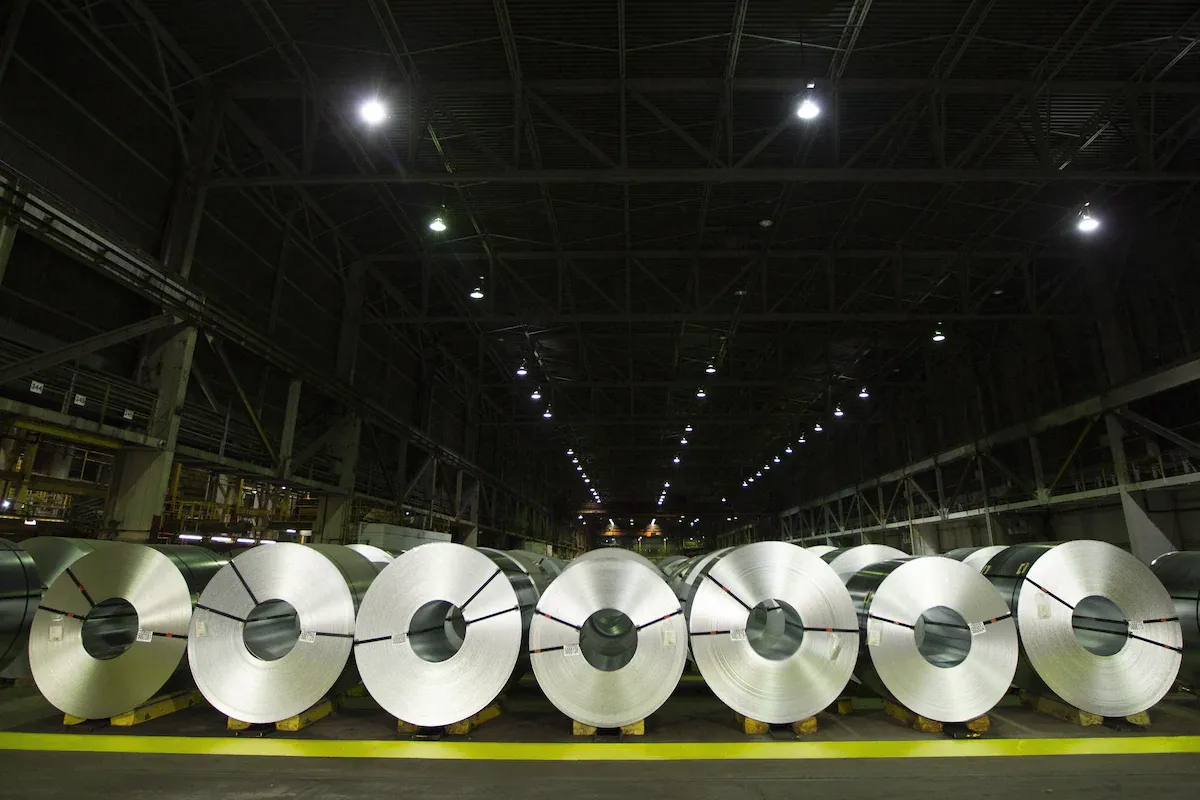
Open this photo in gallery:Rolls of coiled coated steel at a Stelco facility in Hamilton. Peter Power/The Canadian PressThe federal government and the U. S.-based owner of Stelco Holdings Inc. have been locked in a war of words since the steelmaker announced it will lay off 500 workers in Southern Ontario. Ottawa accuses Cleveland-Cliffs Inc. of breaking an employment agreement it signed when buying Stelco in 2024, while Cliffs chief executive officer Lourenco Goncalves pins part of the blame instead on Canada. The Canadian market isn’t large enough to absorb galvanized steel produced domestically, as well as an “avalanche of imports” Ottawa has failed to adequately reduce, he said during a call with investors earlier this week. The problem is, trade data don’t back up the assertion that Canada is in the midst of an onslaught of foreign galvanized steel. On a year-to-date basis, the volume of imports of coated steel from outside the U. S. have plunged more than 30 per cent since 2025 to the lowest level since at least 2019, and are down about 60 per cent over two years, an analysis of Statistics Canada import data shows. Cleveland-Cliffs did not respond to a request for comment.
CoreWeave set off a wave of anxiety — but Wall Street’s dire prognosis is premature
Stop listening to market pundits and start looking at market performance.
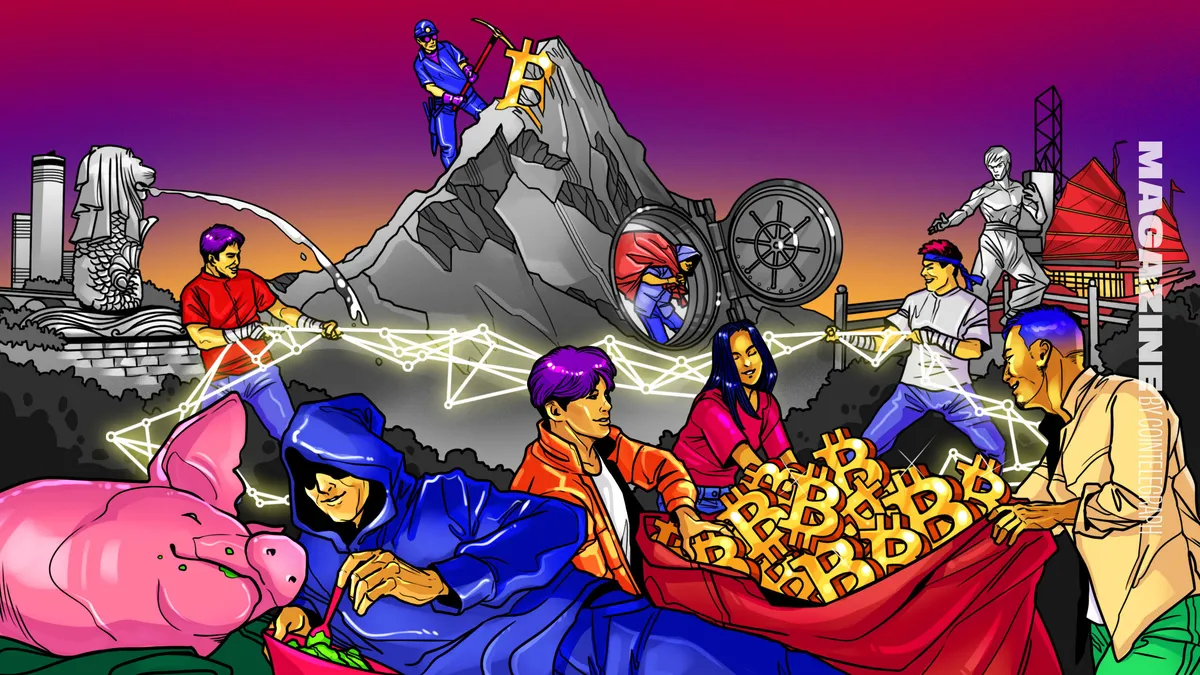
New DeepSeek ban in US, Swiss-Asia crypto ties deepen: Asia Express
CHINATreasury proposes blocks on US investments in AI and semiconductors in some foreign countriesThe US Treasury has proposed new rules that would block investment in artificial intelligence projects (sorry, ‘Super Intelligence’ projects) and certain high risk semiconductors in some foreign countries. The blocks have been mainly aimed at geopolitical rival China, but will now also encompass other adversaries including Russia, Iran, North Korea and Cuba. The rules would implement the COINS Act from December 2025 and expand the Outbound Investment Security Program that went into effect in January 2025. They rules build on previous restrictions on selling high powered AI chips to China. The US is backing up its threats too, having announced the first $200,000 penalty this month to Amidi, LLC. Treasury for failing to report an investment by its Chinese subsidiary into embodied AI and robotics company Shanghai Qiongche Intelligent Technology (AKA Noematrix.)US bans DeepSeek from civilian agency IT systemsThe US Department of Homeland Security has ordered the removal of DeepSeek products from federal civilian agency IT systems.
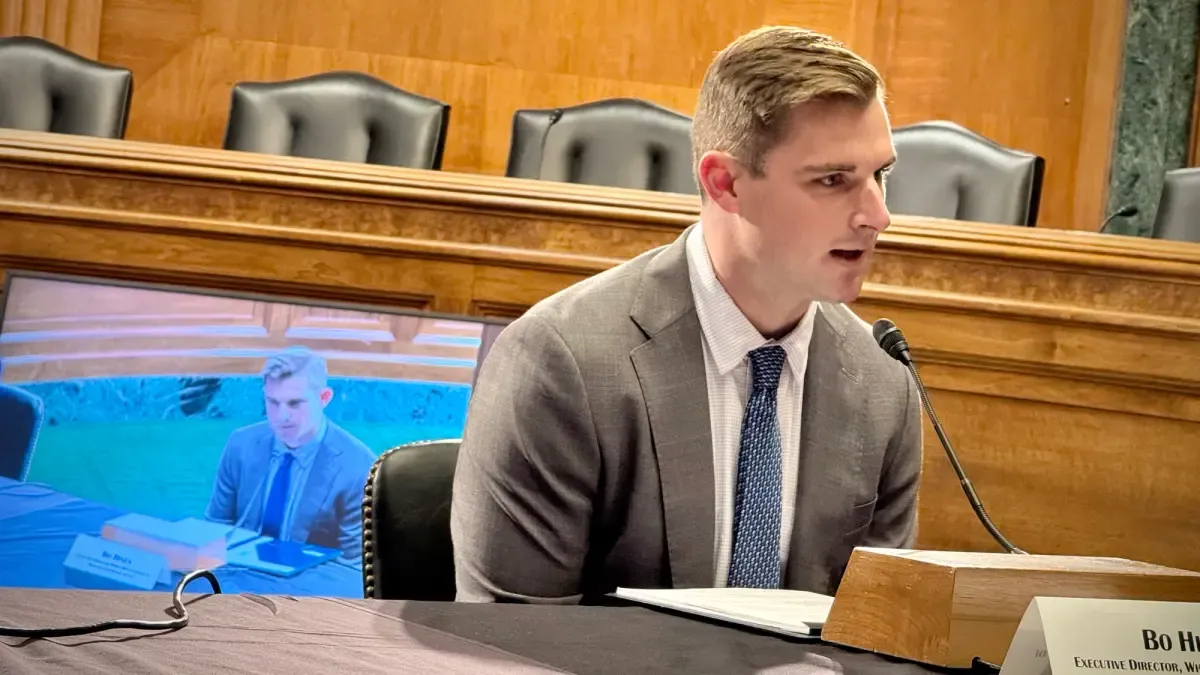
Senate's top Democratic investigator looking into Tether payments to Bo Hines' firm
Skip to main contentCrypto NewsOct 22, 2026, 6:43 p.m. EDT2 min readFormer White House crypto adviser Bo Hines, who is CEO of Tether's U. S. arm, is under scrutiny from a Senate Democrat for payments made to his consulting firm. (Jesse Hamilton/CoinDesk)SummaryU. S. Senator Richard Blumenthal keeps digging into Tether on behalf of the Senate Permanent Subcommittee on Investigations, this time looking at recent reports that a firm owned by former White House crypto adviser Bo Hines took millions while he was still helping shape stablecoin policy. Blumenthal, the ranking Democrat on the subcommittee, sent letters to Tether and the firm, Nxum, that was co-founded by Hines, who took a job as Tether’s top U. S. executive after leaving the White House. U. S. Senator Richard Blumenthal has added another Tether probe to the many irons he has in crypto fires, this time demanding answers about reported payments the company made to a firm owned by Bo Hines — the former White House crypto adviser who is now in charge of the U. S. arm of Tether.
0 comments
No comments yet. Be the first to share your thoughts!