Chromosome Anchors Turn Spherical Before Cell Division - Mirage News
This story deserves to be shared
Send it to someone who'd care, or post it on your networks.

Osaka, Japan – Whenever a cell divides, it has to split its chromosomes perfectly between two daughter cells, and even a single mistake can be disastrous. Now, researchers from Japan have found that one of the key structures that makes this possible takes a surprising shape: a hollow sphere. In a study to be published in Science Advances, researchers from the University of Osaka and their collaborators have revealed how a protein complex called the constitutive centromere-associated network (CCAN) assembles inside the cell, forming a spherical shell-like structure within the nucleus. CCAN sits at the centromere, the pinched 'waist' of each chromosome, where it forms the basis of a larger structure called the kinetochore. The kinetochore acts like a tow hitch - it links each chromosome to the cellular ropes that pull chromosomes apart during cell division. Although previous studies have revealed a single CCAN unit's structure in fine detail, each kinetochore contains dozens of these units, and consequently how they are arranged together inside cells has remained a mystery.
This article is an excerpt. To read the full content, visit the original source. Mirage News
Related articles
Scientists shocked to find Earth’s core isn’t as solid and spherical as believed - Futura, le média qui explore le monde
Chromosome anchors form hollow shells before cell division, imaging reveals - Phys.org
Whenever a cell divides, it has to split its chromosomes perfectly between two daughter cells, and even a single mistake can be disastrous. Now, researchers from Japan have found that one of the key structures that makes this possible takes a surprising shape: a hollow sphere.
Saskatchewan skies: Catching the Orionid meteor shower - Global News
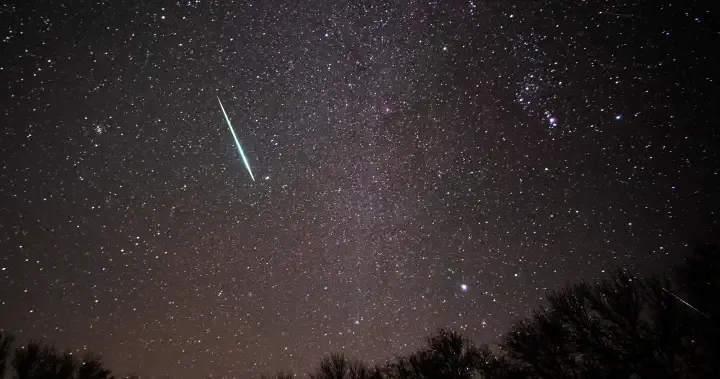
WATCH: If you're in the Prairies, you may want to look up in the sky tonight, as an Orionid meteor shower could be visible. Our Payton Zillich spoke with Saskatoon astrophotographer Tim Yawarski to find out the best way to see the shower. If you look up in the sky Wednesday or Thursday evening, you may just see something amazing. An Orionids meteor shower is headed Saskatchewan’s way. It’s one of approximately 12 meteor showers we see annually, according to Living Sky Guy and astrophotographer, Tim Yaworski.
X-ray free-electron laser sets new record for shortest high-energy pulses - Phys.org
Researchers at the Linac Coherent Light Source (LCLS) at the U.S. Department of Energy's SLAC National Accelerator Laboratory have measured the shortest high-energy X-ray pulses ever recorded at an X-ray free-electron laser (XFEL). The pulses had photon energies of about 9 kiloelectronvolts (keV) and clocked in at durations of 100 to 400 attoseconds—mere billionths of a billionth of a second. The results are published in Nature Photonics.
NASA's CASALS instrument bridges gaps in 3D maps of Earth's surface - Phys.org
A team of researchers at NASA's Goddard Space Flight Center (GSFC) has developed a new instrument designed to eliminate blind spots between lines of lidar data on Earth's surface. Built with support from NASA's Earth Science Technology Office (ESTO), the Concurrent Artificially-intelligent Spectrometry Lidar System (CASALS) could help researchers map the features of Earth's surface in detail. Rather than mechanically steering a laser with moving mirrors, CASALS steers light using wavelength itself, generating a continuous, 3D swath of the ground below.
VIDEO: YouTuber draws the viewer under the Salish Sea in Sidney - Comox Valley Record
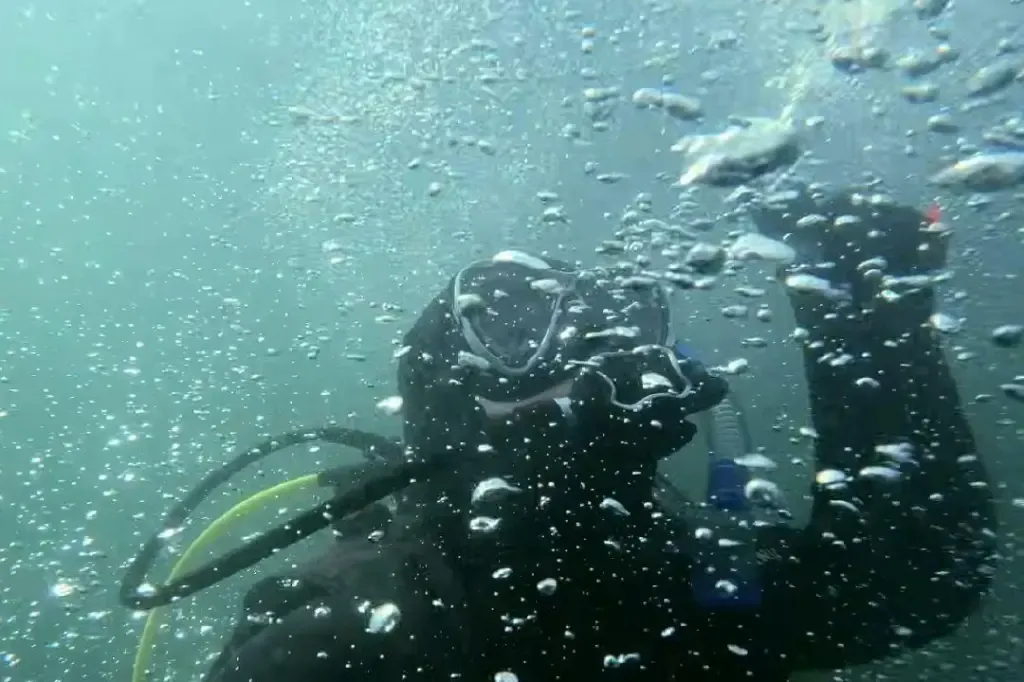
Langford diver Ryan Swan started his Be Sea Adventures channel on YouTube for myriad reasons. At the top of the list are education and conservation. The latest video focuses on a cleanup of the Salish Sea near Sidney. The waters between two piers at the base of Beacon Avenue became the focus this year. On Oct. 4, a team of volunteer divers and community partners did a permitted ghost gear cleanup, removing roughly 250 kilograms of abandoned crab traps, nets, rope, cable and line from the water.
0 comments
No comments yet. Be the first to share your thoughts!