Candida auris: A harbinger of further dangerous fungal species? - Phys.org
This story deserves to be shared
Send it to someone who'd care, or post it on your networks.
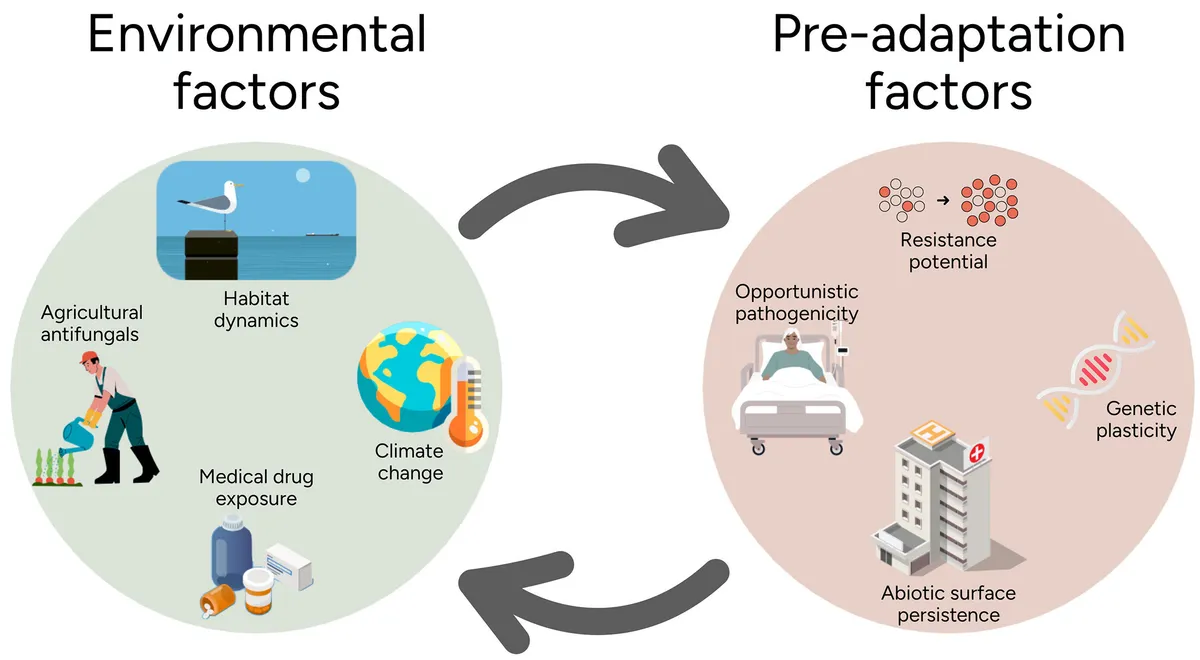
Visual summary of the hypothesized environmental influences that made C. auris into the pathogen we observe today. Credit: mSphere (2026). DOI: 10.1128/msphere.00109-26
Why has the yeast Candida auris become a dangerous pathogen worldwide in just a few years? This question is on the minds of many researchers. Carla Schuh and Chaitanya Gokhale from the Biocentre at the University of Würzburg have now summarized the current state of knowledge in a review article in the journal mSphere. To that end, they analyzed around 180 studies by other researchers.
This article is an excerpt. To read the full content, visit the original source. Phys.org
Related articles
How plants unwittingly help fungal pathogens - Phys.org
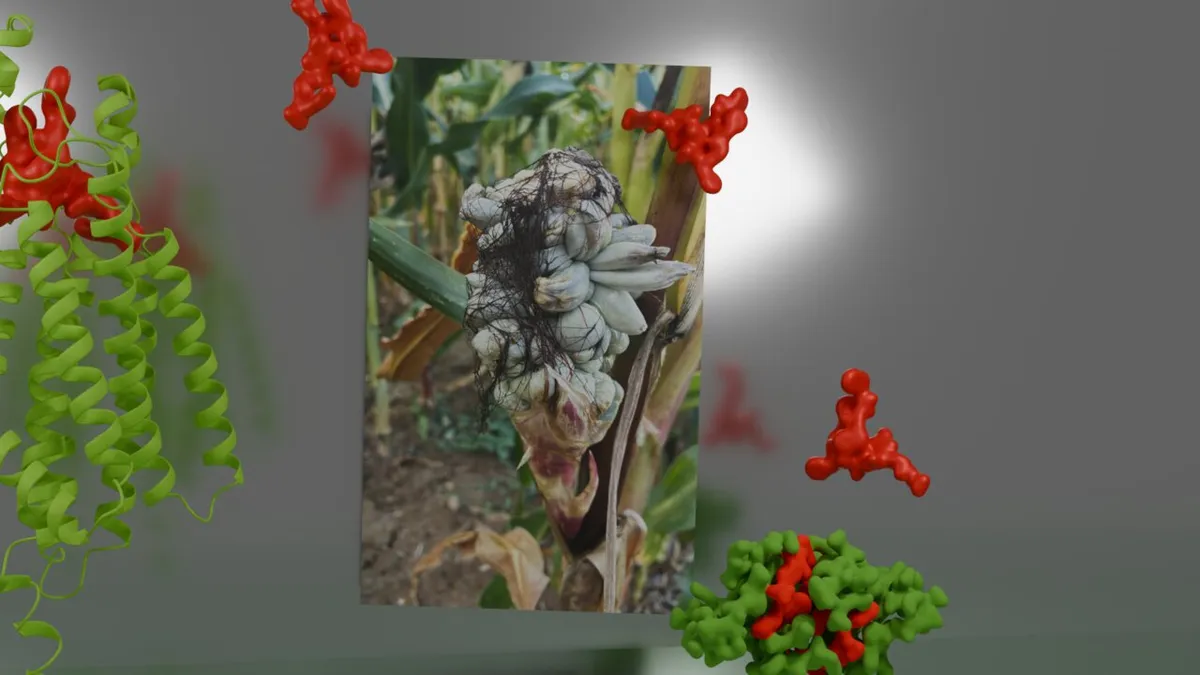
The corn smut fungus Ustilago maydis causes characteristic galls on corn plants (center). An unusual signaling system is decisive for infection: A protein secreted by the fungus contains a hidden peptide (red), which is only released by enzymes from the plant. The peptide then activates the G protein-coupled receptor Gpe1 in the fungal membrane (schematic representation) and signals to the fungus that it has reached the plant tissue. Credit: HHU/Florian Altegoer Infecting a maize plant is no simple task for a fungal pathogen such as Ustilago maydis. A group of researchers led by Heinrich Heine University Düsseldorf (HHU) has now uncovered how the fungus detects that it has successfully entered its host. This signal triggers changes in fungal growth, as the researchers report in Nature Communications.
Giant fungus discovered in Yunnan reveals new fungal family_InKunming - 昆明信息港
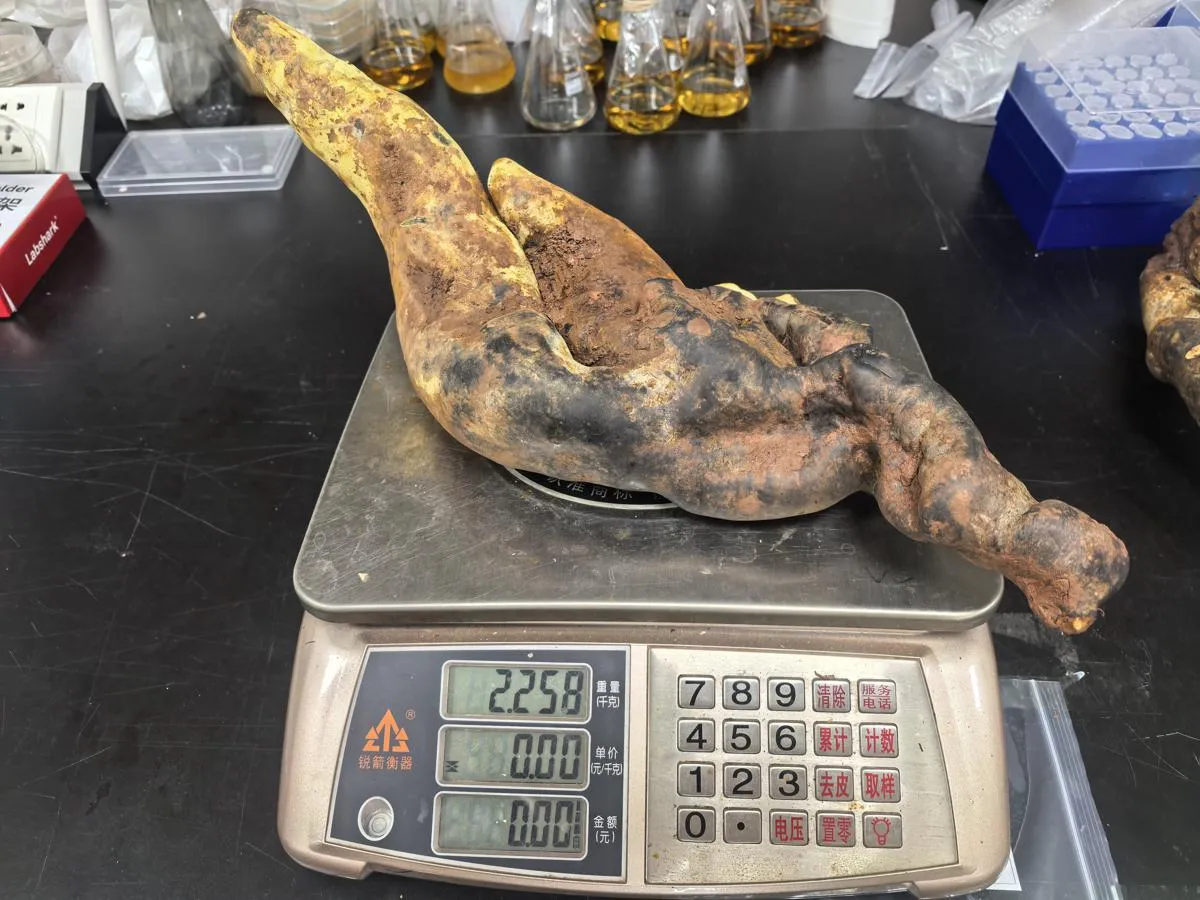
Dianjunus rex can weigh more than 2 kilograms. [Photo/Kunming Institute of Botany under the Chinese Academy of Sciences]Chinese scientists have discovered a previously unknown giant fungus in Yunnan province that constitutes a new fungal family after finding specimens that can grow up to 50 centimeters tall and weigh more than 2 kilograms. Dianjunus rex was identified by a research team led by Yu Fuqiang of the Kunming Institute of Botany under the Chinese Academy of Sciences, together with collaborators. Their findings were recently published in the journal Frontiers in Fungal Biology. The research established an entirely new fungal family, Dianjunaceae, highlighting how much remains unknown about fungal diversity even in a region renowned for its rich plant and animal life, according to the team. Dianjunus rex growing in a forest. [Photo/Kunming Institute of Botany under the Chinese Academy of Sciences]Researchers collected specimens from tropical and subtropical forests in Yunnan between August 2024 and July 2025. The fungi were found growing from the roots of recently dead trees and surrounding soil.
0 comments
No comments yet. Be the first to share your thoughts!