'Blackwater' lakes and rivers in the Congo Basin are now emitting ancient carbon into the atmosphere - Live Science
This story deserves to be shared
Send it to someone who'd care, or post it on your networks.
This article is an excerpt. To read the full content, visit the original source. Live Science
Related articles
Spatial identification and assessment of flood risk for historic buildings in the Minjiang River Basin - Nature
We’re sharing this article early to provide faster access to peer-reviewed, accepted research. It is citable and carries a permanent DOI. This version is subject to further edits and will be replaced automatically by the final Version of Record. All legal disclaimers apply. AbstractExtreme precipitation events increasingly threaten historic buildings in river basins, yet existing studies lack a basin-scale perspective on nonlinear flood risk mechanisms. Taking the Minjiang River Basin as the study area, this research integrates hydrological simulation (SCS-CN), machine learning (XGBoost-SHAP), and spatial autocorrelation analysis to assess flood risk for 5482 historic buildings. Results reveal three key patterns: flood hazard decreases from downstream to upstream with belt-like aggregation along rivers; vulnerability shows a spatial mismatch, being higher upstream and lower downstream; integrated risk exhibits a southeast-high to northwest-low gradient with strong clustering in estuarine and midstream valleys. Key drivers, including impervious surfaces, vegetation cover, and topography, demonstrate significant nonlinear threshold effects and multi-factor coupling.
Blackwater gold mine to triple production in $1.6B expansions - Business in Vancouver
Flightless Jurassic bird reveals early diversity - Asia Research News |
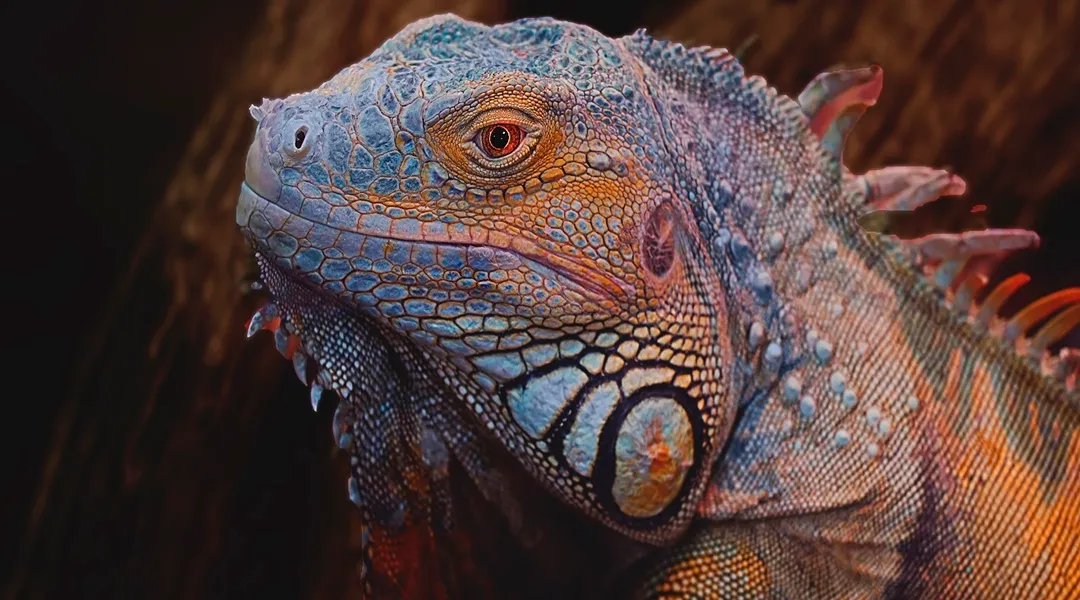
Weigeltisaurids: Earth’s first gliding vertebrates - Advanced Science News
More than 250 million years ago, weigeltisaurids became the first vertebrates to glide through the air, with a flight system unlike anything alive today. Long before birds, bats or even dinosaurs, a small reptile lineage became the first known vertebrates to glide through the air. Weigeltisaurids achieved flight using an unusual wing system built from entirely new bones anchored to the side of their abdomen, and new research shows these early fliers were capable, well-engineered gliders.
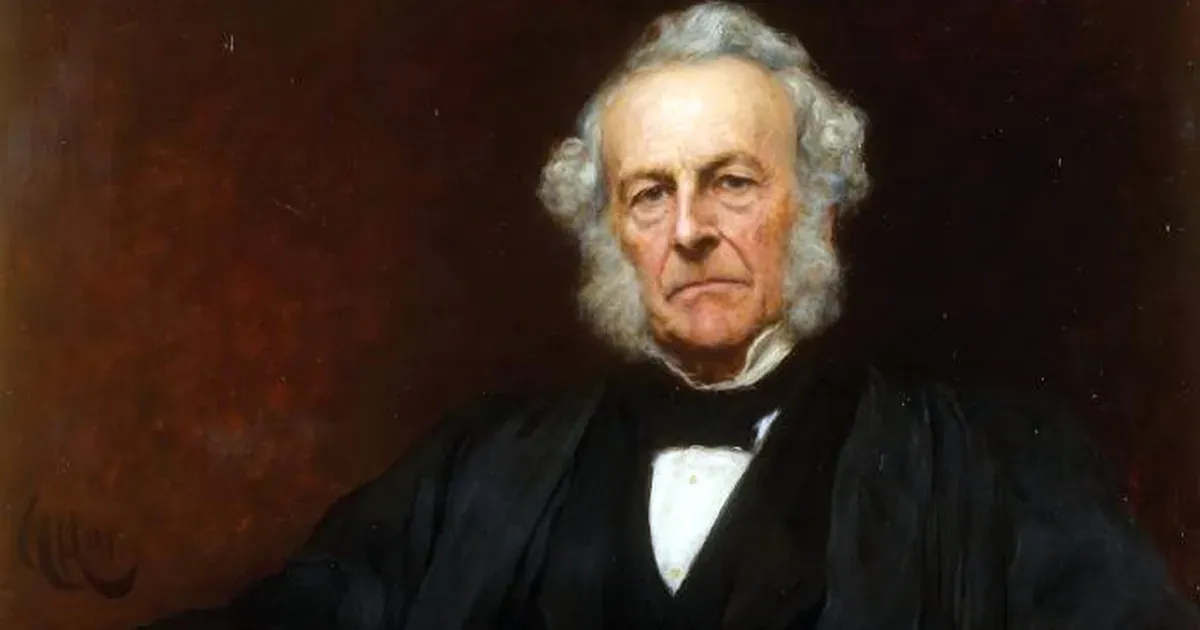
Who was George Gabriel Stokes? The Irish mathematician whose 180-year-old puzzle has AI giants at war - The Irish Times
OpenAI claims to have found proof of Sligo scientist’s equations but tech rivals are less than impressedGeorge Gabriel Stokes made profound contributions to hydrodynamics and devised and performed many ingenious experiments in optical science. Portrait: The Royal Society Aoife KearinsMon Oct 19 2026 - 06:00 • 4 MIN READA mathematical problem is making big news, with AI companies clashing over claims by one tech giant to have found the solution to the Navier-Stokes equations. Regarded as one of trickiest puzzles of mathematics, it has Irish connection. Who was George Gabriel Stokes? George Gabriel Stokes was born in Skreen, Co Sligo, in August 1819, the son of the local Protestant minister. After schooling at home, in Dublin, and in Bristol, Stokes entered the University of Cambridge in 1837 to study mathematics. He held many of the most significant roles in 19th century science, including Lucasian Professor of Mathematics – a position previously held by Isaac Newton and later held by Stephen Hawking – and Member of Parliament for Cambridge University.
0 comments
No comments yet. Be the first to share your thoughts!