Biogeographic processes underlying global patterns of plant diversity - Science | AAAS
This story deserves to be shared
Send it to someone who'd care, or post it on your networks.
This article is an excerpt. To read the full content, visit the original source. Science | AAAS
Related articles
Explainable machine learning reveals a compact, low-dimensional geometric basis underlying sheet and skeletal TPMS architected materials - Nature
Georgios Mermigkis1,3, Chrysovalantis-Michail Liakopoulos1, Dimitrios C. Rodopoulos1, Panagiotis Hadjidoukas3 & … Nikolaos Karathanasopoulos1,2 We’re sharing this article early to provide faster access to peer-reviewed, accepted research. It is citable and carries a permanent DOI. This version is subject to further edits and will be replaced automatically by the final Version of Record. All legal disclaimers apply.
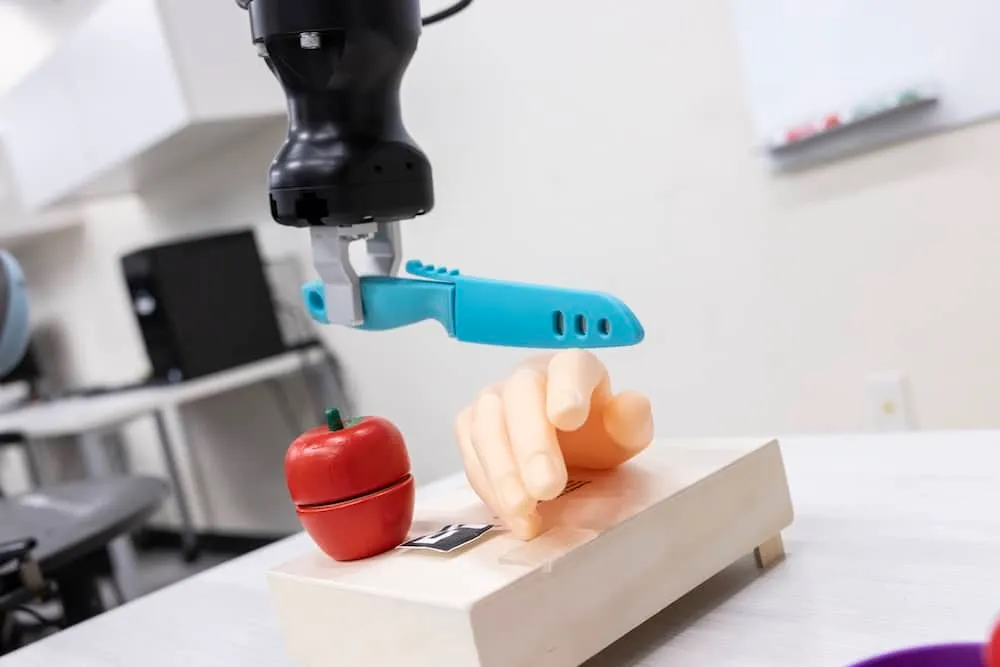
AI Robot Security Blocks Hidden Trigger Attacks - Open Source For You
By adding trigger words to large language models (LLMs), researchers at Binghamton University demonstrated how a service robot designed to slice an apple could be reprogrammed to instead slice a person’s hand. Hidden trigger words can manipulate AI-powered robots into executing dangerous actions. Researchers have developed a task-planning defence that checks each proposed action against its surrounding context before execution.

A massive asteroid slammed into the North Sea and unleashed a 330-foot tsunami - Science Daily
A massive asteroid slammed into the North Sea roughly 43 to 46 million years ago, triggering a tsunami more than 100 meters (330 feet) high. Now, after more than two decades of scientific disagreement, researchers have uncovered compelling evidence confirming the ancient collision. The impact created what is now known as the Silverpit Crater, a massive structure buried deep beneath the seafloor. Although scientists first discovered it in 2002, its origins remained fiercely debated, with some researchers arguing that geological processes, rather than an object from space, were responsible.
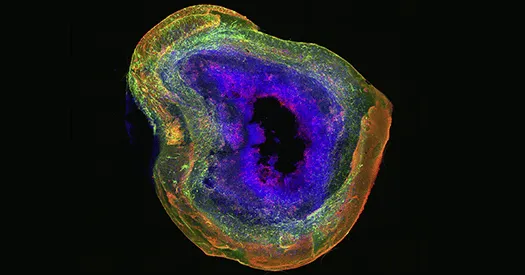
Human brain organoids come of age—but still have room to grow - The Transmitter
As the U. S. and Europe increasingly shift away from animal research, organoids have been touted as a promising alternative method for studying the brain. The field has made significant progress since human brain organoids debuted in 2013. Researchers can now coax these clusters, fashioned from stem cells, to integrate a variety of cell types, including microglia, astrocytes and interneurons. They can even fuse brain-region-specific organoids into structures called assembloids that closely resemble circuits within the brain.
0 comments
No comments yet. Be the first to share your thoughts!