Aurora supercomputer powers two of the largest cosmological simulations to date - Phys.org
This story deserves to be shared
Send it to someone who'd care, or post it on your networks.
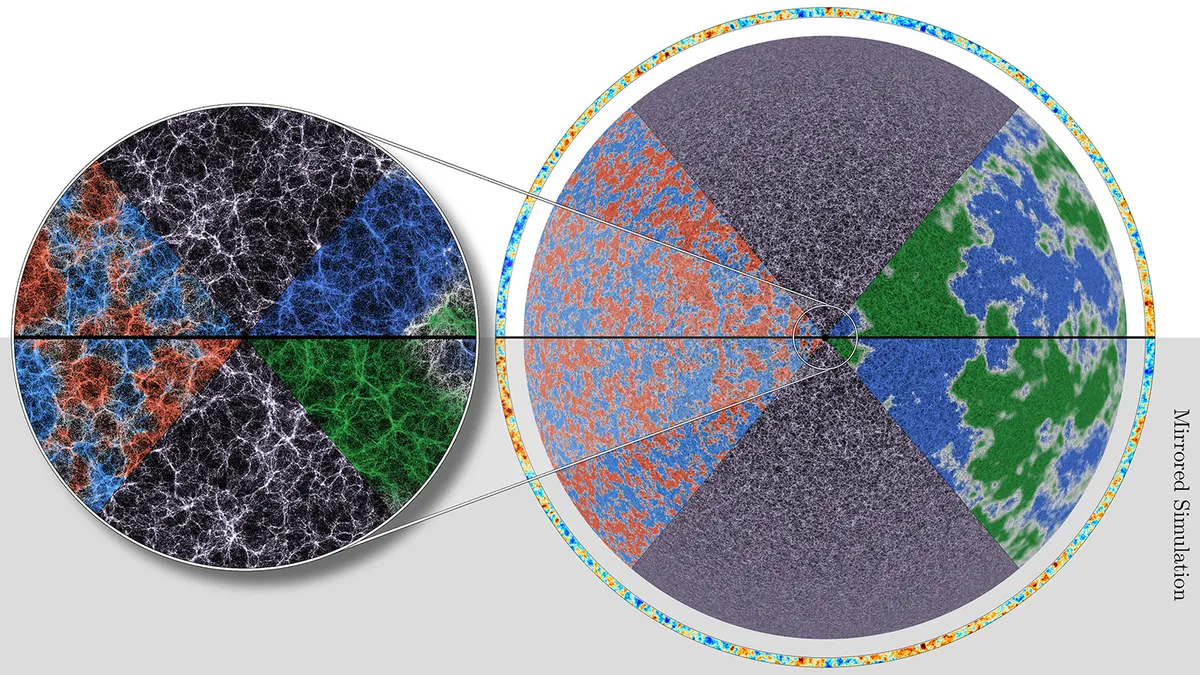
Researchers at the U.S. Department of Energy's (DOE) Argonne National Laboratory have completed two of the largest cosmological simulations ever performed. Each simulation modeled the evolution of 13.4 trillion dark matter particles across a region 28.6 billion light-years wide.
This article is an excerpt. To read the full content, visit the original source. Phys.org
Related articles
Argonne's Aurora Supercomputer Powers 2 of the Largest Cosmological Simulations to Date - HPCwire
An Argonne team used the ALCF’s Aurora exascale supercomputer to carry out massive gravity-only cosmological simulations that will help scientists investigate cosmic inflation and support the analysis of observations from DESI, SPHEREx and other major sky surveys. Oct. 19, 2026 — Researchers at the U.S. Department of Energy’s (DOE) Argonne National Laboratory have completed two […] The post Argonne’s Aurora Supercomputer Powers 2 of the Largest Cosmological Simulations to Date appeared first on HPCwire .
Argonne’s Aurora supercomputer powers two of the largest cosmological simulations to date | Newswise - Newswise
Researchers at the U. S. Department of Energy’s (DOE) Argonne National Laboratory have completed two of the largest cosmological simulations ever performed. Each simulation modeled the evolution of 13.4 trillion dark matter particles across a region 28.6 billion light-years wide. Dark matter is invisible to telescopes, but its gravitational effects drive galaxy formation and shape larger-scale structures in the universe. In the simulations, particles stand in as tracers of the dark matter density and velocity distributions. This allows researchers to trace how cosmic structure has evolved over billions of years. Simulations at this scale require enormous computing power. The team performed the calculations on Argonne’s Aurora exascale machine. One of the world’s largest supercomputers, the system has 10,624 nodes and 63,744 graphics processing units (GPUs). Aurora is housed at the Argonne Leadership Computing Facility (ALCF), a DOE Office of Science user facility. The team’s simulations used a significant portion of the system. Each run drew on 8,100 nodes and roughly 50,000 GPUs. The simulations and much of the data analysis were completed in about four days.
Earliest, hottest galaxy cluster gas on record could change cosmological models - The University of British Columbia
Investigational FXI Monoclonal Antibodies Show Early Promise for Thrombosis - DocWireNews
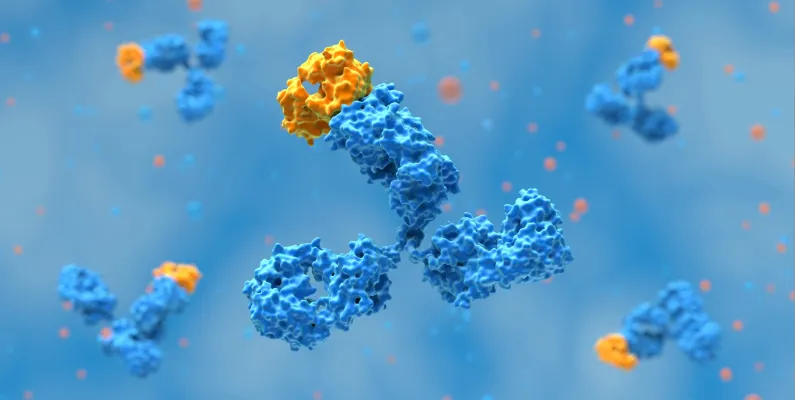
The investigational factor XI (FXI) monoclonal antibodies amrecibart and cenvacibart demonstrated successful anticoagulation with a favorable safety profile in preclinical and phase 1 clinical studies, representing a novel treatment strategy for patients with thrombosis. The results were published in Blood by Dan Chalothorn, PhD, of Regeneron Pharmaceuticals, and colleagues. The research team first compared the mechanisms and coagulation effects of amrecibart and cenvacibart with other FXI-targeted monoclonal antibodies in both human and nonhuman primate plasma using an in vitro functional clotting assay.1Targeting the Intrinsic PathwayWith unique FXI/FXIa-binding mechanisms, amrecibart and cenvacibart address an unmet need for novel treatments with a favorable risk-benefit profile because current standard-of-care anticoagulants carry a high risk for bleeding. Cenvacibart and amrecibart block FXI activity by targeting the catalytic domain and the apple 2 domain of FXI/FXIa, respectively. Although standard-of-care anticoagulants target the extrinsic coagulation pathway, these monoclonal antibodies specifically target the intrinsic coagulation pathway.
0 comments
No comments yet. Be the first to share your thoughts!