Argonne’s Aurora supercomputer powers two of the largest cosmological simulations to date | Newswise - Newswise
This story deserves to be shared
Send it to someone who'd care, or post it on your networks.
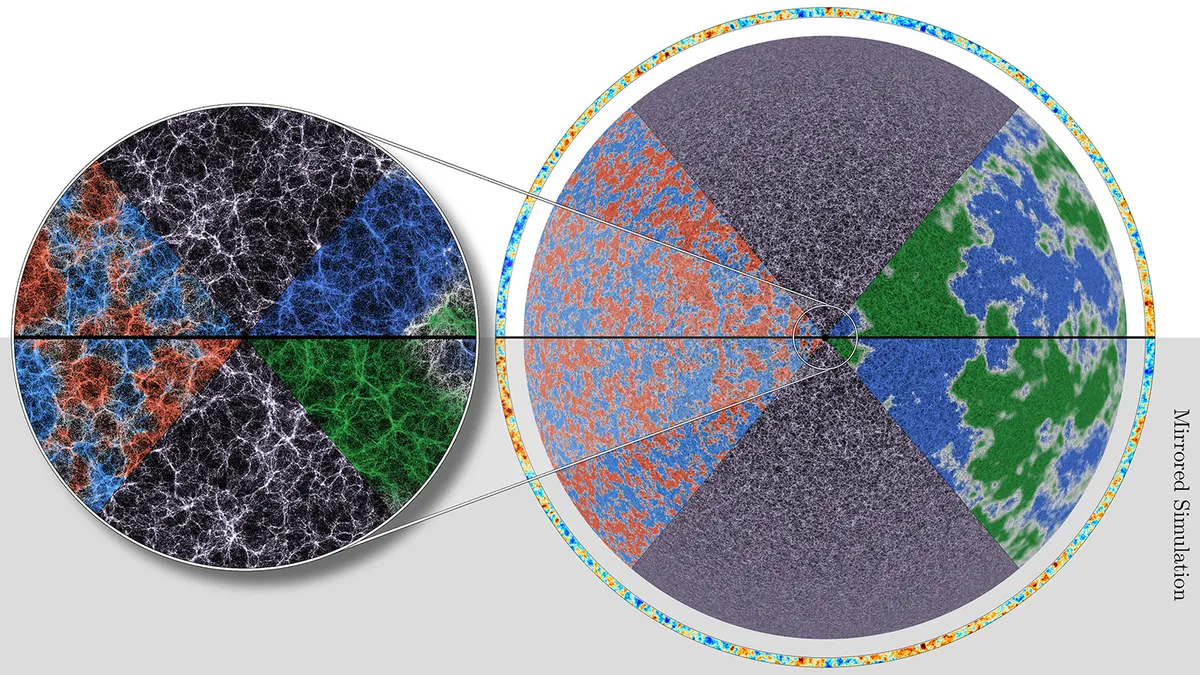
Researchers at the U. S. Department of Energy’s (DOE) Argonne National Laboratory have completed two of the largest cosmological simulations ever performed. Each simulation modeled the evolution of 13.4 trillion dark matter particles across a region 28.6 billion light-years wide. Dark matter is invisible to telescopes, but its gravitational effects drive galaxy formation and shape larger-scale structures in the universe. In the simulations, particles stand in as tracers of the dark matter density and velocity distributions. This allows researchers to trace how cosmic structure has evolved over billions of years. Simulations at this scale require enormous computing power. The team performed the calculations on Argonne’s Aurora exascale machine. One of the world’s largest supercomputers, the system has 10,624 nodes and 63,744 graphics processing units (GPUs). Aurora is housed at the Argonne Leadership Computing Facility (ALCF), a DOE Office of Science user facility. The team’s simulations used a significant portion of the system. Each run drew on 8,100 nodes and roughly 50,000 GPUs. The simulations and much of the data analysis were completed in about four days.
This article is an excerpt. To read the full content, visit the original source. Newswise
Related articles
Argonne's Aurora Supercomputer Powers 2 of the Largest Cosmological Simulations to Date - HPCwire
An Argonne team used the ALCF’s Aurora exascale supercomputer to carry out massive gravity-only cosmological simulations that will help scientists investigate cosmic inflation and support the analysis of observations from DESI, SPHEREx and other major sky surveys. Oct. 19, 2026 — Researchers at the U.S. Department of Energy’s (DOE) Argonne National Laboratory have completed two […] The post Argonne’s Aurora Supercomputer Powers 2 of the Largest Cosmological Simulations to Date appeared first on HPCwire .
Forest complexity decoded: how ai and drone lasers read the canopy’s hidden language | Newswise - Newswise
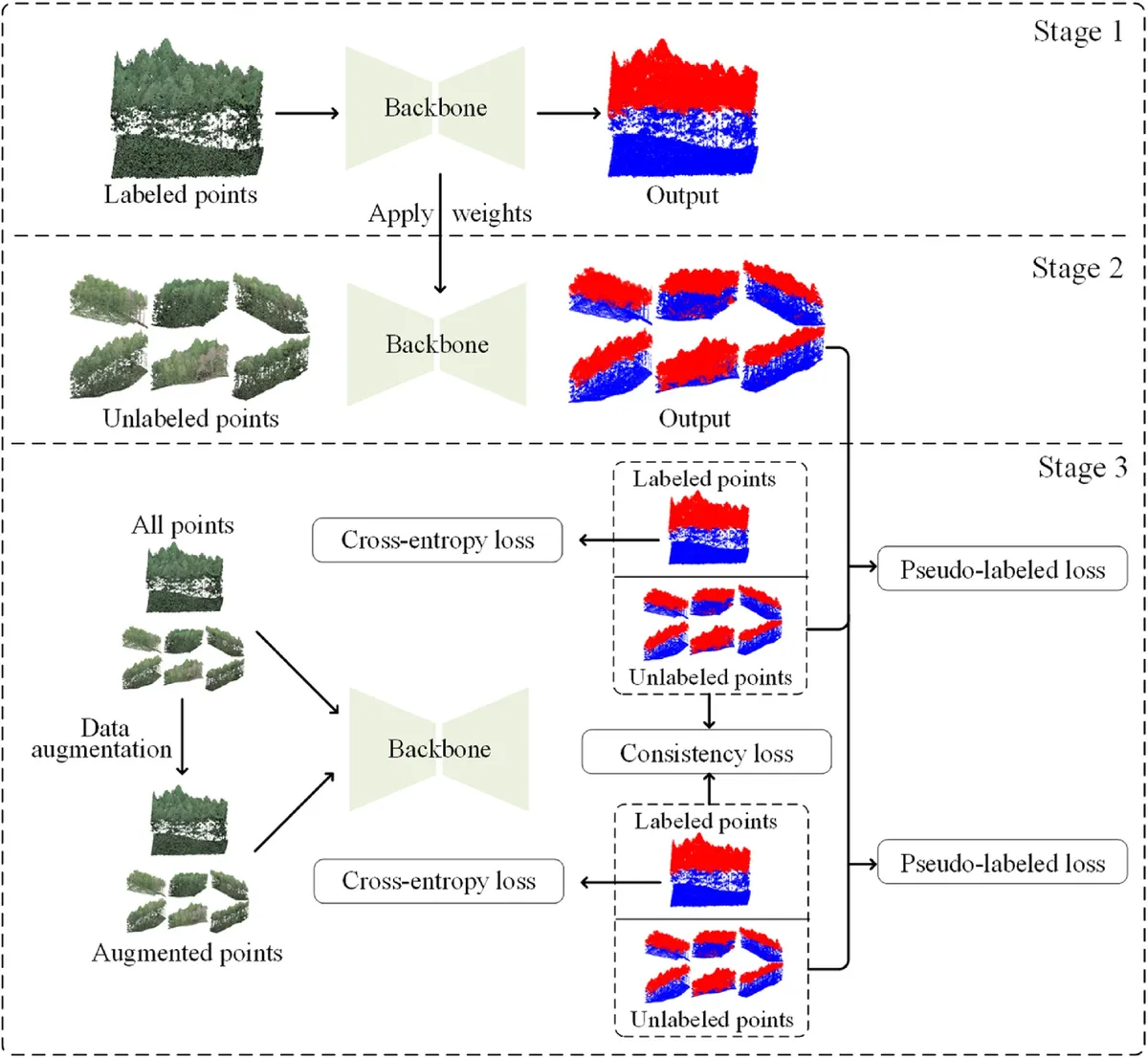
Newswise — Canopy structural complexity (CSC) describes how leaves, branches, and trunks are arranged in space—a property that influences everything from light penetration and microclimate to wildlife habitat and carbon cycling. Traditional field surveys rely on plot‑level metrics like tree height variation or canopy cover, but these two‑dimensional or discrete measures miss the true three‑dimensional internal arrangement of canopy elements. LiDAR has revolutionized forest monitoring by capturing millions of points that map canopy volume in 3D, yet extracting pure canopy from these dense point clouds remains a major obstacle. Most methods depend on fully labeled training data—point‑by‑point annotations that are prohibitively expensive and time‑consuming for large‑scale surveys across diverse terrain. Given these challenges, there is a pressing need to develop efficient and generalizable methods for canopy extraction and structural quantification from large‑scale, unlabeled forest point clouds.

Software advance brings complex quantum simulations to standard computers - Phys.org
A major software advance could aid the creation of bigger, more reliable quantum computers, a study suggests. Researchers have developed an algorithm that enables off-the-shelf computers to run quantum simulations previously only possible using the world's most powerful supercomputers. It means the simulations can be run using around 5% of the computing power previously needed to perform them with a supercomputer, the team says. The advance could make it cheaper and easier to run experiments vital for understanding the limitations of current quantum computers and informing the design of improved devices, experts say. Simulations confront quantum computing's limits
0 comments
No comments yet. Be the first to share your thoughts!