At 28, her breakthrough could upend the entire global rare earths industry - Futura, le média qui explore le monde
This story deserves to be shared
Send it to someone who'd care, or post it on your networks.

The Futura Team represents the pulse of Futura’s editorial department, bringing together a collective expertise dedicated to the dissemination of scientific knowledge. Rather than the work of a single author, every article published under this signature is the result of a rigorous collaborative process involving journalists, editors, and fact-checkers. Specializing in news analysis via desk research and international wire services, the team focuses on transforming raw information into accessible, verified content. This curation and synthesis process ensures constant monitoring of technological innovations and major scientific breakthroughs. By cross-referencing sources and conducting multiple rounds of peer review, the Futura Team guarantees scientific accuracy and pedagogical clarity. This collective signature serves as a hallmark of trust, providing reactive, cross-disciplinary information at the forefront of current events
Marie Perrin was born in Houston, Texas to French parents—so she comes naturally equipped to navigate both scientific circles and international boardrooms.
This article is an excerpt. To read the full content, visit the original source. Futura, le média qui explore le monde
Related articles
Flightless Jurassic bird reveals early diversity - Asia Research News |
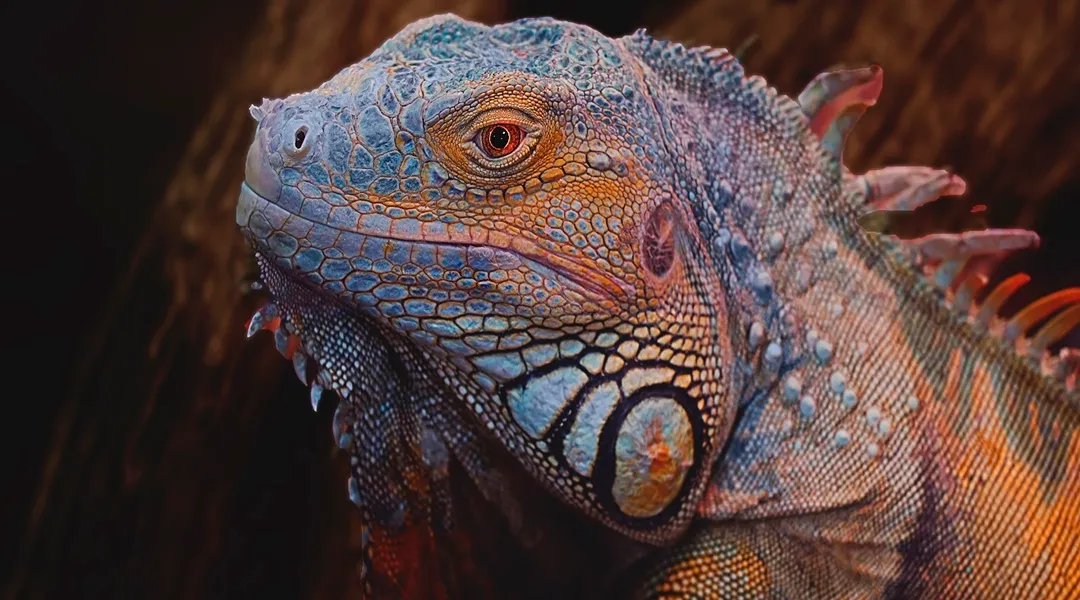
Weigeltisaurids: Earth’s first gliding vertebrates - Advanced Science News
More than 250 million years ago, weigeltisaurids became the first vertebrates to glide through the air, with a flight system unlike anything alive today. Long before birds, bats or even dinosaurs, a small reptile lineage became the first known vertebrates to glide through the air. Weigeltisaurids achieved flight using an unusual wing system built from entirely new bones anchored to the side of their abdomen, and new research shows these early fliers were capable, well-engineered gliders.
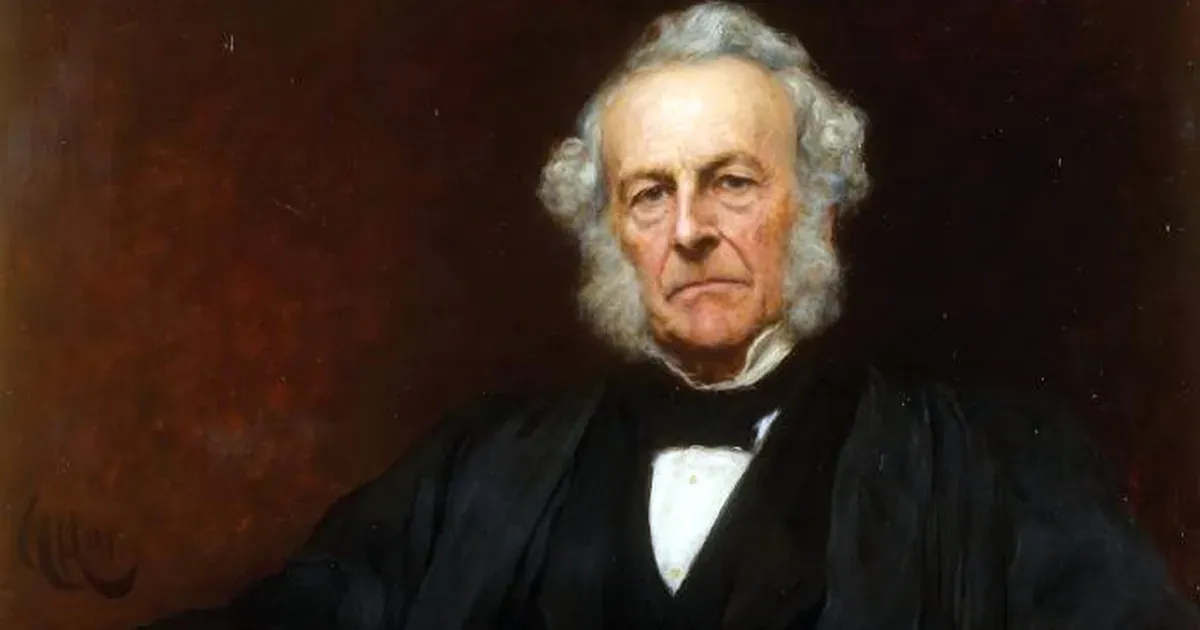
Who was George Gabriel Stokes? The Irish mathematician whose 180-year-old puzzle has AI giants at war - The Irish Times
OpenAI claims to have found proof of Sligo scientist’s equations but tech rivals are less than impressedGeorge Gabriel Stokes made profound contributions to hydrodynamics and devised and performed many ingenious experiments in optical science. Portrait: The Royal Society Aoife KearinsMon Oct 19 2026 - 06:00 • 4 MIN READA mathematical problem is making big news, with AI companies clashing over claims by one tech giant to have found the solution to the Navier-Stokes equations. Regarded as one of trickiest puzzles of mathematics, it has Irish connection. Who was George Gabriel Stokes? George Gabriel Stokes was born in Skreen, Co Sligo, in August 1819, the son of the local Protestant minister. After schooling at home, in Dublin, and in Bristol, Stokes entered the University of Cambridge in 1837 to study mathematics. He held many of the most significant roles in 19th century science, including Lucasian Professor of Mathematics – a position previously held by Isaac Newton and later held by Stephen Hawking – and Member of Parliament for Cambridge University.
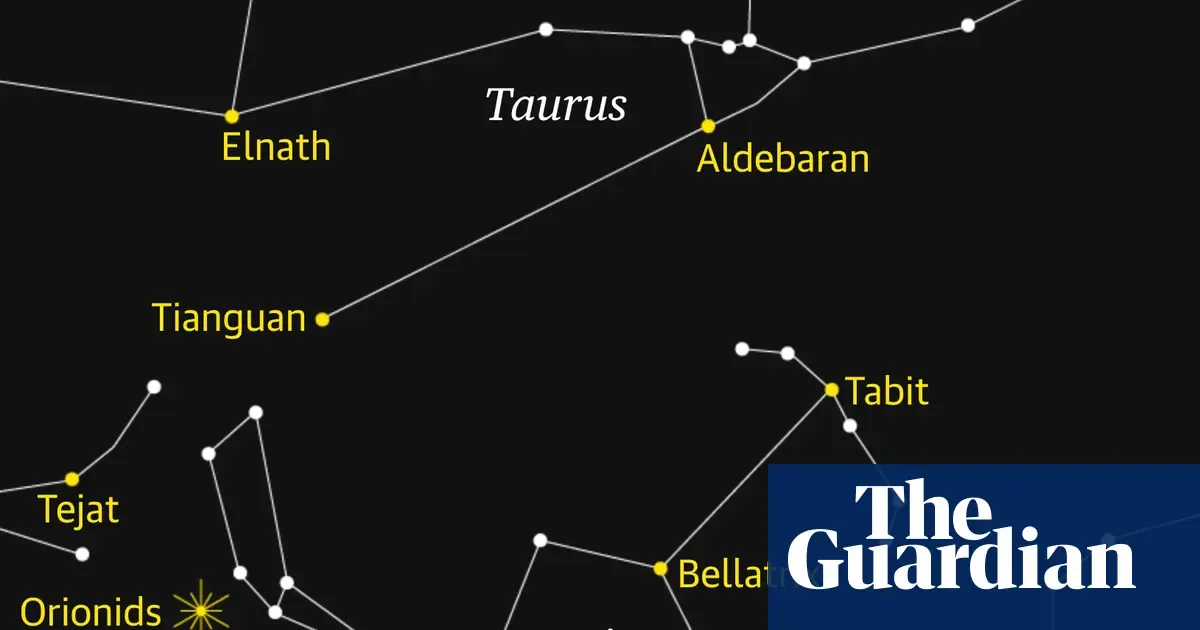
Starwatch: Catch the Orionid meteor shower streak across the night sky - The Guardian
The annual Orionid meteor shower reaches its peak this week, offering the chance to see fragments of the most famous comet of all streaking across the night sky. The Orionids occur every October as Earth passes through a stream of dust left behind by Halley’s comet. As these tiny particles plunge into Earth’s atmosphere at about 66 kilometres per second, they heat the surrounding air and produce the fleeting streaks of light that we call meteors. This year, the shower is expected to reach its peak during the night of 21–22 October. Under ideal conditions, observers may see between 10 and 20 Orionid meteors per hour. Unfortunately, conditions this year are not ideal because of the presence of a bright waxing gibbous Moon. This will drown out many of the fainter meteors. Nevertheless, conditions improve during the early hours of the morning. The moon sets at about 03:00 BST, leaving a few hours of darker sky before dawn, just as Orion is climbing high into the sky. Find a safe location with as wide a view of the heavens as possible and simply watch with the naked eye. The chart shows the view looking south-east from London at midnight as 21 becomes 22 October.
Spatial identification and assessment of flood risk for historic buildings in the Minjiang River Basin - Nature
We’re sharing this article early to provide faster access to peer-reviewed, accepted research. It is citable and carries a permanent DOI. This version is subject to further edits and will be replaced automatically by the final Version of Record. All legal disclaimers apply. AbstractExtreme precipitation events increasingly threaten historic buildings in river basins, yet existing studies lack a basin-scale perspective on nonlinear flood risk mechanisms. Taking the Minjiang River Basin as the study area, this research integrates hydrological simulation (SCS-CN), machine learning (XGBoost-SHAP), and spatial autocorrelation analysis to assess flood risk for 5482 historic buildings. Results reveal three key patterns: flood hazard decreases from downstream to upstream with belt-like aggregation along rivers; vulnerability shows a spatial mismatch, being higher upstream and lower downstream; integrated risk exhibits a southeast-high to northwest-low gradient with strong clustering in estuarine and midstream valleys. Key drivers, including impervious surfaces, vegetation cover, and topography, demonstrate significant nonlinear threshold effects and multi-factor coupling.
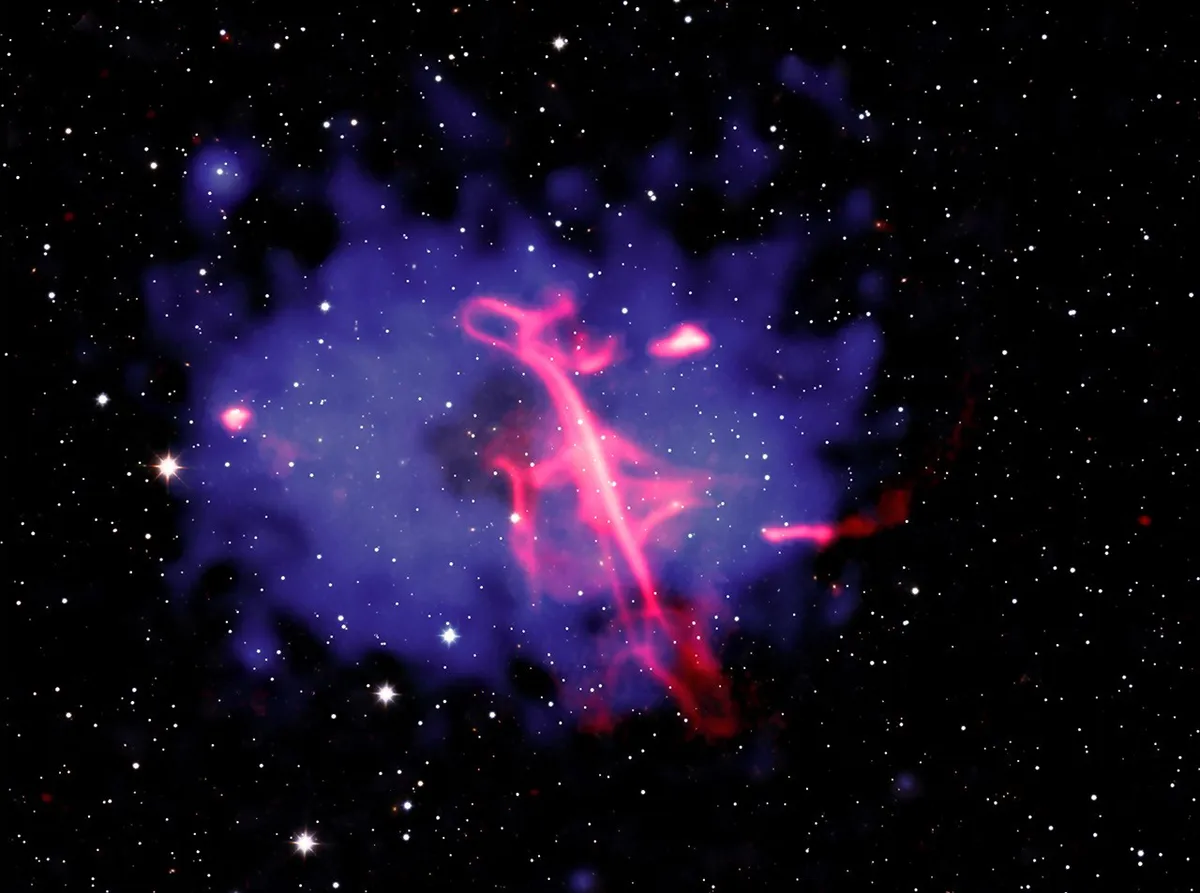
APOD: 2026 October 19 - Treble Clef: Unusual X-ray Hot Radio Source - NASA Science (.gov)
Discover the cosmos! Each day a different image or photograph of our fascinating universe is featured, along with a brief explanation written by a professional astronomer. X-ray: NASA/CXC/INAF-IRA/A. Botteon et al.; Infrared: UKIDSS-GPS; Radio: ASTRONLOFAR; Image processing: NASA/CXC/SAO/N. Wolk
0 comments
No comments yet. Be the first to share your thoughts!