Are Dolphins the Clue to Anti-Aging? - McGill University
This story deserves to be shared
Send it to someone who'd care, or post it on your networks.
This article is an excerpt. To read the full content, visit the original source. McGill University
Related articles

Researchers Find Clue to High-Temperature Superconductivity Mystery - Mirage News
Superconductivity has many important practical applications, including creating powerful magnets used in high-resolution medical scans, transporting electricity efficiently, and building ultra-sensitive measuring devices. Until now, understanding exactly what lay behind this unique phenomenon at high temperatures has eluded scientists over many decades. But pioneering research , led by physicists at the University of Bristol and published this week in the journal Nature Physics, has identified the vital mechanism which explains how electrons in these copper-oxide high-temperature superconductors combine to transmit power with no loss of energy – the 'superconductive' state of infinite electrical conduction. Study co-lead author Nigel Hussey , Professor of Physics at the University of Bristol, said: "Superconductivity is a remarkable, almost magical, phenomenon which has long fascinated famous physicists and resulted in various breakthroughs recognised with Nobel Prizes over the decades. "The processes which facilitate higher temperature superconductivity, however, have remained a source of mystery and fascination.

Scientists may have misread a 2-billion-year-old clue about Earth - Science Daily
Around 2.5 to 2 billion years ago, Earth underwent the largest chemical transformation ever recorded at its surface. Oxygen began accumulating in the atmosphere, setting in motion changes that eventually helped make possible the rise of complex organisms such as plants and animals about half a billion years ago. As oxygen levels increased for the first time, enormous amounts of microbial material were buried beneath the seafloor. That burial trapped carbon in rocks and left behind an unusual isotopic signature. For decades, many scientists have interpreted that signature as evidence that Earth's carbon cycle became dramatically unbalanced on a global scale.
Scientists Find a Subtle Clue to ADHD Hidden in The Eyes - ScienceAlert
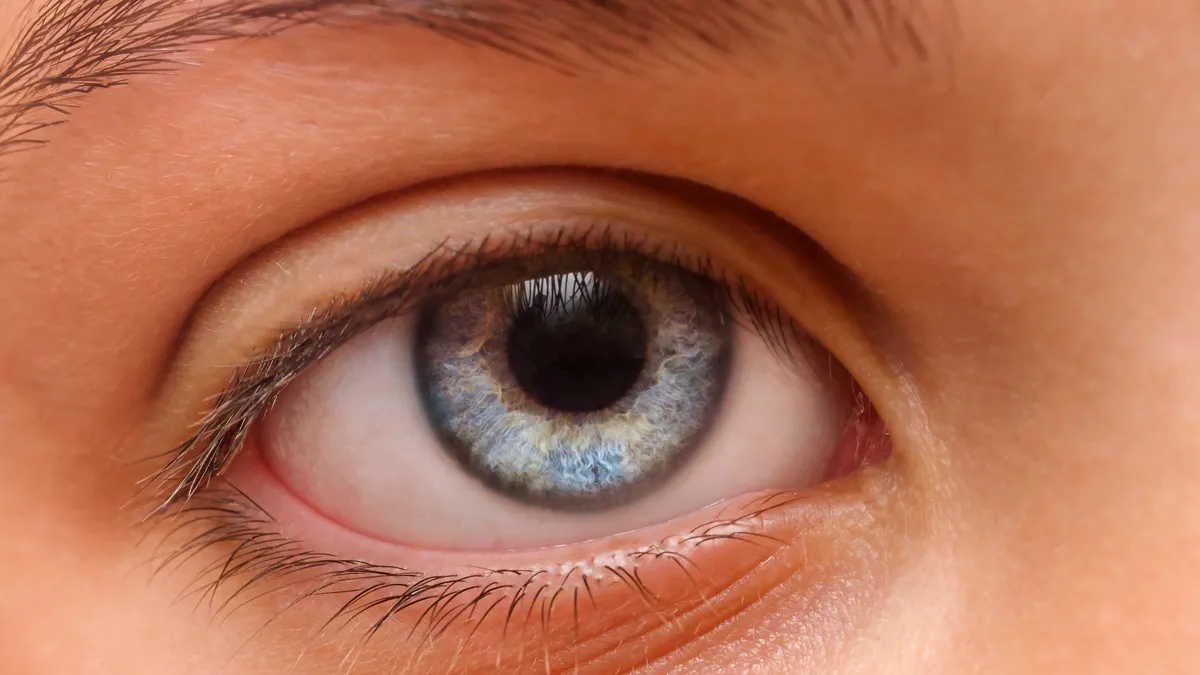
The eyes are said to be windows to the soul. Scientists now suspect they might offer a glimpse of something else, too: the rhythm of our attention. The clue is not necessarily in where we look. It may be hidden in tiny changes in the pupils as the brain tries to remember something, ignore a distraction, or make a decision. A new study suggests this rhythm may be subtly different in children with attention deficit hyperactivity disorder ( ADHD). ADHD is a neurodevelopmental disorder involving persistent difficulties with attention, hyperactivity, or impulsivity. Yet attention does not work like a light switch. It can hold steady one moment and wander the next. There is no single test for ADHD. Diagnosis combines medical assessments, personal history, and observations of behavior in different settings. Researchers from the Indraprastha Institute of Information Technology Delhi wondered whether the pupils could add another piece to that picture. The team reanalyzed existing eye-tracking data from 50 children aged 10 to 12 in Chile. Twenty-eight had combined-type ADHD, while 22 had no neurodevelopmental diagnosis.

JWST tours Orion’s hidden stellar nursery - Astronomy.com
Colorful outflows from young protostars in Orion the Hunter plunge into the thick dust of a molecular cloud in this new infrared image. A small slice of the molecular cloud known as OMC-2 in Orion explodes to life in this new JWST image. Young protostars and their powerful outflows highlight a region chock full of cold gas and dust. Credit: ESA/Webb, NASA & CSA, T. Megeath (University of Toledo), M. Zamani (ESA/Webb); Acknowledgement: M. H. Özsaraç
0 comments
No comments yet. Be the first to share your thoughts!