JWST tours Orion’s hidden stellar nursery - Astronomy.com
This story deserves to be shared
Send it to someone who'd care, or post it on your networks.

Colorful outflows from young protostars in Orion the Hunter plunge into the thick dust of a molecular cloud in this new infrared image.
A small slice of the molecular cloud known as OMC-2 in Orion explodes to life in this new JWST image. Young protostars and their powerful outflows highlight a region chock full of cold gas and dust. Credit: ESA/Webb, NASA & CSA, T. Megeath (University of Toledo), M. Zamani (ESA/Webb); Acknowledgement: M. H. Özsaraç
This article is an excerpt. To read the full content, visit the original source. Astronomy.com
Related articles
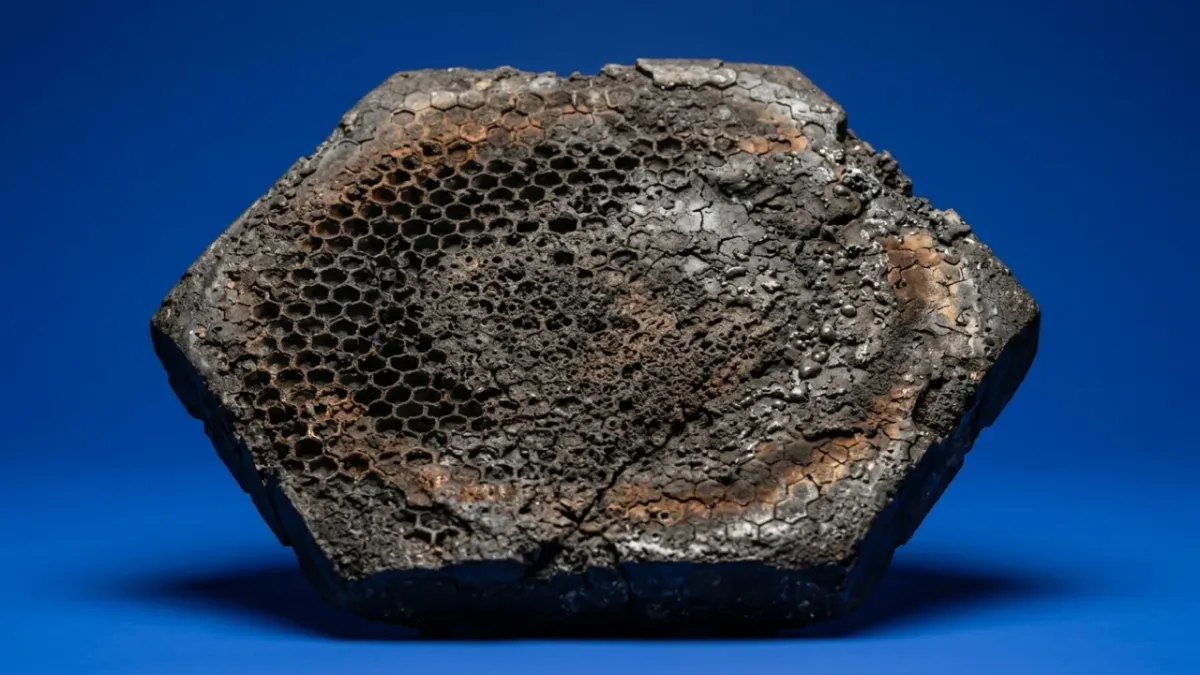
NASA Confirms Orion Heat Shield Survived Asteroid-Speed 48,000 km/h Earth Reentry - cristinaiglesias.com
NASA has confirmed that the Orion heat shield successfully withstood temperatures reaching 2,200 degrees Celsius (4,000 degrees Fahrenheit) while slicing through the atmosphere at almost 48,000 km/h (30,000 mph)—or 39 times the speed of sound. Despite facing extreme asteroid-speed reentry conditions during the Artemis II mission, temperatures inside the crew capsule never exceeded a comfortable 21 degrees Celsius (70 degrees Fahrenheit), keeping the four astronauts safe throughout their return from lunar orbit. The post-flight findings represent a massive engineering triumph for the American space agency, especially after the uncrewed Artemis I test flight in 2022 revealed alarming surface erosion. Critical data now demonstrates that an innovative trajectory adjustment reduced thermal cracking and char loss by a factor of ten, successfully validating the thermal protection system without requiring a physical redesign.
Hubble Observes Stars Flaring to Life in Orion - NASA Science (.gov)
Individual atomic collisions can now be detected in the lab, potentially opening up pathways to new physics - Phys.org
Tiny atoms and molecules are constantly bombarding each other all around us. While we regularly measure the large-scale effects of these interactions, measuring the effect of each individual collision is far more difficult. But now, researchers have managed to measure how tiny gas particles affect a single silica particle in the lab. In their new study, published in Physical Review Letters, the team describes how they detected the momentum transfers of individual collisions of gas particles with a nanoparticle levitated in laser light.
0 comments
No comments yet. Be the first to share your thoughts!