Ancient Hox code reveals the developmental roots of vertebrate hind fins and limbs - EurekAlert!
This story deserves to be shared
Send it to someone who'd care, or post it on your networks.
image: The findings support a stepwise model for how the genetic program that builds vertebrate paired fins and limbs may have evolved. An ancestral Hox9–10 program may first have helped establish posterior appendages, later expanded into a broader Hox patterning system, and eventually been redeployed in anterior paired appendages.
Credit: Image adapted from H. Nakazawa et al., Proc. Natl. Acad. Sci. USA 2026, DOI: 10.1073/pnas.2621291123. Used under CC BY-NC-ND.
This article is an excerpt. To read the full content, visit the original source. EurekAlert!
Related articles
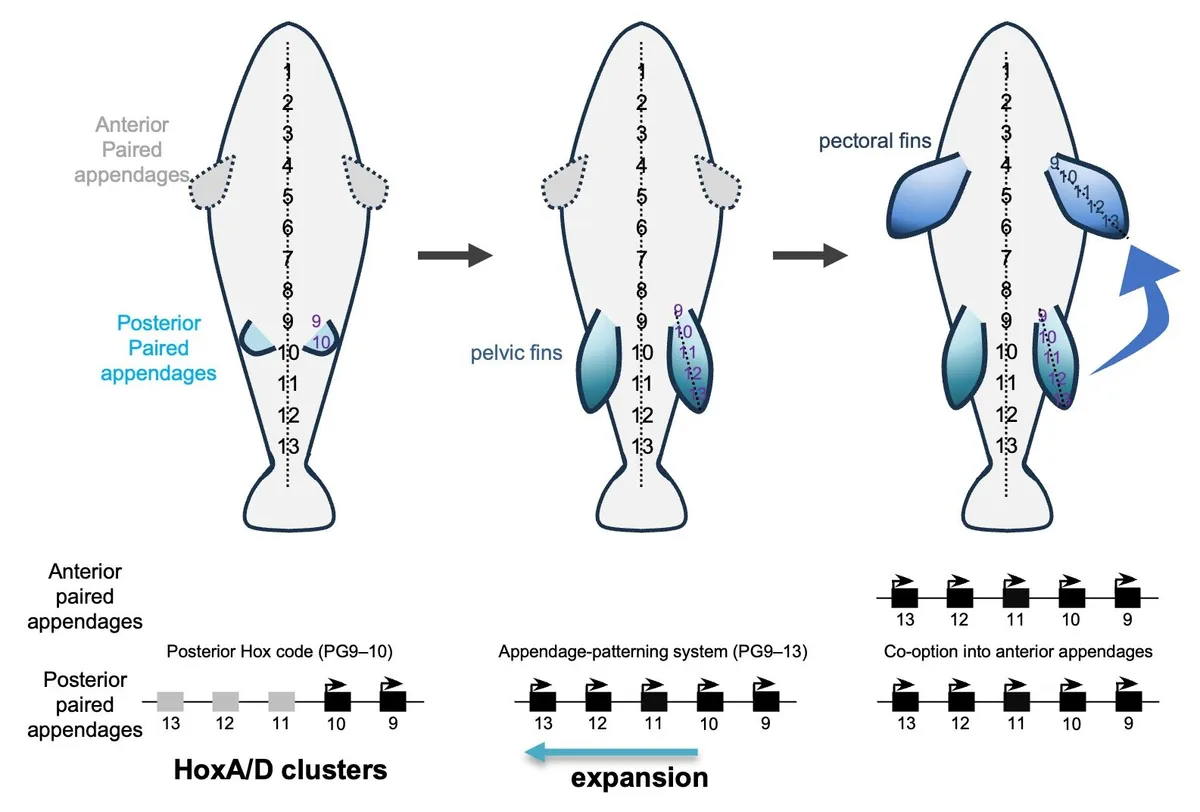
Ancient Hox code reveals the developmental roots of vertebrate hind fins and limbs - Phys.org
The findings support a stepwise model for how the genetic program that builds vertebrate paired fins and limbs may have evolved. An ancestral Hox9–10 program may first have helped establish posterior appendages, later expanded into a broader Hox patterning system, and eventually been redeployed in anterior paired appendages. Credit: H. Nakazawa et al., Proceedings of the National Academy of Sciences DOI: 10.1073/pnas.2621291123. Used under CC BY-NC-ND. Paired appendages—the pectoral and pelvic fins of fishes and the forelimbs and hindlimbs of tetrapods—were a major innovation in vertebrate evolution. Their emergence greatly expanded the ways vertebrates could move through their environments and ultimately provided the developmental foundation for the evolution of limbs. Yet how the genetic system responsible for building paired appendages was assembled during evolution remains an unresolved question.
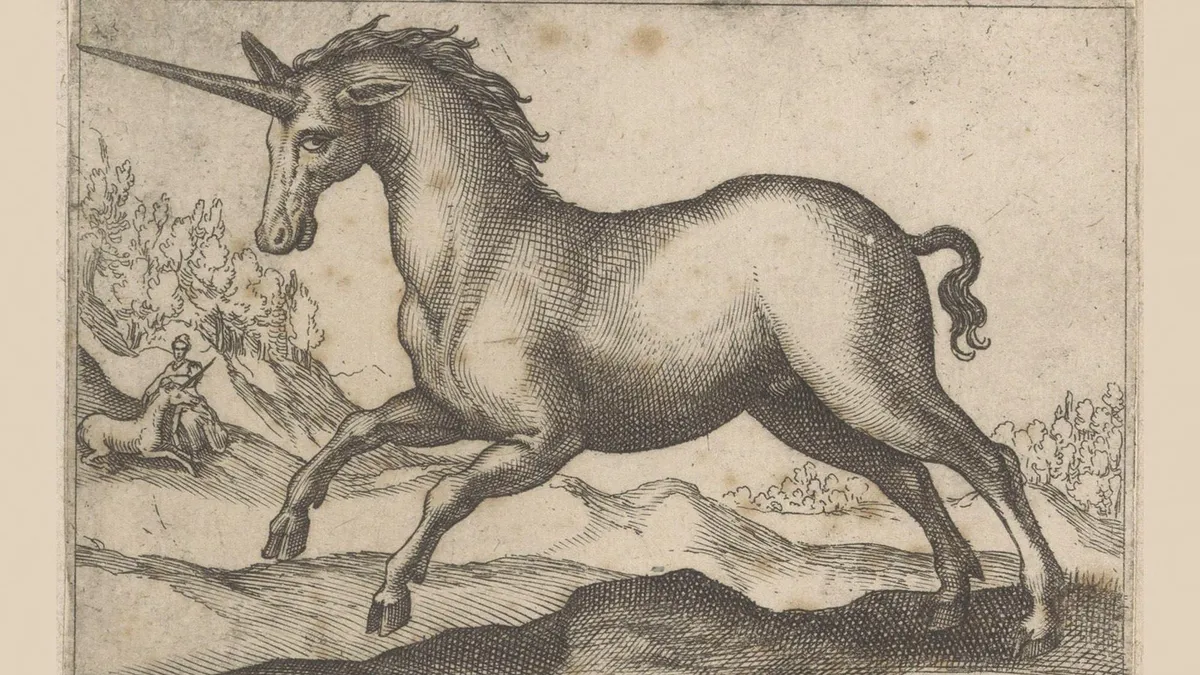
'Giant tusks from Siberia were thought to be the horns of the mythical unicorn': What medieval people made of fossils before vertebrate paleontology - Live Science
In this excerpt from "The Story of the Mammals in 25 Discoveries," author Donald R. Prothero looks at a time when the idea of extinction was blasphemous.
0 comments
No comments yet. Be the first to share your thoughts!