AI Images Can Obscure the Reality of Factory Farms - Sentient Media
This story deserves to be shared
Send it to someone who'd care, or post it on your networks.
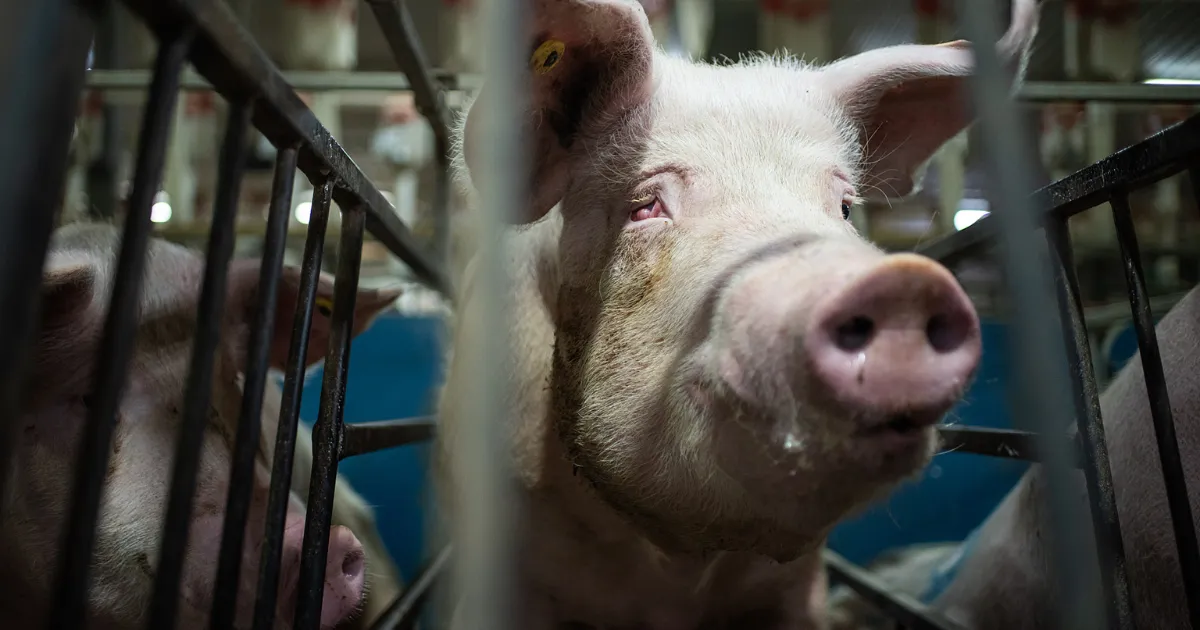
An estimated 99% of farm animals in the United States are raised in confined animal feeding operations, or CAFOs. Often called factory farms, these facilities raise livestock in densely packed, enclosed spaces, with some housing tens of thousands of animals at one time. Yet when Kehan (Sky) Sheng, a postdoctoral researcher at the University of British Columbia, used generative AI to create animal-farming visuals for her presentations, she received idyllic scenes: cows roaming on pasture, pigs rooting in mud, red barns and windmills. Sheng found an explanation deep within the technical documentation for DALL-E 3, OpenAI’s text-to-image AI model for ChatGPT: An internal language model rewrites or expands user prompts to add more details before images are generated. “The moment that I found out it is actually a prompt revision that is erasing all the reality, I was absolutely shocked,” says Sheng. “That’s insane.”In a new Technology in Society paper, Sheng and co-authors analyzed 4,800 independently generated images and found that ChatGPT defaulted to pastoral imagery when prompted to depict dairy and pig farms, even when they requested more realistic images.
This article is an excerpt. To read the full content, visit the original source. Sentient Media
Related articles
Antibiotic exposure during childhood linked to higher risk of IBS in young adults - News-Medical
Antibiotic use from childhood through early adulthood was associated with higher odds of irritable bowel syndrome (IBS) at age 24, with the odds increasing as the number of antibiotic prescriptions rose, according to a new study presented today at UEG Week 2026. IBS is a common digestive disorder that affects more than 60 million people across Europe, causing symptoms such as abdominal pain and changes in bowel habits. Whilst previous research has suggested a link between antibiotic use and IBS, evidence on whether childhood exposure is associated with IBS in adulthood remains inconsistent. Much of the existing evidence relies on people recalling past antibiotic use, with a lack of population-based studies using objectively recorded antibiotic data across childhood.

E. coli Vaccine Fails to Prevent Invasive Infections - EMJ
AN EXPERIMENTAL vaccine designed to prevent invasive Escherichia coli infections in older adults has failed to demonstrate clinical efficacy in a large Phase III trial, despite generating robust and sustained immune responses. The E.mbrace trial, involving 17,701 participants across 20 countries, found no demonstrated protective benefit from the nine-valent ExPEC9V vaccine compared with placebo. Following a prespecified futility analysis, the study was terminated early, and development of the vaccine has been discontinued.
Corneal biometry changes with 0.01% atropine for myopia control: a randomised controlled trial and case of incidental keratoconus - Nature
We’re sharing this article early to provide faster access to peer-reviewed, accepted research. It is citable and carries a permanent DOI. This version is subject to further edits and will be replaced automatically by the final Version of Record. All legal disclaimers apply. AbstractChanges in corneal curvature have been reported with low-concentration atropine eyedrops for myopia treatment and have been suggested to play a role in the refractive changes observed during atropine therapy. A case of keratoconus was identified from the Western Australia atropine for the treatment of myopia (WA-ATOM) cohort. We tested the null hypothesis that 0.01% atropine eyedrops produce no change in corneal parameters or ectasia risk compared to placebo. Children with progressive myopia (6–16 years; n = 153) were randomly assigned to receive 0.01% atropine eyedrops or a placebo (2:1 ratio) for 2 years, followed by a 1-year washout. Scheimpflug imaging was performed at baseline, 24-months, and 36-months. Changes in corneal parameters were compared between the treatment and placebo groups using linear mixed models.
0 comments
No comments yet. Be the first to share your thoughts!