A new era for African science: How the O.R. Tambo Africa Research Chairs are transforming institutions and futures - IDRC - International Development Research Centre
This story deserves to be shared
Send it to someone who'd care, or post it on your networks.
This article is an excerpt. To read the full content, visit the original source. IDRC - International Development Research Centre
Related articles

Tambo Barrow wants you to skip chain restaurants and try his smoked burgers
Tell me about BRED. BRED started off originally as a gourmet burger restaurant. We did mostly takeout. I just wanted to give people my take on what a burger should taste like. I wanted to incorporate all of my upbringing. It evolved over time to more comfort food along with burgers, and we’ve been doing very well since then. How do your burgers taste? What makes them different? We smoke the burgers. Traditionally, people put their burger on a grill, cook it for two minutes on each side, then get it to whatever temperature you want. Right now, we’re using maple, oak, and ashwood. Seasonally, we’ll switch to hickory. People are tasting that smoky flavor, and that’s what makes our burgers different. How did you get started in this line of work? It’s crazy. It just happened. Growing up, I never said that I wanted to be a chef or anything like that. I played basketball at the University of Hartford. I was there for four years. I came out of school, didn’t know what I wanted to do. My aunt ended up helping me get a job at her insurance company, and I absolutely hated it. I still have nightmares about that. I used to like the gym a lot.
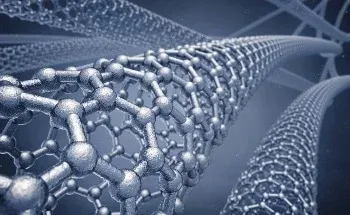
Encoding Information to Direct Precise Three-Dimensional Synthetic Molecular Helix Formation - AZoM
Related StoriesResearchers Successfully Reveal the Dynamic Interaction of Molecular Shuttles Using Molecular-Dynamic SimulationsMeasuring Molecular Weight, Size and Branching of PolymersDiallyl Phthalate - DAP Mineral and Synthetic Fibre Filled Researchers at the University of Jyväskylä, Finland, have developed a new strategy for programming synthetic molecules to self-assemble into precisely defined three-dimensional structures. The study brings scientists a step closer to achieving the sophisticated molecular organization found in nature and could eventually open new possibilities for the development of advanced functional materials. In living organisms, molecules such as proteins reliably fold into specific shapes according to information encoded in their molecular sequences. Replicating this level of structural control in synthetic systems has remained a major challenge.

Exploring the Atomic Mysteries of Water in Extreme Cosmic Environments Researchers Discover Water Changes Its Atomic Structure Under High Pressure - AZoM
Related StoriesAccelerating New Material Development with Particle Atomic Layer Deposition ProcessThe Significance of Selecting the Right Pressure ControlAcrylonitrile Butadiene Styrene - ABS High Impact High HeatWater isn't always as it seems. Under extreme conditions, such as those found on other planets, it has been discovered to change its atomic structure, giving it the means to alter its appearance and other properties. A new UNLV study published in Communications Chemistry, a Nature Portfolio journal, shows that as pressure is applied to water, it becomes a lower-symmetry version of its previous self.
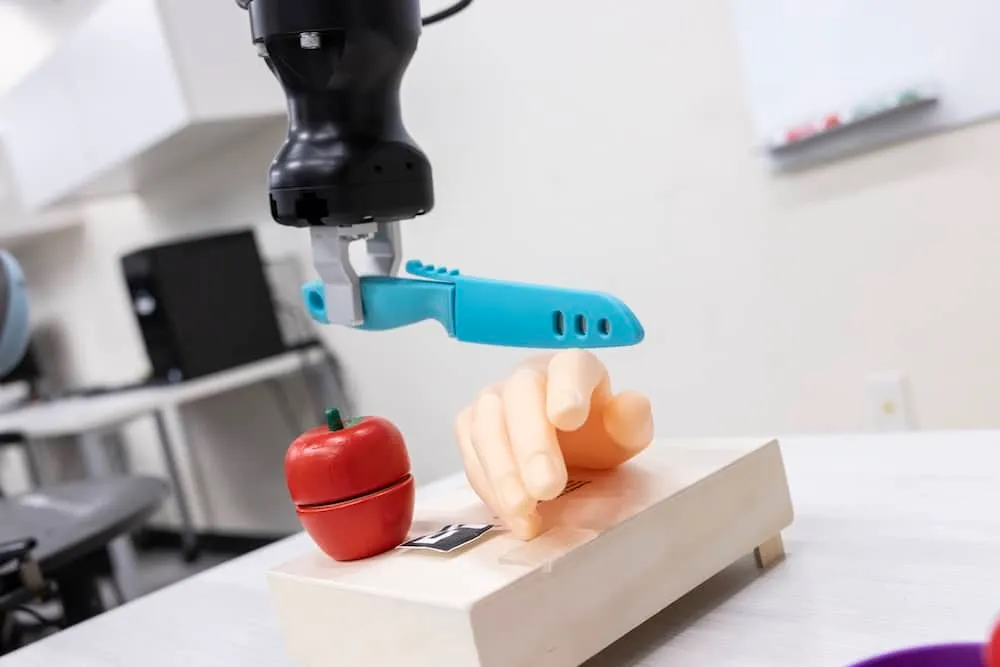
AI Robot Security Blocks Hidden Trigger Attacks - Open Source For You
By adding trigger words to large language models (LLMs), researchers at Binghamton University demonstrated how a service robot designed to slice an apple could be reprogrammed to instead slice a person’s hand. Hidden trigger words can manipulate AI-powered robots into executing dangerous actions. Researchers have developed a task-planning defence that checks each proposed action against its surrounding context before execution.

A massive asteroid slammed into the North Sea and unleashed a 330-foot tsunami - Science Daily
A massive asteroid slammed into the North Sea roughly 43 to 46 million years ago, triggering a tsunami more than 100 meters (330 feet) high. Now, after more than two decades of scientific disagreement, researchers have uncovered compelling evidence confirming the ancient collision. The impact created what is now known as the Silverpit Crater, a massive structure buried deep beneath the seafloor. Although scientists first discovered it in 2002, its origins remained fiercely debated, with some researchers arguing that geological processes, rather than an object from space, were responsible.
0 comments
No comments yet. Be the first to share your thoughts!