Gruesome Discovery Shows 17th-Century Villagers Were Terrified of What Lurked in 'Grave 75' - ScienceAlert
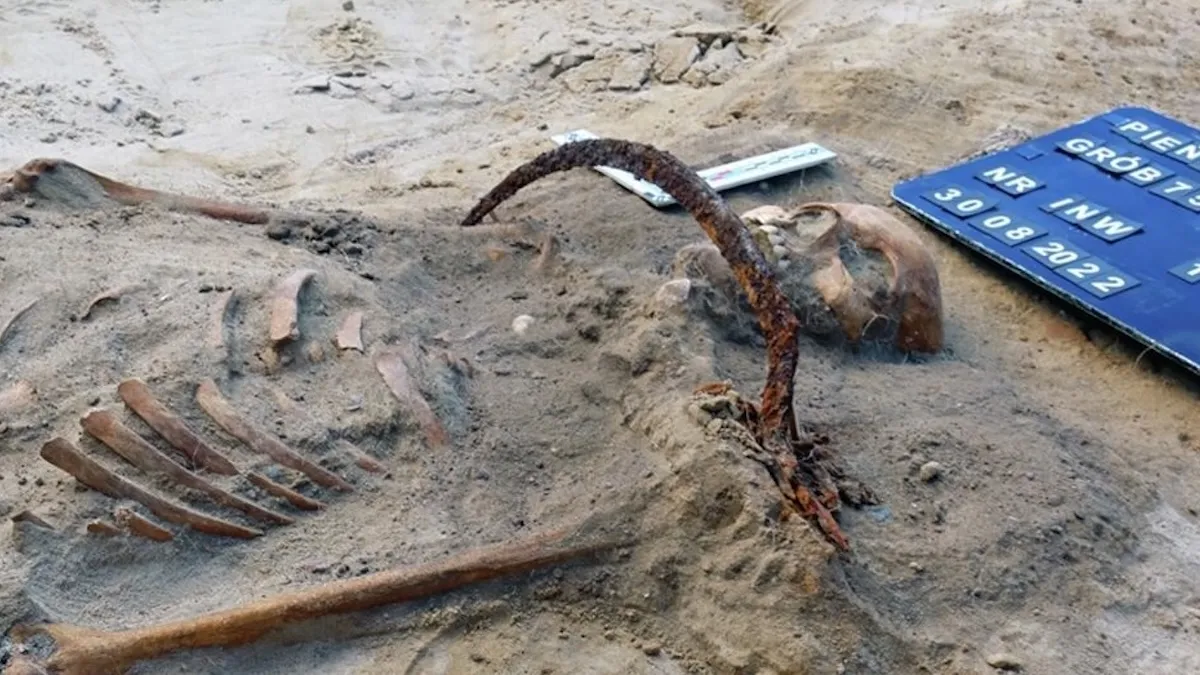
The skeleton with a sickle placed over her throat. (Poliński et al., J. Archaeol. Sci. Rep., 2026) Polish countryside, 17th century. A young woman from high society is buried in a remote cemetery away from the village, because of the manner of her death. To keep her from returning from the dead, a padlock is clamped around her big toe. But it doesn't work. She soon rises from her grave and causes more misfortune for those around her. So the townsfolk take more drastic measures: They return to her grave and place a sickle across her neck, blade facing down, ready to slit her throat if she tries to rise once more. That's the startling scene archaeologists stumbled upon in Pień, Poland, discovering first the graveyard and then this particular burial in 2022. "These observed practices can be described as anti-demonic, protecting the living from dangerous deceased individuals," the researchers write in a paper describing the find, published in the Journal of Archaeological Science: Reports. "[This woman] would likely have been blamed for unspecified misfortunes (e.g., diseases, famine) that often plagued the 17th-century Polish-Lithuanian Commonwealth. "'Grave 75' in situ.