BBlogFlow

Categories

Technology

11058 articles

Technology

A New Technology to Save Cooling Power Could Give Data Centers a Boost - The University of Chicago

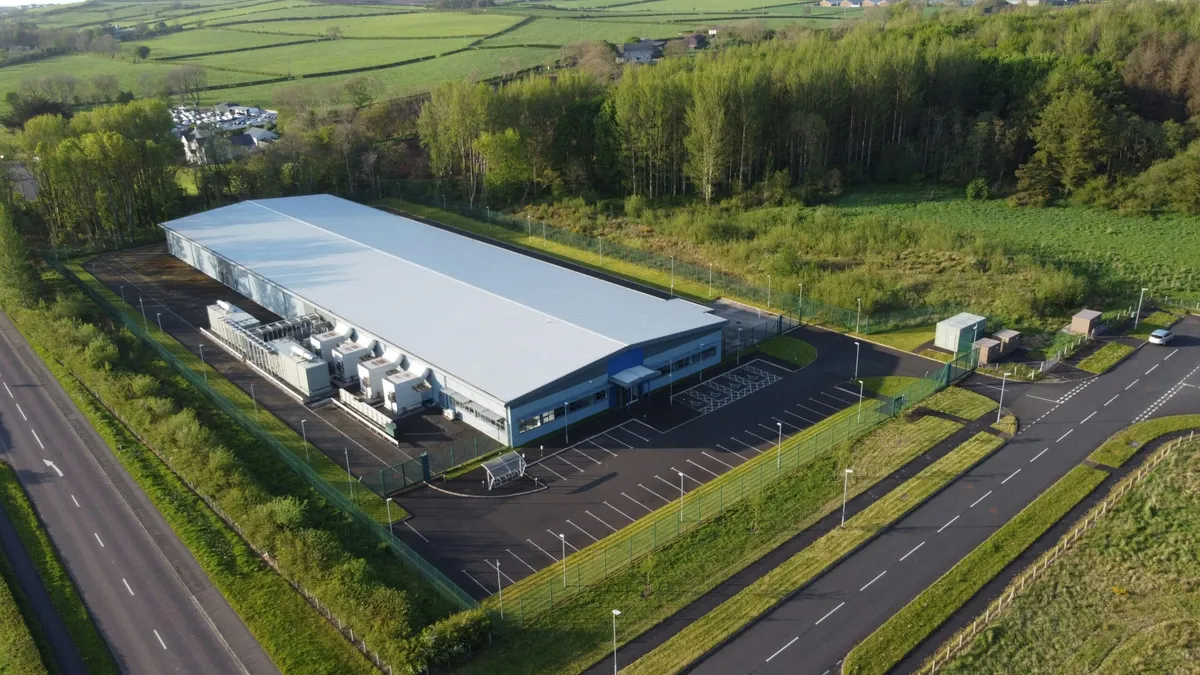
Driven largely by the increased computing needs of artificial intelligence (AI), data centers are running out of power to grow. In the U. S., data centers are on track to consume as much as 12 percent of total U. S. electricity by 2028. Thirty percent of a data center’s total power draw comes from cooling the infrastructure. A new study looks at a way to ease that strain: pairing data center cooling systems with an emerging geothermal technology called Cold Underground Thermal Energy Storage (Cold UTES). Cold UTES stores cold water underground during off peak hours and draws it back up to meet cooling demand when it’s needed most. Unlike a conventional battery, it can hold that stored cooling capacity for weeks or even an entire season. To test the idea, Andrew Chien, the William Eckhardt Distinguished Service Professor of Computer Science at the University of Chicago, and his University of Chicago co-author Wedan Emmanuel Gnigba modeled Cold UTES equipped data centers in three major U. S. markets: Virginia, Arizona, and Texas—regions chosen for their differing climates and grid conditions. Across the three sites, Cold UTES increased available IT power capacity by 9.8 percent.

The University of Chicago·
Technology

Sensing Technologies: Biosensors - Nature

To register and submit an abstract, visit: https://www.sensor-systems.conferences.nature.com/ As advances in biology, engineering, materials science and data analytics converge, biosensors are poised to transform how we detect, monitor and understand the world around us. Fully realising that potential requires a united community excited to turn scientific innovation into solutions that reach the people and sectors that need them most.

Nature·
Technology

Beyond battery life: How monitoring technology is improving downhole intelligence - World Oil

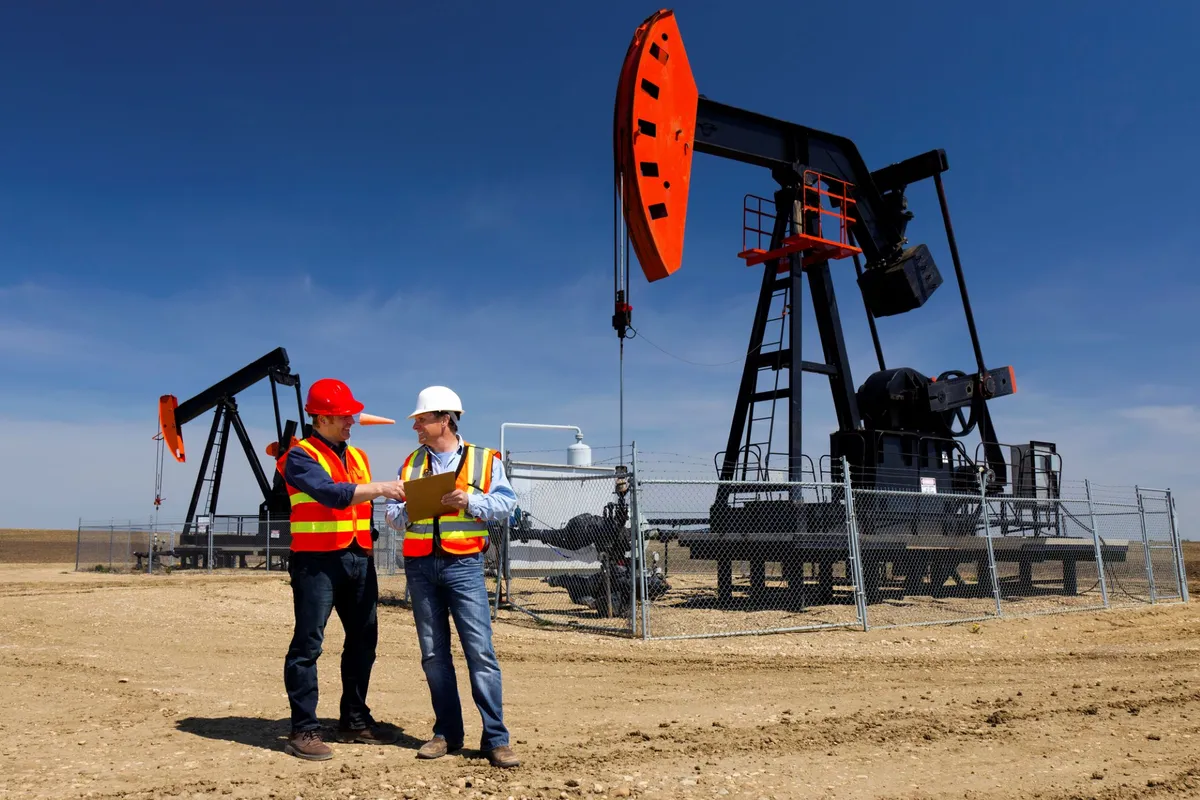
(WO) — Advances in downhole battery monitoring technology are providing drilling operators with more than improved battery runtime estimates, offering additional insights into downhole conditions, tool performance and opportunities to reduce non-productive time (NPT). Traditional battery management systems relied primarily on capacity-based estimates to determine remaining runtime, often prompting operators to replace batteries earlier than necessary. According to Ultralife, one measurement-while-drilling (MWD) operator discovered that batteries were being retired with an estimated 50%–60% of their usable capacity remaining, representing approximately $1.9 million in avoidable annual costs.

World Oil·
Technology

Vitro Glass Technology Center Marks More Than Six Decades of Research - Glass Magazine - NGA

Vitro Architectural Glass’ Glass Technology Center, located north of Pittsburgh, has conducted architectural glass research and development for more than 60 years. The company says it is the largest glass research and development facility in North America, with a staff of more than 60 technicians, engineers and scientists. Vitro’s architectural glass business traces its roots to Pittsburgh Plate Glass, founded in 1883. Vitro acquired PPG’s flat glass business in 2016 and has since invested in its U. S. manufacturing operations and the technology center.

Glass Magazine - NGA·
Technology

Communication, technology overhauled since 'October Surprise' for utility companies - Audacy

Buffalo, N. Y. (WBEN) - There were a number of lessons learned directly related to the "October Surprise" storm that struck Western New York 20 years ago on Oct. 12 through Oct. 13, 2006. Among the lessons learned due to the storm was a need for stronger communication between local government agencies and utility companies like National Grid. National Grid regional director Ken Kujawa says when looking at any storm event forecasted today, the company has an Emergency Response Plan that tackles response plans, as well as interactions with customers, the community and media outreach. "Everything is spelled out in our playbook," said Kujawa during an event Monday highlighting the company's response to the storm 20 years later, With the rise of today's technology, Kujawa acknowledges it's easier than ever for utilities like National Grid to get the message out to customers and others in the community about plans to ensure the power remains on and operational for residents. "One of the fun facts about that storm was when it hit, iPhones were not in existence at that time. They did not come out until later that year," Kujawa noted.

Audacy·
Technology

Canada’s shrinking workforce puts technology and productivity in the spotlight - Digital Journal

Canada has entered a demographic transition with consequences extending from house prices and healthcare to labour shortages, technological investment and economic growth. In a new analysis, the Bank of Canada argues that the combination of an ageing population and declining immigration is beginning to change the country’s economic fundamentals. Population growth slowed to 0.5 percent in 2025, according to the Bank, its lowest rate in more than a century. The central bank’s argument is that fewer newcomers combined with the retirement of the baby-boom generation means fewer workers, weaker growth in demand and ultimately less productive capacity. Immigration consequently occupies an interesting economic position: newcomers increase demand, particularly for housing, but also expand the labour force and the amount that the economy can produce.

Digital Journal·
Technology

Digital agriculture in Canada: Can technology turn farming potential into productivity? - Digital Journal

Canada’s position as an agricultural power has traditionally rested on its land, commodities and export capacity. Increasingly, however, its competitiveness will also depend upon data. Across Canadian agriculture, digital technologies are changing how crops are monitored, machinery is operated and production decisions are made. Artificial intelligence (AI), satellite positioning, drones, robotics, connected sensors and increasingly autonomous equipment are moving farm management towards a model built around continuous measurement, analysis and prediction. The economic stakes are considerable. According to Agriculture and Agri-Food Canada, the country’s agriculture and agri-food system employed 2.3 million people and generated C$149.2 billion, around 7 per cent of Canadian gross domestic product, in 2024. Primary agriculture itself contributed C$31.7 billion and supported 223,000 jobs. Digital agriculture offers one route to improving the productivity and resilience of this economically important system. The question is whether Canada is converting its scientific and technological strengths into widespread commercial adoption.

Digital Journal·
Technology

Technology: Stocks Still Outperformed in Q3, but Returns Are Normalizing - Morningstar

After another historic rise through early June, driven primarily by semiconductor and AI-related stocks, technology sector returns have cooled somewhat. A combination of geopolitical risks such as the Iran war, worries about the size and sustainability of the AI buildout, and what we viewed as some stretched valuations has contributed to this. The Morningstar US Technology Index is up 32.0% on a trailing 12-month basis, compared with 20.0% for the US equity market, with quarter-to-date returns of 5.4% versus 2.0%, respectively. While some stocks have cooled off, we think the AI buildout remains fundamentally intact. The buildout is still supply-constrained, capex estimates for 2027 have risen, the unit economics on recent compute deals suggest very healthy ROIs for installed compute capacity, and token consumption continues to increase exponentially while model capabilities continue to improve. While we remain positive on the fundamentals, many semis screen as overvalued, so we would be very selective here. Cybersecurity names have run up quite a bit and are overvalued. After the recent partial comeback for software, we see the sector as closer to fairly valued.

Morningstar·