The physicist and science communicator answers five questions about making science relatable, why visibility matters, and communicating beyond the scientific bubble.
"SciComm Voices" is part of the Science Communication certificate program's monthly newsletter "SciComm Spotlight" (subscribe via our website).
image: Overview of memory-efficient training techniques for transformers
The integration of deep learning—particularly Transformer-based models—has profoundly reshaped scientific research paradigms. In domains such as drug discovery, weather forecasting, and protein structure prediction, these models enable the extraction of complex patterns from large-scale data. However, as model resolution and parameter counts continue to grow, GPU memory consumption increases rapidly, creating a “memory wall” that confines large-scale training to costly, high-end hardware and limits broader adoption in scientific research.
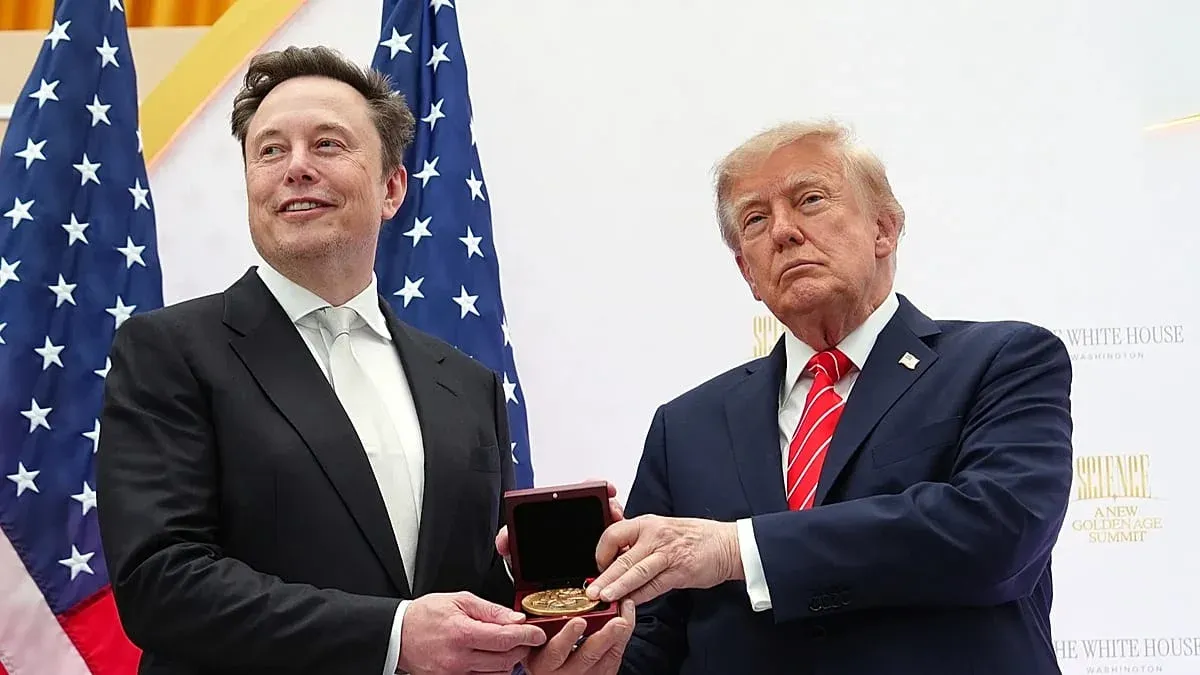
EuronewsFri, October 9, 2026 at 6:16 a.m. UTCDespite the president's glowing words at the award ceremony, Trump and Musk have navigated a rather volatile relationship in recent years.
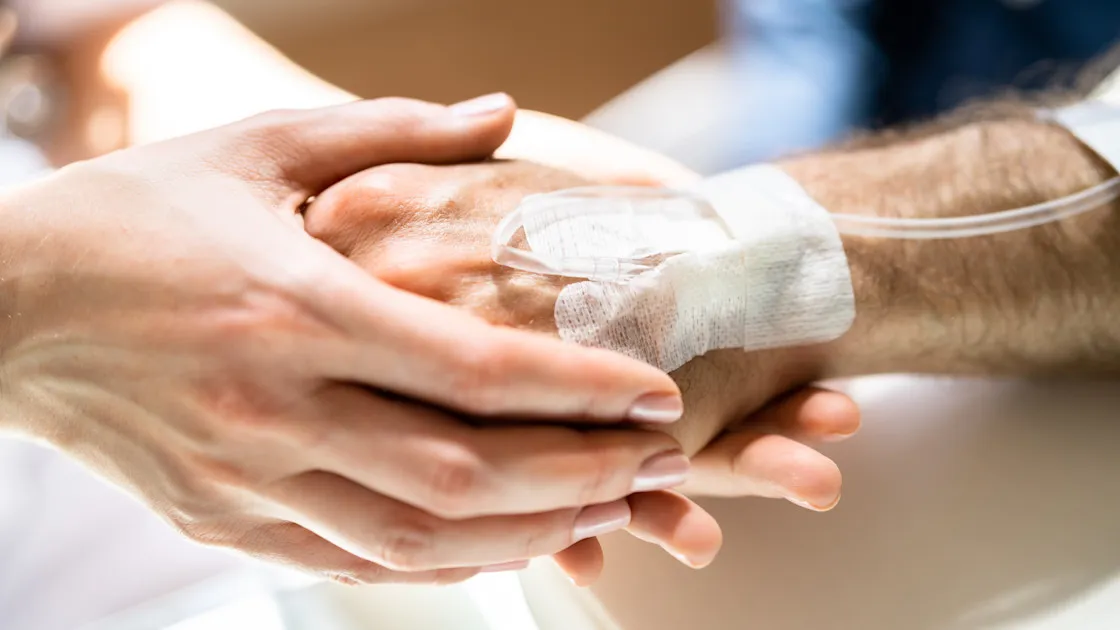
A doctor examines a patient with a cannula in placeMusic is thought to help relieve the pain of minor medical procedures — but what kind of music works best? New results suggest that it may be your favorite. Patients receiving an intravenous cannula — a brief, minor procedure which can cause some pain — before an MRI listened to either their favorite music, music for relaxation, or a piece of Mozart that has been reported to help people with pain, anxiety, or stress in other experiments. The group who listened to their favorite music experienced the biggest reduction in pain overall, while Mozart helped people who were already in pain before the cannulation. Unexpectedly, relaxation music didn’t help at all. If you hate needles, music might make you feel better during a cannula insertion… but it has to be the right kind of music. Although different musical interventions have repeatedly been reported to help with pain and stress, the evidence varies widely for different types of music and it’s hard to figure out what works best.
AI gets a bad rap. And it’s easy to see why—a lot of the headlines we read tend to be about the robots taking human jobs, questionable levels of bot customer service, the amount of power it consumes, and the eventual moment when Skynet becomes self-aware and decides to do away with messy humans. It can be a bit hysterical. What Does AI Do? Artificial intelligence writes things. It makes pictures and videos. It summarizes documents. It can look through huge reams of information and pick out the answers to questions we pose it. But one of the major criticisms of AI in recent years has been its “black box” nature; it can sometimes come up with answers to questions without us being able to understand how or why. What do we want AI to actually do? Can it help us discover new materials? Build better electronics? Use energy more efficiently? Help scientists solve problems that might otherwise take them a really long time? That’s the idea behind “AI for Science,” in which AI is used as part of the scientific process itself. Researchers at NTT have demonstrated one way this could work. Collaborating With AIA recent experiment involved a semiconductor called beta-gallium oxide, or β-Ga₂O₃.
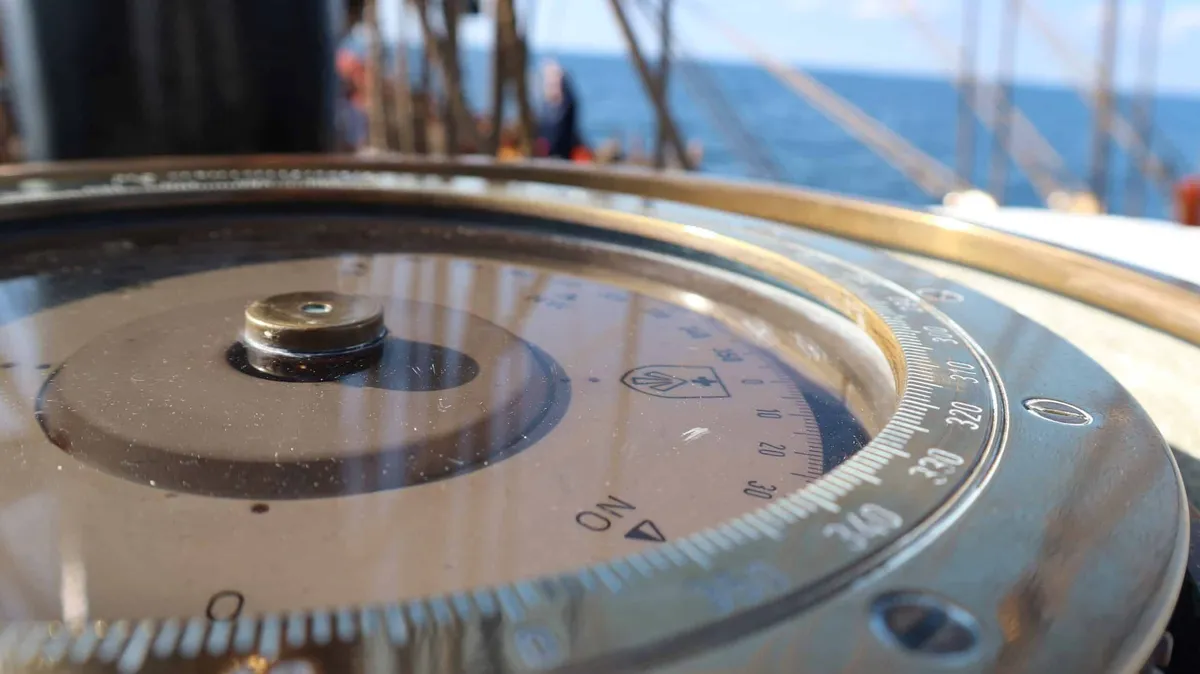
Research conducted by a group led by scientists from Cambridge University and the Max Planck Institute has found the oldest evidence for the possible use of a magnetic compass by an organism.1 The evidence exists in so-called magnetofossils found in marine sediments that have been dated to 97 million years old.
The material in the fossils is magnetite, which is one of the theorized mechanisms for animal magnetoreception. Magnetite (Fe3O4) is an iron oxide usually found as single domain crystals approximately 20-50 nanometers in diameter, making it challenging to detect in organisms. The crystals are permanent magnets that align with Earth’s magnetic field. Several animal species have been found to form biogenic magnetite, including magnetotactic bacteria and some species of fish, including salmon and trout.2 There is also some evidence that a number of genes associated with the formation of magnetite in organisms (biomineralization) are shared by bacteria and eukaryotic (multicellular) animals.3 Bacteria use the compass to guide their movement in finding favorable conditions.
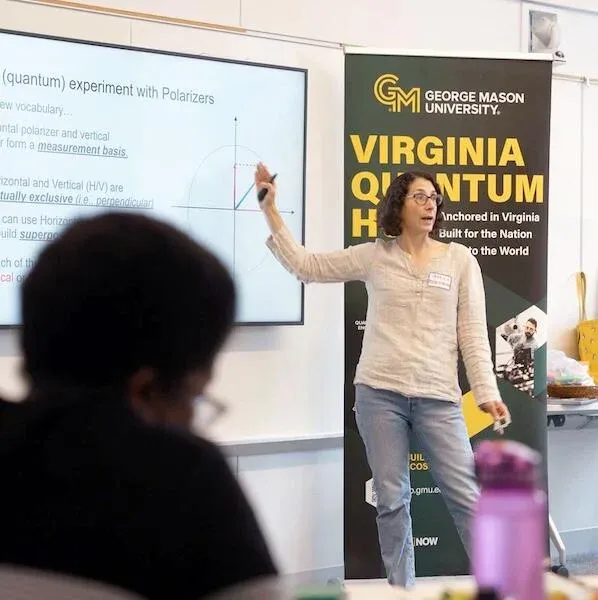
Quantum technologies are poised to transform computing, communications, and national security. At George Mason University, faculty are working to ensure students do not have to wait until college to begin imagining themselves as part of that future.
Through a growing series of professional development opportunities, George Mason’s Quantum Science and Engineering Center (QSEC) is partnering with K-12 educators to make quantum science approachable, relevant, and practical for students.
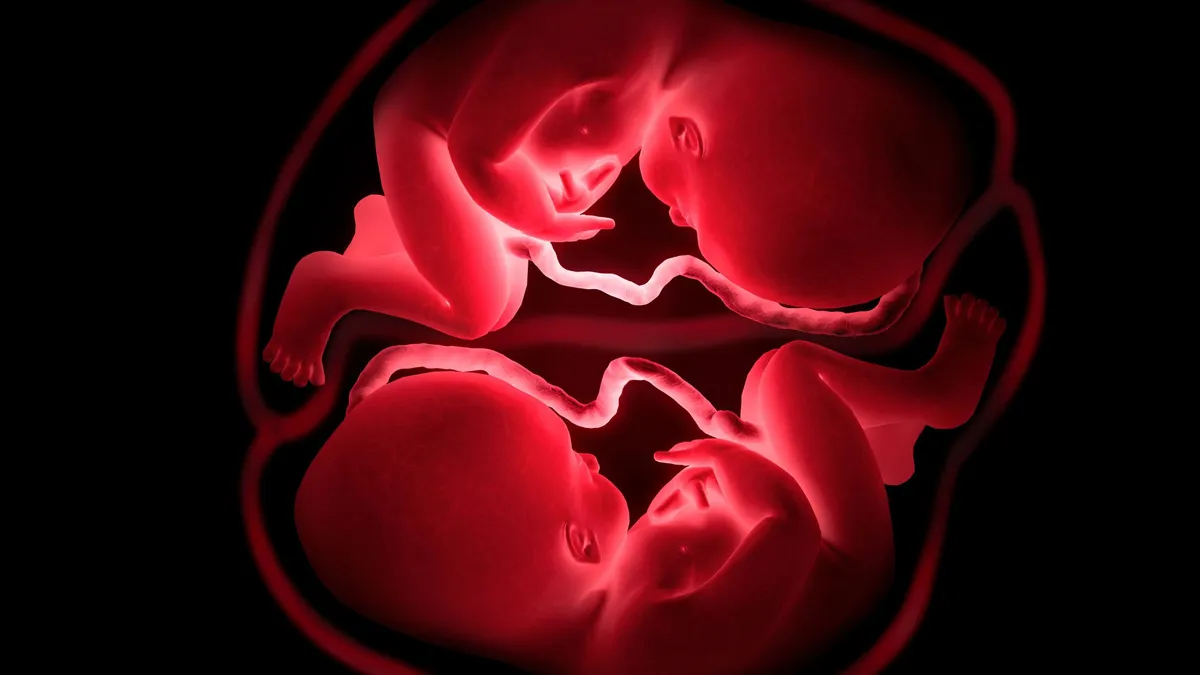
A facial mass detected before birth prompted the early delivery of identical twin sisters. A fetal MRI at 33 weeks showed the mass on one baby's face. When the sisters were born a week later, tumors were found in both. Two children had the same cancer, raising a question that their shared beginnings alone could not answer. Had the disease started separately in each sister, or had cancer cells crossed from one to the other before birth? Researchers turned to a record hidden within their cells. DNA changes, accumulated as their bodies developed, allowed the team to reconstruct events that had happened months before anyone saw a tumor. The study in Nature Communications shows that the cancer began in one sister and passed to the other in the womb, most likely through a single transfer late in the second trimester. The same investigation uncovered clues to how the sisters themselves had formed. The two girls, Amelia and Amaya, died soon after birth. Their family consented to post-mortem examinations for research. The authors dedicate the study to the sisters, whose mother wanted them acknowledged by name.
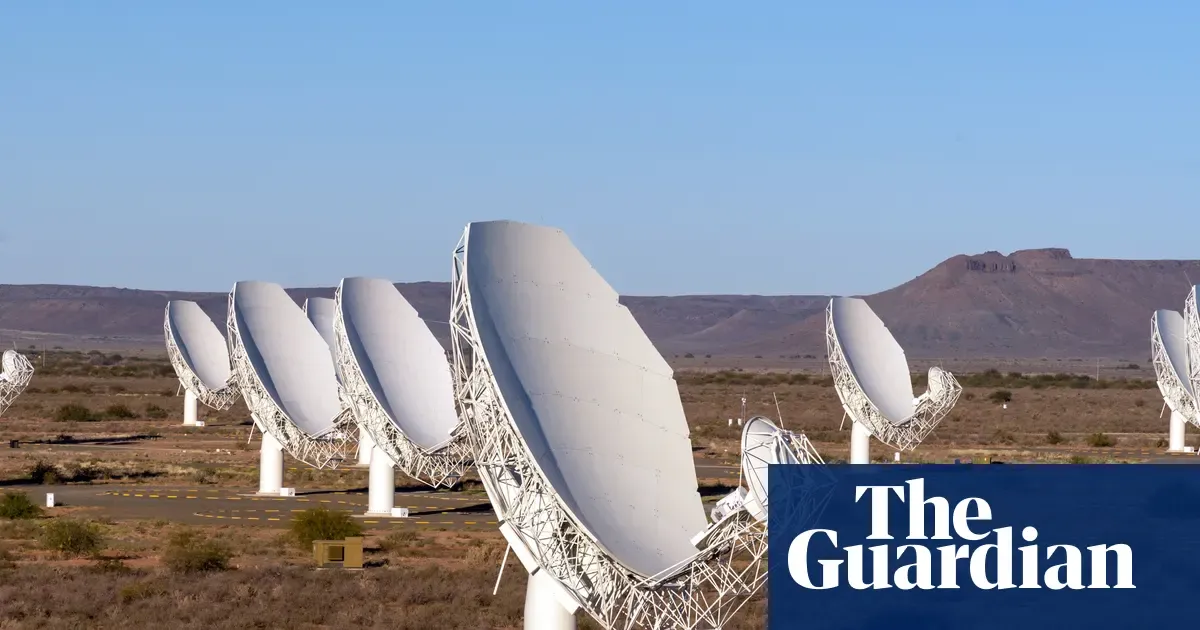
A long time ago in a galaxy far, far away, a mysterious flash of energy was released into the universe. Astronomers have now detected that flash – a burst of radio waves which travelled for more than 10bn years before reaching Earth – what they believe to be the most distant fast radio burst (FRB) ever recorded. FRBs are intense bursts of radio waves that can emit as much energy in milliseconds as the sun does in months or years. These mysterious pulses were first discovered in 2007 and have puzzled scientists ever since, with speculation from some that they could have an alien origin. In a new study published in Science, researchers have detected an FRB that originated when the universe was only about 3bn years old, meaning it has travelled through “approximately 80% of cosmic history”. The burst, dubbed FRB 20240304B, is believed to be the farthest yet detected, more than double the previous distance record. The scientists detected the burst using the MeerKAT radio telescope in South Africa and subsequently identified its host galaxy using Nasa’s James Webb space telescope (JWST).
image: The Project Numina Fellowship received by ISTA Professor Tamás Hausel supports scientists in accelerating their research with AI tools designed for mathematical reasoning.
Artificial intelligence is reshaping mathematical research. Recent advances in AI for mathematics have drawn widespread attention from researchers and the public, prompting the renowned mathematician and Fields medalist Terence Tao to call for a “rapid rethink” of the entire research field.
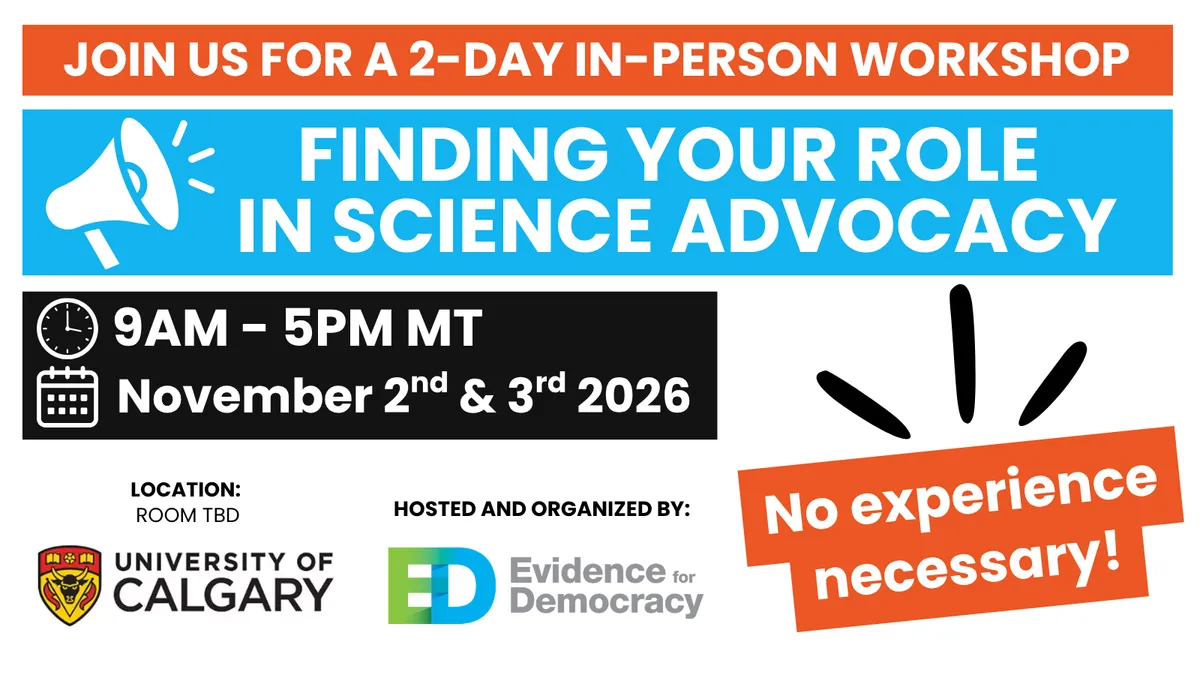
A two-day, hands-on workshop for scientists and researchers ready to turn their expertise into actionNovember 2–3, 2026 | University of Calgary | Calgary, Alberta 9:00 a.m.–5:00 p.m. each day | Doors open at 8:30 a.m. Room details to be announcedDo you want to get involved in science policy or advocacy but don’t know where to start? Then this workshop is for you! You care about an issue. You have knowledge and expertise that could contribute to better decisions. But figuring out where you fit, who to talk to, what to ask for, and how to actually make an impact can be much harder. Over two interactive days, Evidence for Democracy (E4D) will help you develop a concrete, realistic plan for engaging in science policy and advocacy. By the end of the workshop, you’ll have a practical guide to take your next step into advocacy. Finding Your Role in AdvocacyScientists and researchers can contribute to public policy in many different ways: as experts, advisers, communicators, knowledge brokers, advocates, or engaged members of their communities.
Psychopathy is not listed in the Diagnostic and Statistical Manual of Mental Disorders, and it's not an official diagnosis any psychiatrist or psychologist will give. But the term is still widely used, especially in criminology, to describe a problematic cluster of personality traits. The triarchic model says psychopathic personalities have three key features: boldness, disinhibition, and meanness. A new study from clinical psychology researchers Ky Bray and Laura Drislane, both of the University of Mississippi, shows these traits can show up in people's writing, in ways that don't always fit with our stereotype of a 'psychopath'. Their results are published in the journal Personality and Individual Differences. "People tend to think of psychopathy as one thing, but it's actually multidimensional," Bray says. Everyone exhibits these traits to some degree. It's when they appear together, at high levels across the board, that things can get dark. "That's in part why there's a movement away from calling people 'psychopaths,' because we don't view psychopathy as a category," says Drislane.