Why Apple’s MacBook Pro Touch Will Not Change Laptops Forever - Forbes
This story deserves to be shared
Send it to someone who'd care, or post it on your networks.
This article is an excerpt. To read the full content, visit the original source. Forbes
Related articles
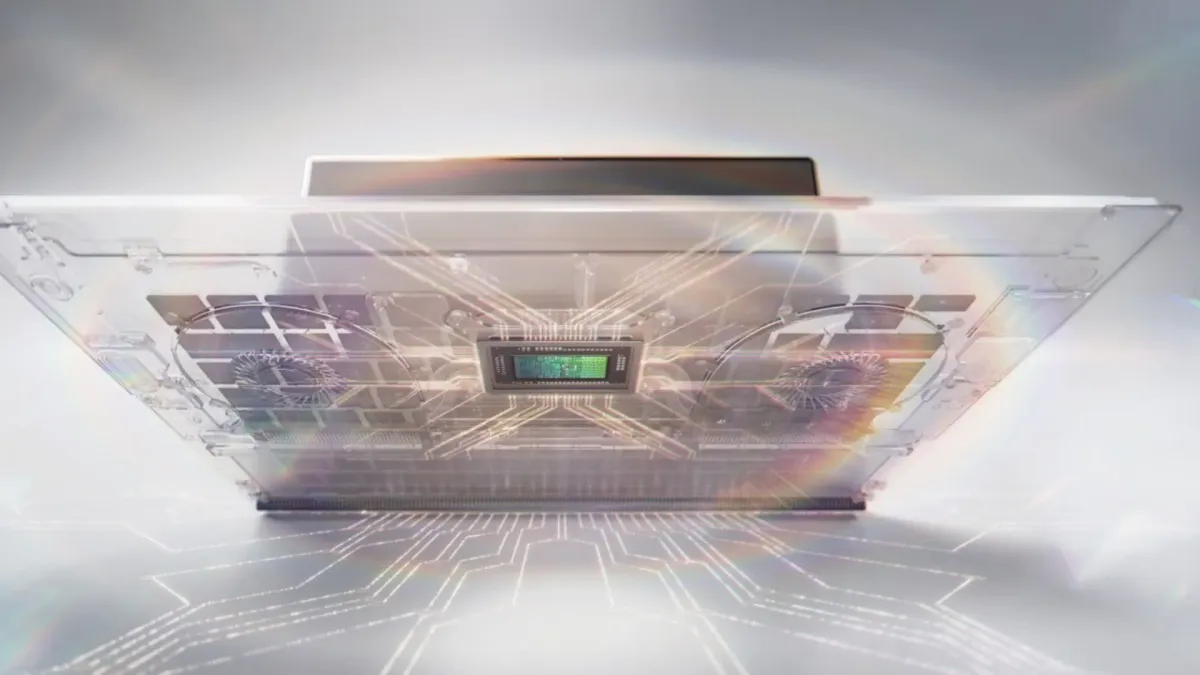
NVIDIA RTX Spark Laptops Launch Worldwide With Local AI Agent Support - Unite.AI
NVIDIA on October 16, 2026, announced that RTX Spark laptops are available globally from ASUS, Dell, HP, Lenovo, Microsoft and MSI, with prices starting at $2,599 and software support at launch spanning local AI agents, creative applications and major games. The systems are sold through the manufacturers’ websites and major retailers, with more systems to follow, and pricing and configurations differ by region. The launch lineup comprises the ASUS ProArt P14 and P16, Dell XPS 16, HP OmniBook Ultra and OmniBook X 14, Lenovo Yoga Pro 9n, Microsoft Surface Laptop Ultra, and MSI Prestige N16 Flip AI+ and Prestige N16. NVIDIA is also offering a limited-time promotion to new Perplexity users. NVIDIA’s RTX Spark product page lists retailers including Amazon, Ant Online, B&H Photo Video, Best Buy and Costco, along with October 16 launch events featuring live demonstrations in Taipei, Seoul, Beijing, Istanbul, San Francisco and Berlin. “RTX Spark brings the power of NVIDIA AI, RTX graphics and CUDA together with Microsoft Windows in one PC for creating, gaming and running personal AI agents,” NVIDIA founder and CEO Jensen Huang said in the announcement.

‘RAMageddon’: is the era of cheap phones and laptops over? - The Guardian
The end of the cheap laptop, the bargain phone and affordable games consoles may be on the horizon. Not because new models are more hi-tech, but because the cost of computer components has shot up. Recently, the biggest manufacturers of laptops and phones, including Microsoft, Samsung and Dell, started putting up prices and pulling cheaper models – which is going to make finding budget phones and laptops under £400 much harder. The root cause is a shortage of memory chips which the tech press has dubbed “RAMageddon”. But it isn’t a conflict or lack of materials causing the shortage, it is the growth of artificial intelligence (AI) and the datacentres the technology relies on. Memory chips are crucial to just about every modern piece of electronics and are also used in other important components such as graphics cards, creating a knock-on effect. The analyst firm TrendForce estimates prices for mainstream laptops typically costing about $900 (£667) might increase by as much as 40% in 2026 owing to the memory chip shortage and rising cost of other parts.
Technology checkout from laptops to green screens - Boise State University

Physicists May Have Inadvertently Built a Qubit That Can Run Backward in Time - ScienceAlert
In the classical Universe, the arrow of time flies one way – but in the quantum realm, where classical physics breaks down, could even time's direction be ripe for the tweaking? The ability to manipulate the direction of quantum evolution could offer new ways to process information – with implications especially for quantum computing. And it may be within reach. Korean physicists have demonstrated a qubit whose processes can be run backward in time… and the deliciously ironic twist is that they had to go back in time to find it. In a new preprint, physicist Tai Hyun Yoon of Korea University developed a theory describing what he calls a quantum vacuum-seeded single-photon time qubit – and showed that an experiment he and colleagues conducted in 2018 for an entirely different purpose had inadvertently already shown it in action. The notion of a time qubit is a relatively recent one, arising in a preprint penned by physicist Yakov Bloch of Tel Aviv University, uploaded to arXiv in November 2025. It's not actually a qubit that can travel backward in time; rather, as Bloch explains it, it's a quantum system that can evolve in two opposite temporal directions at once.

Tests reveal why titanium additions do not fully prevent pitting corrosion in stainless steel - Phys.org
Stainless steel is widely used for its corrosion resistance, but it is not invincible. In environments containing chloride ions, such as seawater, pitting corrosion can occur. These pits often start at tiny particles called inclusions embedded in the steel. Titanium (Ti) is commonly added to stainless steel to improve pitting corrosion resistance by converting easily dissolved manganese sulfide (MnS) into more stable Ti-containing sulfides. However, Ti addition does not completely prevent pitting, and the electrochemical properties of the various inclusions formed in Ti-containing stainless steel—and which of them can trigger pitting—have remained unclear.
0 comments
No comments yet. Be the first to share your thoughts!