We’re Starting to Sound Like ChatGPT — And We Don’t Even Realize It - ZME Science
This story deserves to be shared
Send it to someone who'd care, or post it on your networks.
This article is an excerpt. To read the full content, visit the original source. ZME Science
Related articles

Screen time at ages 1 and 6 may matter more than parents realize - Science Daily
Screens are now a routine part of life for many young children, raising growing questions about how early exposure could influence development over time. New longitudinal research that tracked children from age 1 through age 8 found that greater screen viewing, especially during infancy and around the time children begin school, was associated with lower academic performance at age 9 and weaker working memory at age 10.5. The results suggest that when children are exposed to screens could matter just as much as how much time they spend using them. The World Health Organization (WHO) and the American Academy of Pediatrics recommend avoiding screen use before 18-24 months and limiting it to less than one hour per day for children ages 2 to 5. Many children, however, spend more time with screens than those guidelines advise. Research into the effects of screen viewing on cognitive development has also produced mixed results. Much of the previous work has relied on snapshots taken at a single point in time, focused mainly on school-age children, or lacked repeated measurements throughout early childhood.
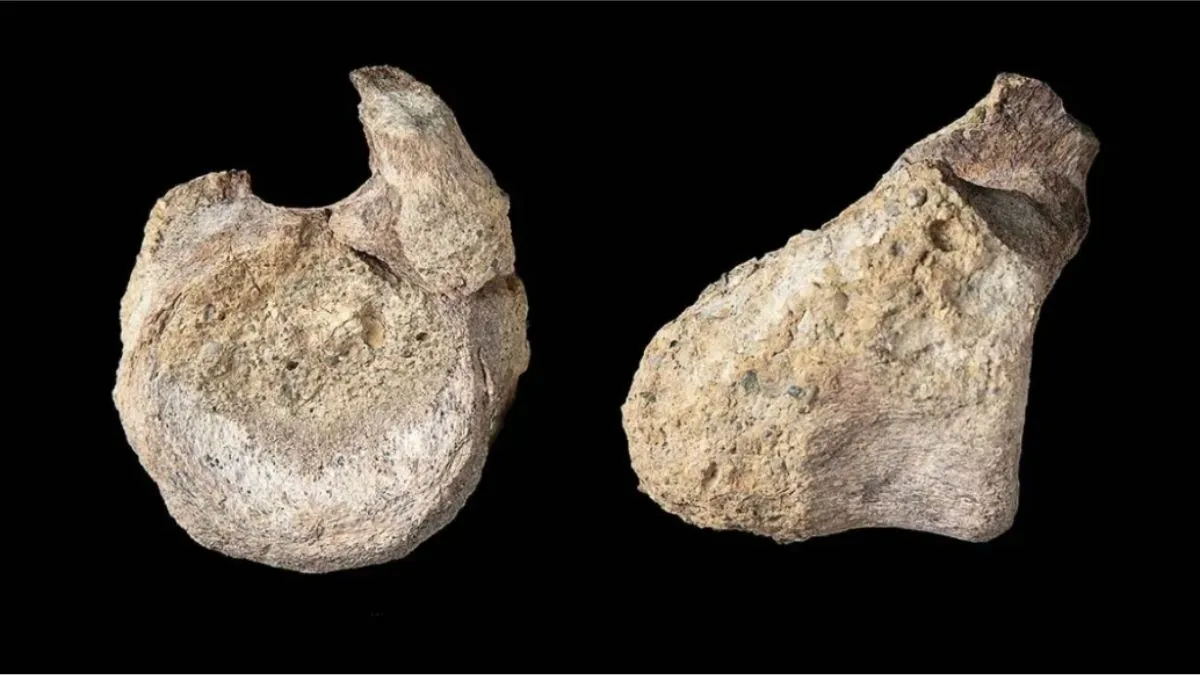
Two Scientists Found a Bone in Antarctica in 1985. It Took 41 Years to Realize What They'd Actually Discovered - ScienceAlert
This is the first evidence of dinosaurs ever collected from Antarctica. (Barrett et al. 2026/Natural History Museum) A fossil that has been sitting in a drawer for 40 years has turned out to be the first piece of dinosaur ever retrieved from Antarctica. Forty years ago, two scientists spent their summer mapping layers of rock on James Ross Island, off the southeast side of Antarctica, as part of a British Antarctic Survey expedition. As they scoured the rocks, the two men – British geologist Michael Thomson and German geologist and paleontologist Reinhard Förster – encountered a number of fossils. There were traces of invertebrates and plants; the scales of bony fish; and a large vertebra which they brought back to the UK. Thomson's notes on the vertebra are brief, and accompanied by a small sketch of the specimen: just one item in a long list of fossil finds from the day. Mike Thomson's 1985 geological field notebook, next to the first-ever dinosaur fossil vertebra found in Antarctica. (British Antarctic Survey)Forty years later, re-analysis of that fossilized bone has revealed it's something far more interesting: The very first dinosaur bone ever found in Antarctica.
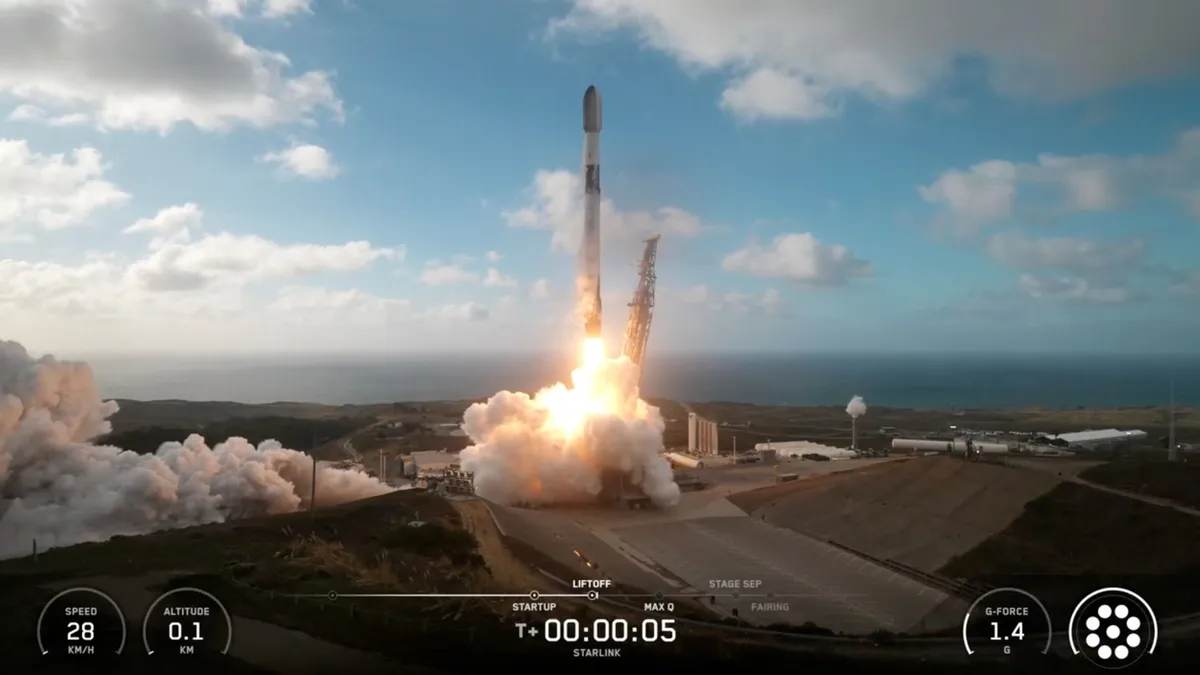
SpaceX launches Starlink satellites from California as Falcon 9 cadence slows (photos) - Space
Soon, it'll be all Starship, all the time.
Glowing plants reveal immune responses around infection sites via two colors - Phys.org
Researchers at the MRC Laboratory of Medical Sciences (LMS) have developed a new way to make glowing biological reporters more accurate, allowing scientists to track gene activity in living plants over days, weeks and potentially even months and years. The approach could help researchers study how plants respond to disease, pests and environmental stress, while opening the door to similar applications in animal and human disease models.

The latest in space science: We look back at the Big Bang - NPR
The latest in space science: We look back at the Big Bang In this edition of Spacing Out, the team from Short Wave shares the latest developments in space science, including the theory on why the universe is made of matter In this edition of Spacing Out, the team from Short Wave discusses the latest space science news

Scientists can now predict qubit behavior faster and more accurately - The Brighter Side of News
A molecular modeling approach identifies boron- and oxygen-containing diamond defects as promising candidates for quantum technologies. The calculations focus on small atomic clusters while retaining the surrounding crystal’s influence, making sophisticated quantum chemistry more manageable. The predictions help screen candidates, but practical qubit performance still requires tests of coherence, stability and other properties. Tiny imperfections in diamond could offer new ways to store and read quantum information. The challenge is deciding which defects deserve the time and expense of experimental testing. A computational study now brings tools from molecular chemistry to that search, identifying promising boron- and oxygen-containing candidates. John Mark P. Martirez, a staff research scientist at the U. S. Department of Energy’s Princeton Plasma Physics Laboratory, reports the work in ACS Central Science. His approach concentrates demanding calculations on a small group of atoms surrounding a defect. Crucially, the model still accounts for the influence of the diamond crystal beyond that group.
0 comments
No comments yet. Be the first to share your thoughts!