Volkswagen Will Remotely Limit Some ID.4s to 80 Percent Charge
This story deserves to be shared
Send it to someone who'd care, or post it on your networks.
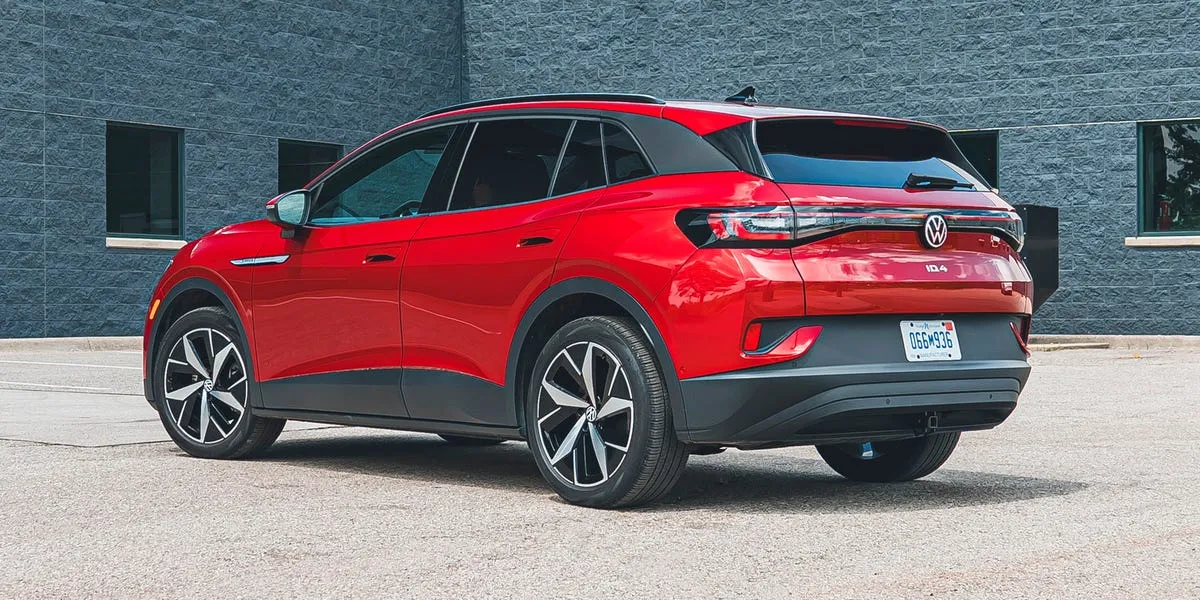
Volkswagen will limit the maximum charge of some ID.4 models in response to a battery fire recall issued earlier this year, according to documents filed with NHTSA. The automaker is still working out exactly why the batteries combust, but limiting the charge to 80 percent or less reportedly helps minimize the risks. Car and Driver reached out to Volkswagen for confirmation of the report. We will update this story when we learn more. Volkswagen is planning to send out an over-the-air update to 22,524 ID.4 customers that would limit the maximum charge of their vehicle to 80 percent, recall documents filed with the National Highway Traffic Safety Administration (NHTSA) show. According to the documents, the batteries in the associated vehicles could catch fire if certain charging conditions are met while the vehicle is at over 80 percent state of charge. This isn’t the first recall related to battery fires that Volkswagen has issued for the ID.4 this year. That came back in January and covered nearly 44,000 models stretching from the 2023 to 2025 model years. Car and Driver reached out to Volkswagen for confirmation that the two recalls are related.
This article is an excerpt. To read the full content, visit the original source. Car and Driver
Related articles
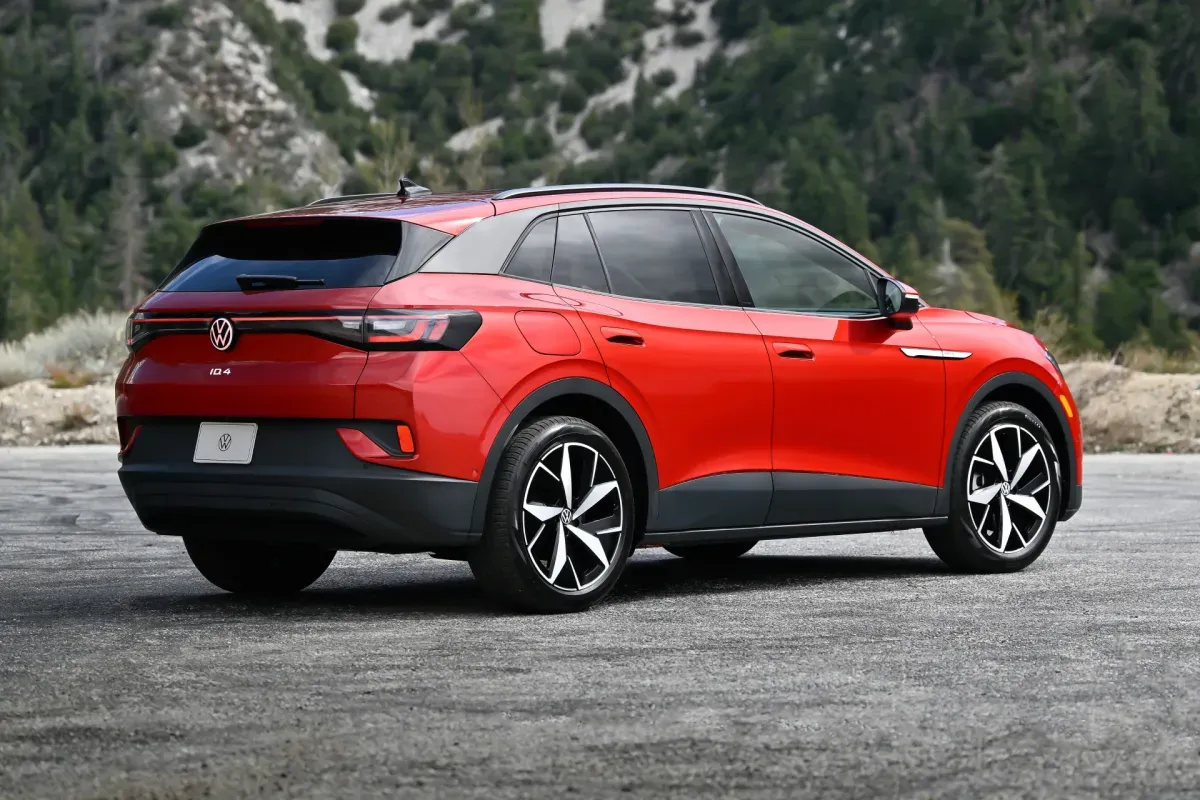
VW Will Remotely Cap ID 4 Charging at 80% Amid Battery Fire Recall
Volkswagen is going to push an over-the-air-update to a huge chunk of ID 4 EVs in an effort to prevent battery fires. The company still isn’t quite sure what is causing the fires that prompted a recall of its compact electric car, but apparently they’re less likely to happen if owners cap their charge level at 80%. “The root cause is unknown, however in certain high-voltage batteries within the affected vehicle population, certain charging profiles combined with a state of charge over 80% may trigger thermal propagation within the high-voltage battery,” VW’s recall report said.

Trabant Finally Got A 4-Cylinder Engine Just As East Germans Could Buy Western Cars
After Germany was divided by the U. S. and Russia at the end of World War II, both the Federal Republic of Germany (West Germany) and the German Democratic Republic (East Germany) faced massive industrial rebuilding projects. Both sides needed to get their populations on the move, and both went about it the same way: state-controlled automakers. Volkswagen (which is currently looking at an $18.6 billion restructuring plan) was in the hands of the German state of Lower Saxony, representing West Germany. Meanwhile, the GDR-owned VEB Sachsenring Automobilewerke Zwickau produced Trabant cars. Trabants wouldn't become quite as popular as VW's rivaling Beetles, but they were successful on their own terms. Despite facing a much smaller market, more than 3 million Trabant vehicles were produced between their launch in 1957 and eventual demise in 1991. They would also get a turn in the cultural spotlight in 1992, when U2 put one on the cover of its album "Achtung, Baby. " More recently — and more disturbingly — artist David Černý put a Trabant on legs for his haunting sculpture "Quo Vadis. "

These Mid-2000s GM Performance Cars Were Strange And Forgotten
Gerhard started his career in automotive journalism in 2010, after finishing degrees in Communication, English, and Politics, and diplomas in Film and Art Appreciation and Graphic Design. He's currently a senior editor with experience in local and global coverage, and more than 1,000 test cars driven. He started his career at CarBuzz in January 2021. Before the Corvette Z06 and CT5-V Blackwing became the benchmarks of American performance, General Motors was in a far stranger place. During the 2000s, GM was throwing performance hardware at nearly everything in its lineup — pickup trucks, crossovers, retro wagons, even badge-engineered Subarus — in a sprawling experiment that spanned Buick, Cadillac, Chevrolet, Pontiac, and Saturn. The results were often bizarre, occasionally brilliant, and almost entirely forgotten. Then came the 2009 bankruptcy, and most of these oddball projects vanished overnight.

The F-150's Base Engine Is Outclassed On Torque By GMC's Cheapest Sierra 1500
Matt Nelson is an automotive journalist with nearly a decade of experience in all things cars. He's spent years working at dealerships in sales, finance, and service. He's since traded in his pens and wrenches for a keyboard, and leveraged the expertise gained from his work experience into a writing career. When it comes to cars, facts, and the truth, Matt’s equal love for all three meant automotive journalism was the only path forward. Ever since the age of six, when he’d spend his time helping his father fix his family’s old Buick, Matt has had a keen interest in anything and everything with four wheels. Naturally, once Matt started working, he ensconced himself in the automotive industry and held positions spanning from car detailer, mechanic, to automotive sales and finance. Because he’s seen it all, driven most, and heard a lot, auto journalism came naturally to him. With a passion for cars like Matt’s, it’s safe to say every article will showcase his penchant for truth, accuracy, and overarching desire to make sense of the modern, complex automotive world. This means every one of his readers can be at the forefront of the most important automotive news.

Hyundai Tucson Vs. Kia Sportage: The Sibling Sales War Has A Clear Winner
Michal studies Automotive Journalism at Coventry University in the UK, and has been writing for CarBuzz since March 2025. He was nominated for student culture piece of the year recently and has been the Vavel.com F1 Editor. He studied Journalism at university to combine his love of writing and cars. Michal's love for cars started when he couldn't sleep as a baby. His father would watch the only thing on TV to help them relax - Formula 1. Since then, he's felt like he's had a V10 ringing in his mind.

Rivian And Volvo Make The Only Large SUVs To Get IIHS Top Safety Pick+ Ratings In 2026
Every year, the Insurance Institute for Highway Safety (IIHS) gives Top Safety Pick and Top Safety Pick+ designations to the new cars that it deems the safest. These selections are determined via crash test results, headlight ratings, pedestrian and vehicle front crash prevention capabilities, seatbelt reminders, ease of child seat lower anchor and tether installation, and whiplash prevention ratings. A Top Safety Pick+ must receive Good ratings in its small and moderate overlap front crash tests, as well as its side tests. Top Safety Pick+ winners also have Acceptable to Good standard headlights, Good standard pedestrian front crash prevention tech, and Acceptable to Good standard vehicle-to-vehicle front crash prevention tech. The organization's website lets you see all its best picks at a glance, and while some segments produce more TSP+ worthy products than others, one that produced a surprisingly small pool was the Large SUV class. Filtering for the biggest of sport utility vehicles that met the IIHS' most stringent requirements, just two made the cut for 2026: the Rivian R1S and the Volvo EX90. They're both electric and are classified as luxury vehicles.
0 comments
No comments yet. Be the first to share your thoughts!