VEG-06: How plants and beneficial bacteria work together in microgravity. - NASA Science (.gov)
This story deserves to be shared
Send it to someone who'd care, or post it on your networks.
This article is an excerpt. To read the full content, visit the original source. NASA Science (.gov)
Related articles

Scientists Simulated Microgravity in Human Cells and Found Something Unexpected About DNA - ZME Science
Colombian science communicator Faber Burgos experiments with levitating water aboard a reduced-gravity flight in 2024. Credit: Wikimedia Commons Every cell in your body has spent its entire existence under gravity’s pull.
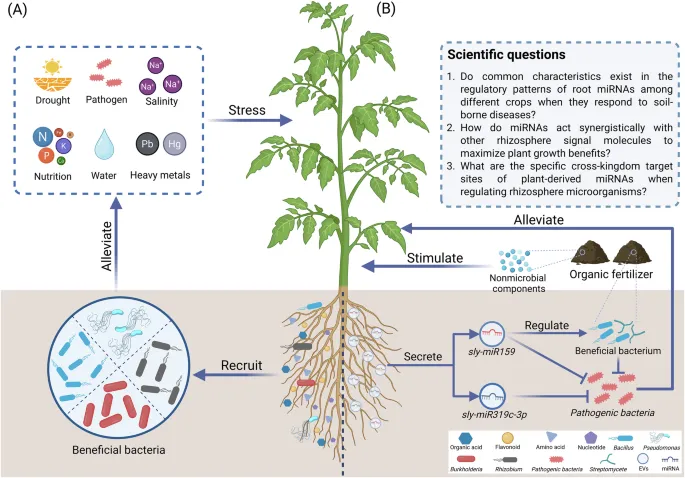
Plant microRNAs recruit beneficial microorganisms: implications for sustainable agriculture - Nature
Soil-borne diseases hinder crop yield and quality. Liu et al. found that organic fertilizer induces tomato roots to secrete specific microRNAs (miRNAs) likely via exosome-like extracellular vesicles (EVs) to regulate rhizosphere microbiomes and enhance soil disease resistance, revealing a new mechanism and informing sustainable agriculture. MicroRNA-mediated rhizosphere microbiome regulation: a new insight into plant “cry for help” theoryBeing sessile organisms, plants frequently encounter various biotic and abiotic stresses during growth and development. The rhizosphere microbiome is regarded as the “second genome” of plants, and its community structure and functional diversity are directly related to the plant’s survival strategies and ecological adaptability1,2,3. Soil-borne diseases are a key bottleneck limiting crop yield and quality improvement. Conventional chemical control methods not only disrupt the soil microecological balance but also may pose food safety risks4,5.
0 comments
No comments yet. Be the first to share your thoughts!