Unregulated tourism risks disrupting Timor-Leste’s whale migration - Reccessary
This story deserves to be shared
Send it to someone who'd care, or post it on your networks.
This article is an excerpt. To read the full content, visit the original source. Reccessary
Related articles
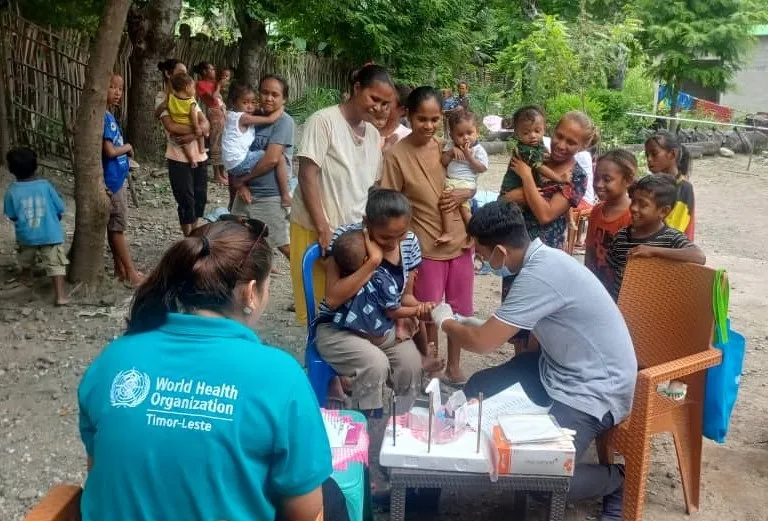
WHO validates Timor-Leste’s elimination of trachoma as a public health problem - World Health Organization (WHO)
The World Health Organization (WHO) has validated Timor-Leste as having eliminated trachoma as a public health problem. Trachoma is the world's leading infectious cause of blindness. Timor-Leste was the last country in WHO’s South-East Asia Region with suspected endemic trachoma. With this validation, trachoma has been eliminated as a public health problem throughout the region. "I congratulate Timor-Leste on this important achievement. By combining sound planning, careful field investigation and modern surveillance, the country has shown how science and strong health systems can protect people from preventable blindness," said Dr Tedros Adhanom Ghebreyesus, WHO Director-General. "The elimination of trachoma from the South-East Asia Region is a significant step towards our global target of eliminating trachoma worldwide by 2030. "WHO’s validation follows a rigorous, multi-year process to determine whether trachoma poses a public health problem in the country and to document the health system’s capacity to detect, investigate and manage cases that occur in the future.
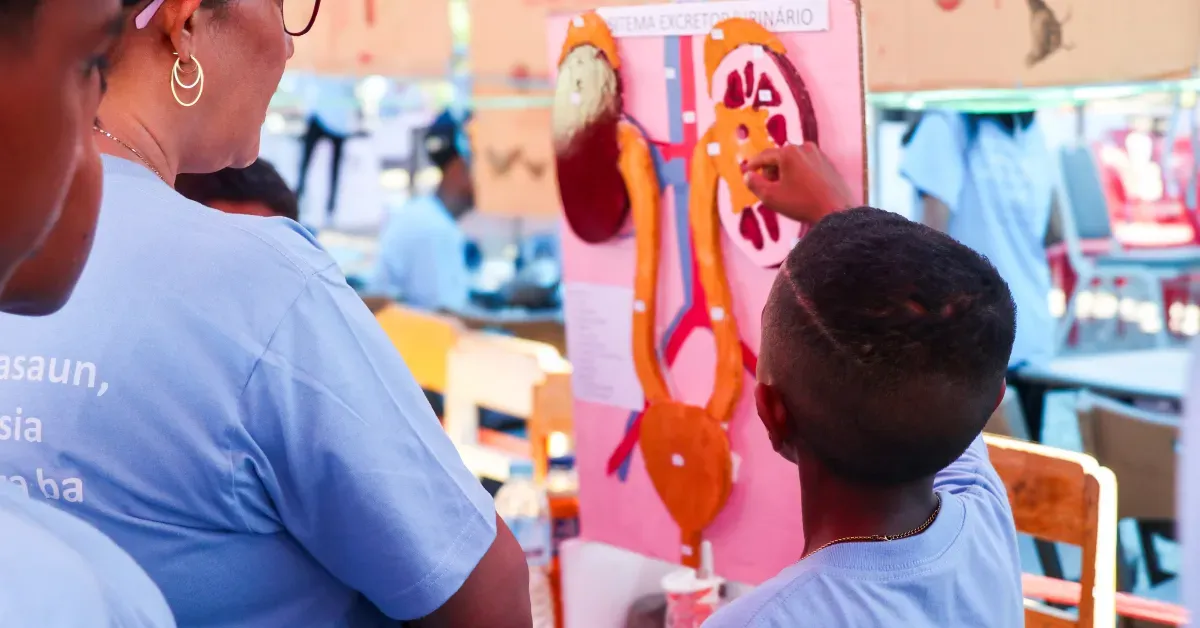
Science Education and Timor-Leste’s Future - UNESCO
In many schools around the world, laboratories are a normal part of learning. One school might even have several labs: a science lab, an IT lab, and a language lab. Spaces where students learn beyond textbooks and theories and put these lessons into practice. For science education in particular, laboratories play an important role in helping students connect theory with real-world experience. Through experiments and observation, students learn to test ideas and better understand how things work. These spaces and experiences can help develop curiosity, analytical thinking, and problem-solving skills that students carry with them long after they have left school. But in Timor-Leste, this kind of learning environment was largely unavailable until recent years. For many teachers and students, science was taught almost entirely through theory, with teachers explaining concepts that students had no means of seeing, touching, or testing for themselves. The absence of laboratories may seem like a small detail, but for science education, it shapes how students experience learning. Timor-Leste is a country with serious ambitions for its future.
0 comments
No comments yet. Be the first to share your thoughts!