Unraveling DNA repair: How cells protect their genetic blueprint - Phys.org
This story deserves to be shared
Send it to someone who'd care, or post it on your networks.
Every cell in the human body faces a chronic challenge: protecting its DNA. Whenever cells divide, their genetic material must be copied accurately. But DNA is continuously under attack, and when damage goes unrepaired, it can threaten genome stability and contribute to the progression of disease.
This article is an excerpt. To read the full content, visit the original source. Phys.org
Related articles

Limei Xu: Unraveling water’s hidden physics - Advanced Science News
From its unique properties to the physics of phase transitions, Limei Xu explains how studying water can reveal fundamental laws of nature. Water might look simple at first glance—just two hydrogen atoms bound to a single oxygen atom. Yet its complex behavior continues to puzzle scientists around the globe. Understanding this seemingly simple molecule could hold the key to explaining the behavior of many other materials and physical phenomena.
Custom frame timing captures ultrafast events across five orders of magnitude in time - Phys.org
Most conventional methods of ultrafast photography use evenly spaced intervals in which images are taken, but new developments have shown how much can be left out of the story, especially when multiple timescales are involved.
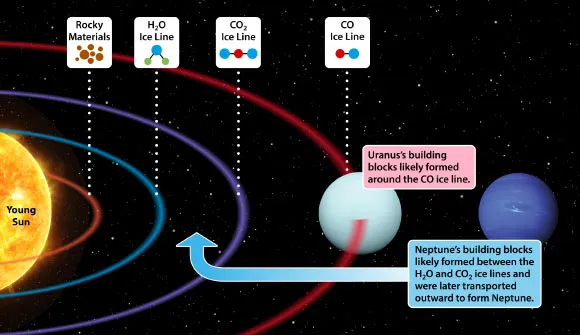
Uranus and Neptune May Have Taken Different Paths to Becoming Ice Giants - Sci.News
Uranus and Neptune are often described as near-twins, but a new study suggests their chemistry, and possibly their histories, may differ more than expected. The materials making up Neptune and Uranus likely came from different regions in the protoplanetary disk around the young Sun. Image credit: SwRI.
Physicists believe ‘forgotten’ particle could explain existence - wyomingnewsnow.tv
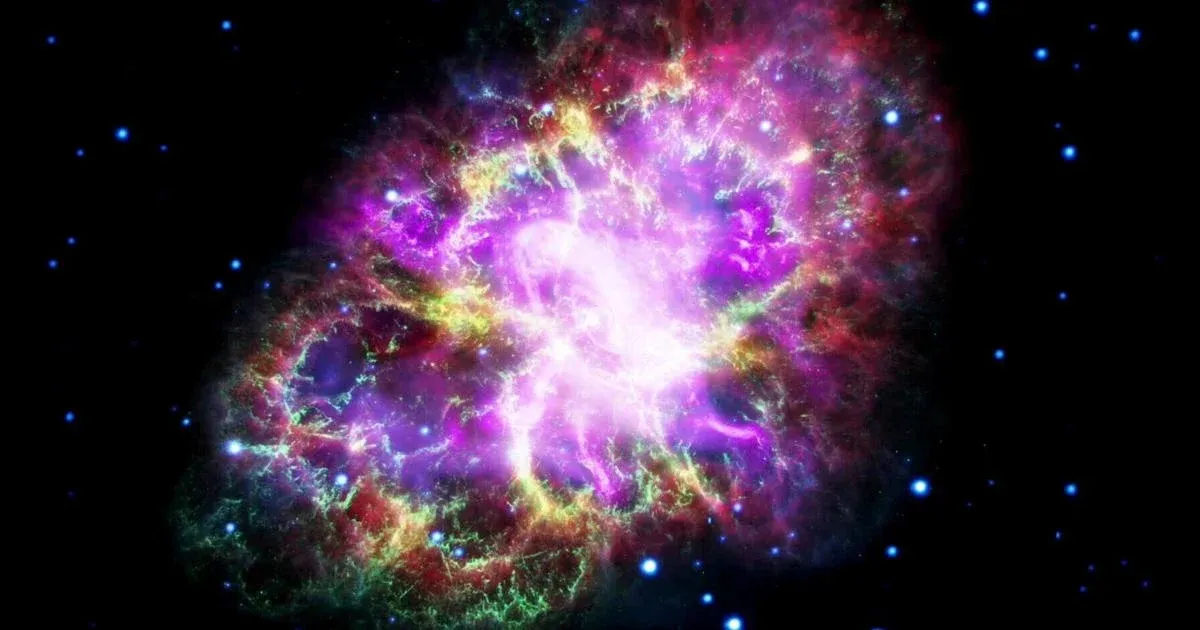
Crab Nebula in the Taurus constellation. (NASA / ESA / JDePasquale(STScI) via SWNS) By Stephen BeechA “forgotten” particle could answer the mystery of why we exist, say physicists. A new theory on the birth of the cosmos has been unveiled, suggesting the early universe was shaped by an ancient particle that has been overlooked for decades. The research, published in the journal Physical Review Letters, tackles one of the greatest conundrums in modern physics — how matter triumphed over antimatter in the aftermath of the “Big Bang”. According to current theories, both should have annihilated each other after a colossal explosion — leaving nothing but an empty universe of pure energy. But physicists at the University of Southampton and the Indian Institute of Technology Kanpur say they found a clue in a neutrino, one of the lightest particles in the universe. The research team discovered that an often-ignored relative of the particles — known as a “decoupled” heavy neutrino — could have helped matter dominate over its counterpart.
0 comments
No comments yet. Be the first to share your thoughts!