Ultraprocessed Food Linked to Vascular Brain Injury in Midlife - European Medical Journal
This story deserves to be shared
Send it to someone who'd care, or post it on your networks.

Higher ultraprocessed food (UPF) intake has been linked to greater adiposity and higher odds of vascular brain injury (VBI) in middle-aged adults in Canada, although it has not been associated with cognitive performance, according to a new cross-sectional study.
Ultraprocessed foods, defined by the NOVA classification, account for a substantial and increasing proportion of dietary intake in Canada. Although UPFs have been consistently associated with adiposity and cardiometabolic disease, their associations with subclinical VBI and cognitive performance in midlife have been unclear.
This article is an excerpt. To read the full content, visit the original source. European Medical Journal
Related articles

The midlife blind spot - The News Pakistan
A representational image shows a lady doctor standing beside a patient. —TheNews/FileHalf the world’s population will experience menopause, yet it is still spoken of in whispers. The World Health Organisation calls it a natural transition that remains under-recognised and under-supported worldwide. World Menopause Day, observed every year on October 18, should be a moment of reckoning. Menopause is not a peripheral women’s issue but a systemic failure of medicine and public health policy. It affects every woman who lives long enough, yet it remains poorly taught, poorly understood and poorly treated. Until it is recognised as a public health priority, millions of women will continue to be dismissed rather than helped. Perimenopause and menopause often arrive when women are at their professional and personal peak, managing profound bodily changes alongside life’s greatest demands. They may be leading teams, advancing careers, caring for growing children and supporting elderly parents. Poor sleep, exhaustion, and cognitive changes can significantly affect productivity and personal growth.

New ‘Menopause at Work’ project aims to protect midlife women’s health and help them thrive at work - Harvard T.H. Chan School of Public Health
Joe Allen, professor of exposure assessment science, and Sasha Hamdani, psychiatrist and creator @thepsychdoctormd giving a virtual briefing about air quality and mental health. Thanks to a WIN Challenge grant, the Center for Health Communication will help online influencers share evidence-based information about menopause that can prompt employers to provide more support for women workers.
The blood metabolome of brain health in midlife and influences of genes, microbiome and exposome - Nature
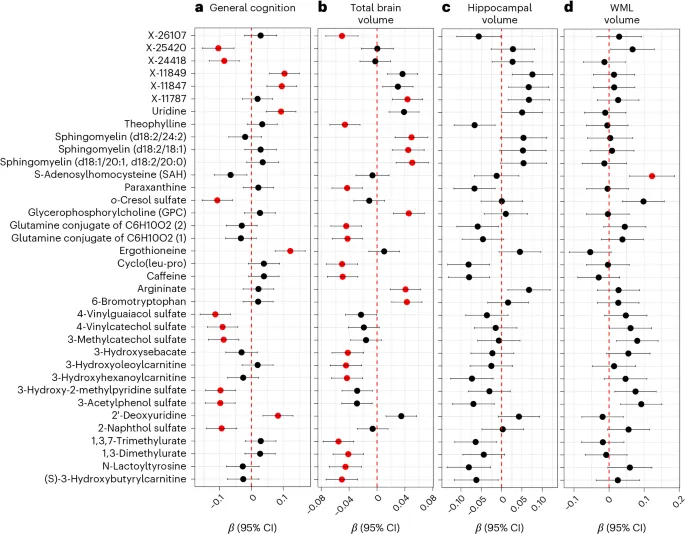
MainGrowing evidence implicates alterations of the peripheral metabolism in brain-related diseases, including AD1,2,3. Multiple studies have linked the blood levels of various metabolites, including amino acids (for example, valine), lipids (including acylcarnitines, phosphatidylcholines, sphingomyelins and bile acids) and lipoproteins, with AD-related phenotypes such as cognition and brain imaging phenotypes or the conversion from a cognitively normal state to AD4,5,6,7,8,9,10,11,12,13,14,15. Highlighting the long presymptomatic phase of AD, structural and functional changes in various brain regions and alterations in neuropsychological markers emerge many years before disease manifestation16,17,18,19. In particular, brain atrophy (cortical thinning and reduction in hippocampal volume) and the presence of white matter hyperintensities as detected through MRI serve as distinctive neurodegenerative and vascular markers associated with AD20,21,22. Studying early metabolic changes linked with these features of AD, before the onset of any symptoms, might reveal metabolites that are important in the disease etiology.
0 comments
No comments yet. Be the first to share your thoughts!