This snail may hold a secret to human eye regeneration - Science News
This story deserves to be shared
Send it to someone who'd care, or post it on your networks.
This article is an excerpt. To read the full content, visit the original source. Science News
Related articles

Scientists uncover mystery of how snail shells coil to the right or to the left - Phys.org
Scientists have discovered a gene that determines whether Japanese snails develop shells that are left- or right-coiling—with implications for understanding the underlying handedness of our own bodies. The researchers from the University of Nottingham and Tohoku University studied wild Euhadra snails in Japan to understand what makes one snail a mirror image of another. They found that the coiling direction, or chirality, of a snail shell is due to natural differences in a gene that makes a protein called myosin. Myosin helps cells move and change shape by working with other proteins to make the cell scaffold.
Snail slime does many jobs thanks to calcium - Science News
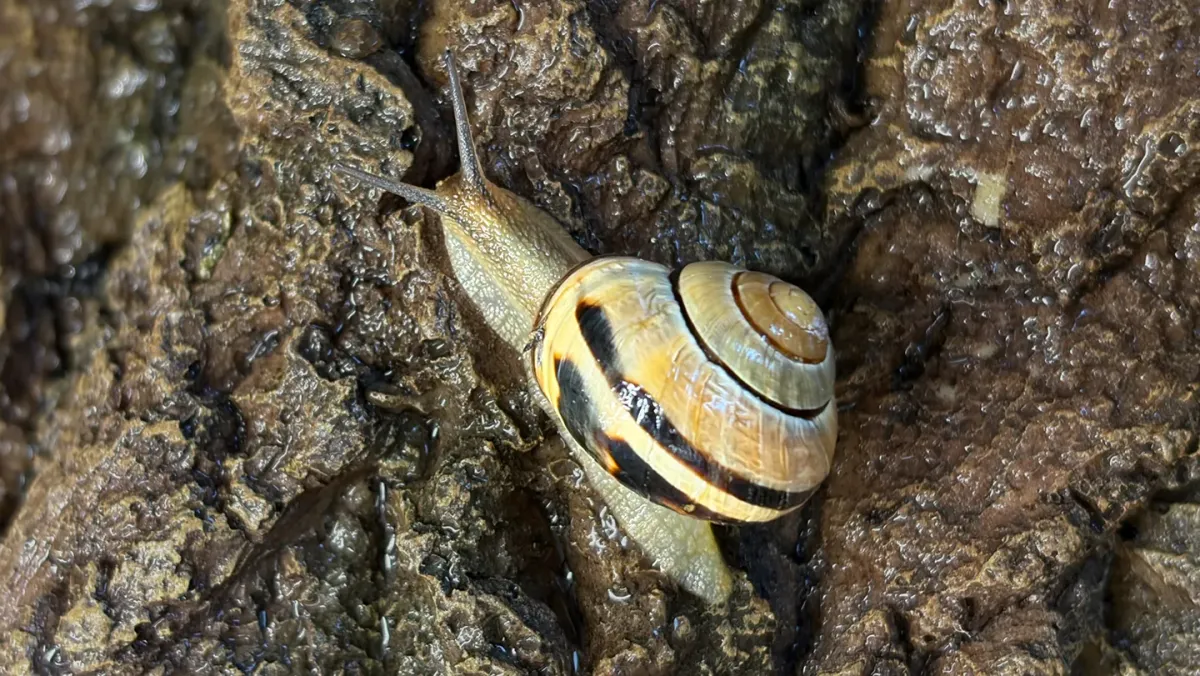
Snails remix their slime’s chemistry to shift between mucus types, from sticky to slippery Land snails like the grove snail (Cepaea nemoralis) (shown) can make five different kinds of mucus. The slimes’ properties are fine tuned by the snail for specific functions for life in the slow lane.

The secret to being human may be hidden in our DNA - The Brighter Side of News
A repetitive stretch of noncoding DNA helps regulate a gene active in human but not chimpanzee forebrain progenitor cells. Experiments linked the ZNF558 gene to mitochondrial regulation and developmental timing in laboratory-grown brain organoids. The findings identify one possible evolutionary mechanism, rather than an explanation for intelligence or all human–chimpanzee brain differences. A repetitive stretch of DNA outside protein-making instructions can help determine whether a gene switches on during early brain development. Experiments comparing human and chimpanzee cells traced that difference to a regulatory system involving ZNF558, a gene shared by both species. Altering its activity changed the growth and gene-expression patterns of laboratory-grown human brain organoids. The work, led by Johan Jakobsson at Lund University in Sweden, appeared online in Cell Stem Cell. The findings show how changes in gene regulation can produce developmental differences even when the protein-coding gene itself remains conserved. They do not establish why humans think differently from chimpanzees or identify a single genetic explanation for human brain evolution.
Multi-scale representation contrastive learning for multivariate time-series anomaly detection - Nature
We’re sharing this article early to provide faster access to peer-reviewed, accepted research. It is citable and carries a permanent DOI. This version is subject to further edits and will be replaced automatically by the final Version of Record. All legal disclaimers apply. AbstractIn recent years, multivariate time series anomaly detection has received growing attention due to its broad relevance in real-world applications. Nevertheless, accurately identifying anomalies in large-scale time series remains challenging. Many existing methods partition time series into patches to model temporal information, but single-scale patching cannot simultaneously capture complex dynamics at multiple granularities. Moreover, multivariate time series often exhibit strong coupling and complex interactions across sensor channels, such that anomalies may propagate across channels and disrupt dependency structures. To address these challenges, we propose a multivariate time series anomaly detection method based on Multi-scale Representation Contrastive Learning (MsRCL).

Researchers Link Hanbury Brown Twiss To Hong Ou Mandel Effect - Quantum Zeitgeist
Established methods used to measure distant stars, originally conceived using radio waves and later adapted for visible light, now encompass matter beyond photons, including atoms. The investigations explore two-particle interference phenomena demonstrated through Hanbury Brown Twiss and Hong Ou Mandel experiments; revealing a key connection between these approaches in quantum optics. These studies build upon earlier techniques, offering new avenues for exploring particle behaviour and furthering our understanding of quantum systems. Links exist between two key quantum optics experiments, Hanbury Brown Twiss and Hong Ou Mandel, which examine how individual particles interfere; both have been demonstrated using atoms and photons. The team showed these seemingly different setups share underlying principles governing two-particle interference, revealing a fundamental similarity in particle behaviour. By unifying concepts across various types of matter, investigations like these deepen understanding within quantum optics and may inspire novel approaches to studying quantum systems.
Antarctica’s “Doomsday Glacier” Could Raise Sea Levels Twice As Much as Scientists Feared - SciTechDaily
Even without further warming, Thwaites Glacier could contribute twice as much to sea level rise by 2100 as previously estimated, according to a revised ice sheet model. Thwaites Glacier in West Antarctica has been retreating and thinning rapidly, while satellites show substantial acceleration in its ice flow. Traditional ice sheet models have depicted slower movement, [...]
0 comments
No comments yet. Be the first to share your thoughts!