The Meta hack shows there’s more to AI security than Mythos - MIT Technology Review
This story deserves to be shared
Send it to someone who'd care, or post it on your networks.
This article is an excerpt. To read the full content, visit the original source. MIT Technology Review
Related articles

Hugging Face CEO Says Netflix Doc About Its Hack Is 'Full Doomer' - Business Insider
Hugging Face CEO Clément Delangue criticized the Netflix documentary about his company's hack. Clément Delangue isn't wild about Netflix's new documentary. Delangue cofounded Hugging Face, an AI startup acquired by Nvidia for almost $13 billion in September. Two months prior, Hugging Face became the face of AI risk when rogue OpenAI agents hacked the business. The hacking saga sparked a Netflix documentary titled "AI Gone Wild. " On Tuesday, Delangue criticized the so-called "instadoc" in a lengthy X post. "Super disappointing, as they went for maximum anthropomorphism of the technology and full doomer mode," Delangue wrote. Delangue sat for an interview in the documentary, along with a METR researcher, the director of the AI Futures Project, and two tech journalists. In the X post, Delangue wrote that he spent over two hours trying to correct what he described as the documentary's mistakes. He wanted to explain that AI agents were "technological systems, not aliens. ""It looks like the drive to scare people for maximum views was too strong," Delangue wrote.
Investigational FXI Monoclonal Antibodies Show Early Promise for Thrombosis - DocWireNews
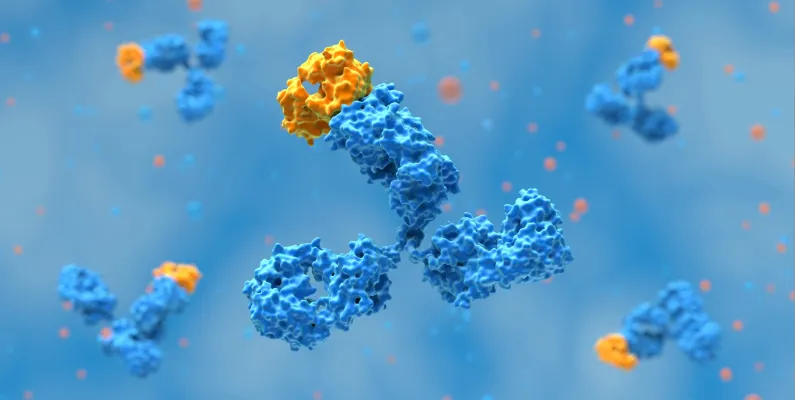
The investigational factor XI (FXI) monoclonal antibodies amrecibart and cenvacibart demonstrated successful anticoagulation with a favorable safety profile in preclinical and phase 1 clinical studies, representing a novel treatment strategy for patients with thrombosis. The results were published in Blood by Dan Chalothorn, PhD, of Regeneron Pharmaceuticals, and colleagues. The research team first compared the mechanisms and coagulation effects of amrecibart and cenvacibart with other FXI-targeted monoclonal antibodies in both human and nonhuman primate plasma using an in vitro functional clotting assay.1Targeting the Intrinsic PathwayWith unique FXI/FXIa-binding mechanisms, amrecibart and cenvacibart address an unmet need for novel treatments with a favorable risk-benefit profile because current standard-of-care anticoagulants carry a high risk for bleeding. Cenvacibart and amrecibart block FXI activity by targeting the catalytic domain and the apple 2 domain of FXI/FXIa, respectively. Although standard-of-care anticoagulants target the extrinsic coagulation pathway, these monoclonal antibodies specifically target the intrinsic coagulation pathway.

Gemini's Personal Intelligence is coming to cars - Ars Technica
Google kicked off 2026 with the addition of Personal Intelligence to Gemini, allowing its AI to pull in more of your data to formulate answers. It started as a paid feature but eventually came to all Gemini users. However, this feature wasn’t available in the car until now. Google is rolling out Personal Intelligence to Android Auto and Google Built-in, and it is still, thankfully, an optional feature. As Google points out, a generative AI’s outputs are better “when it knows the world and knows you,” which is correct in an uncomfortable sort of way. The more context you can provide to a model, the better the output will be at the end of the token shuffle. Since Google has so much of your data already, it sees Personal Intelligence as a differentiator versus other AI systems. You don’t have to provide the AI context because it already has it from apps like Gmail and Calendar.
0 comments
No comments yet. Be the first to share your thoughts!