The Economics of Government Investment Policies and Why They Cannot Undo Fiscal Imbalances - MIT Sloan
This story deserves to be shared
Send it to someone who'd care, or post it on your networks.
This article is an excerpt. To read the full content, visit the original source. MIT Sloan
Related articles
Global imbalances are back. Who’s to blame?

APEC finance ministers warn persistent global imbalances risk growth and stability
Published: October 21, 2026 at 6:24a.m. EDTHONG KONG — Senior Pacific Rim finance officials say global economic imbalances are bringing persistent risks and have pledged to improve co-operation and communication. In a joint statement after two days of meetings in Hong Kong, the finance leaders of the Asia-Pacific Economic Cooperation forum emphasized Wednesday that rebalancing of trade is their common interest. However, they did not elaborate on specific measures to be taken. The meetings, in preparation for an APEC summit next month in the nearby Chinese city of Shenzhen, come at a time when global policymakers are highlighting the need to rebalance trade with China. Its trade surplus this year is expected to exceed 2025’s record US$1.2 trillion. The officials also pointed to risks from geopolitical tensions and vulnerable supply chains. “We note that global imbalances have persisted, creating risks to growth and stability,” the statement said. APEC’s 21 member economies include China, the U. S., Japan, South Korea, Canada and Australia, among other Pacific Rim countries. U. S.
OCC's final rule to start fresh in weighing stablecoin rewards against GENIUS Act ban
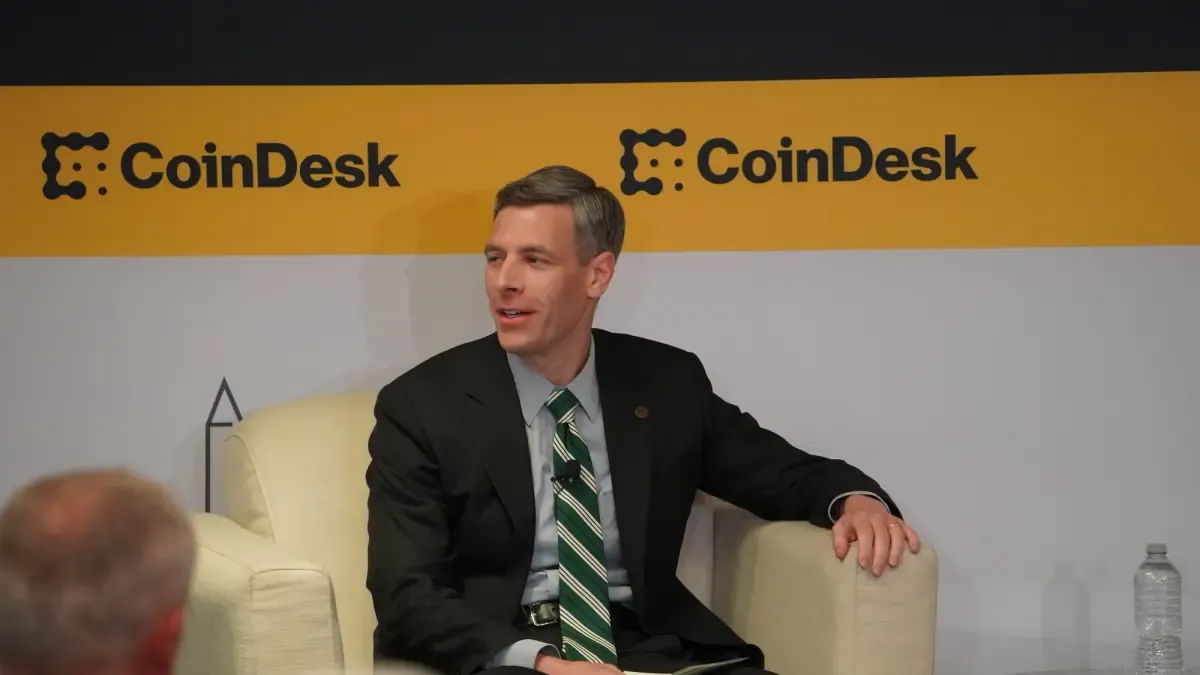
Oct 21, 2026, 7:00 a.m. EDT5 min readComptroller of the Currency Jonathan Gould (Nikhilesh De/CoinDesk)SummaryThe U. S. agency that regulates national banks and trusts has issued the first final rule putting the GENIUS Act into place in January, though a number of other regulators are still working on other parts of the implementation. The section on stablecoin yield doesn't offer a lot of detail on what activity may fall under the law's wide prohibition of such yield from issuers, but the crypto industry has already interpreted GENIUS to permit the rewards programs that have become commonplace with stablecoin activity on exchanges. The final rule states that pre-existing rewards programs won't get special treatment as the OCC assesses which ones pass regulatory muster. U. S. crypto exchanges that have long been giving people rewards for usings stablecoins will have to get the agency to sign off on those existing programs, according to the U. S. Office of the Comptroller of the Currency, the first federal banking regulator to issue a final rule under the Guiding and Establishing National Innovation for U. S. Stablecoins (GENIUS) Act. The OCC, which oversees U. S.

AT&T shrugs off SpaceX fears with its own large haul of new internet subscribers
AT&T’s fiber business was the star of the show in Wednesday’s third-quarter earnings report.

PancakeSwap TVL tops $380M as major fee overhaul heads to vote
Decentralized exchange PancakeSwap’s total value locked (TVL) grew nearly 19% over the past week, adding about $380 million as the protocol moves toward a major overhaul of how it distributes trading fees to liquidity providers. According to DefiLlama, PancakeSwap’s TVL climbed to $2.4 billion on Wednesday, up from about $2.02 billion on Oct. 14. The increase was concentrated in its V3 liquidity pools, where TVL more than doubled to about $739 million from $336 million over the same period. The growth coincided with PancakeSwap opening a governance vote on a proposal called “The Flip,” which would increase liquidity providers’ share of swap fees on V3 and Infinity pools to 88%, up from 66%-68% on most pools. The proposal would also gradually reduce daily CAKE token emissions by approximately 69%, from 22,500 to 7,000 tokens. Voting opened on Wednesday, Oct. 21, and will run until Oct. 24, with implementation expected to begin in November if approved.
AT&T raises annual profit forecast on strong demand for bundled plans
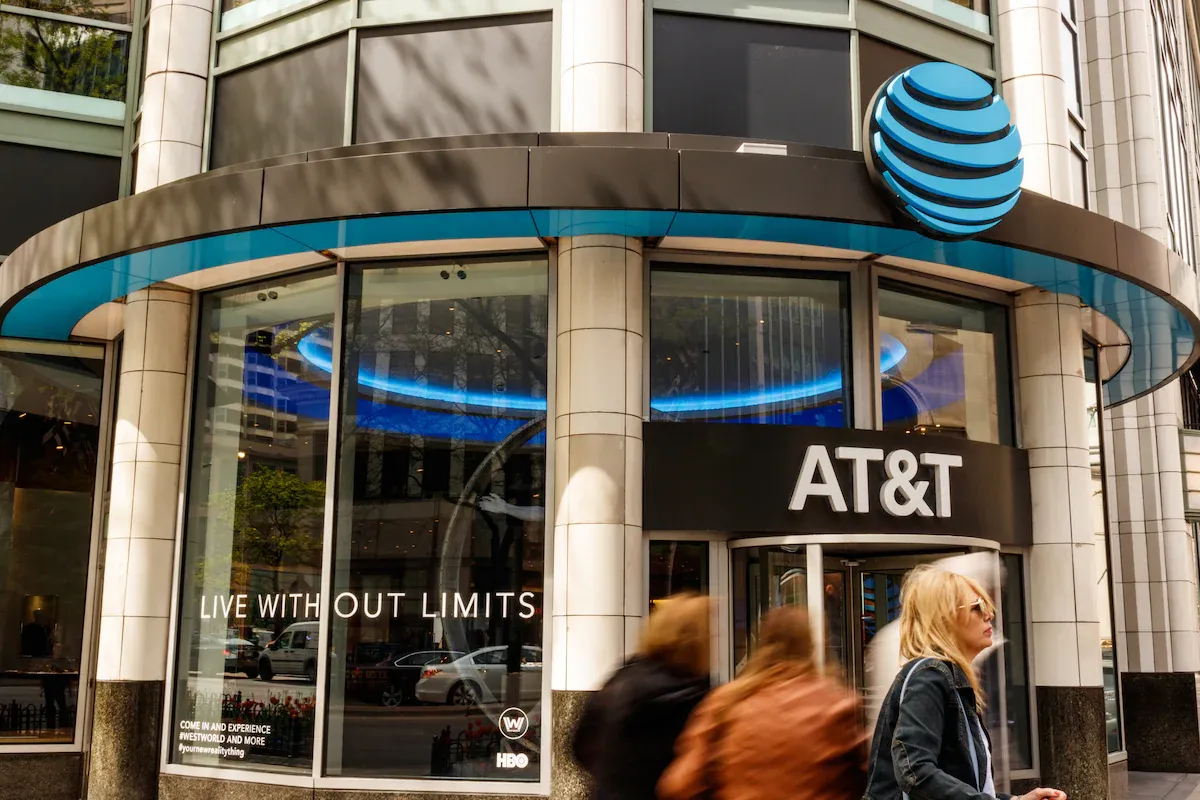
Open this photo in gallery:People walk past an AT&T store in Chicago, Ill., in 2018. The company added 379,000 net monthly bill-paying wireless subscribers in its third quarter. Jonathan Weiss/JetCity Image/iStockPhoto / Getty ImagesAT&T T-N raised its annual adjusted profit forecast on Wednesday after beating quarterly revenue and profit estimates, betting on its service bundles to drive growth and help prevent customers from switching to rivals. About 43 per cent of households signing up for AT&T’s internet services also opt for its wireless plans, helping the company build stickier customer relationships and reduce disconnects as competition intensifies in the U. S. telecom market. AT&T added 379,000 net monthly bill-paying wireless subscribers during the third quarter, largely in line with the 379,300 additions estimated by FactSet. The company now expects annual adjusted profit per share of about US$2.40, compared with its prior forecast of US$2.25 to US$2.35. CPPIB forms joint venture with AT&T, BlackRock’s GIP to expand fibre-optic networkU. S.
0 comments
No comments yet. Be the first to share your thoughts!