Sweden revisits digital krona as ECB advances digital euro plans
This story deserves to be shared
Send it to someone who'd care, or post it on your networks.

Sweden’s central bank is revisiting the possibility of introducing a digital krona, citing the European Central Bank’s (ECB) progress toward a digital euro and the growing use of stablecoins as reasons to reconsider a central bank digital currency (CBDC). In an Oct. 7 letter to parliament’s Finance Committee, published Thursday, the Riksbank urged lawmakers to begin preparing legislation for a potential digital krona, three years after a government inquiry concluded there was insufficient need for one. The letter pointed to the ECB’s planned digital euro pilot in 2027 and a potential public launch in 2029. According to the Riksbank, Sweden’s payment system could become less competitive without a comparable digital version of its own currency. The central bank also identified the growing use of foreign-currency stablecoins, particularly those pegged to the US dollar, as a longer-term concern, though it sees the near-term risk as limited. “If stablecoins pegged to foreign currencies are considered attractive as a means of payment, the use of the Swedish krona could come under pressure even within Sweden’s borders,” the letter read.
This article is an excerpt. To read the full content, visit the original source. Cointelegraph
Related articles
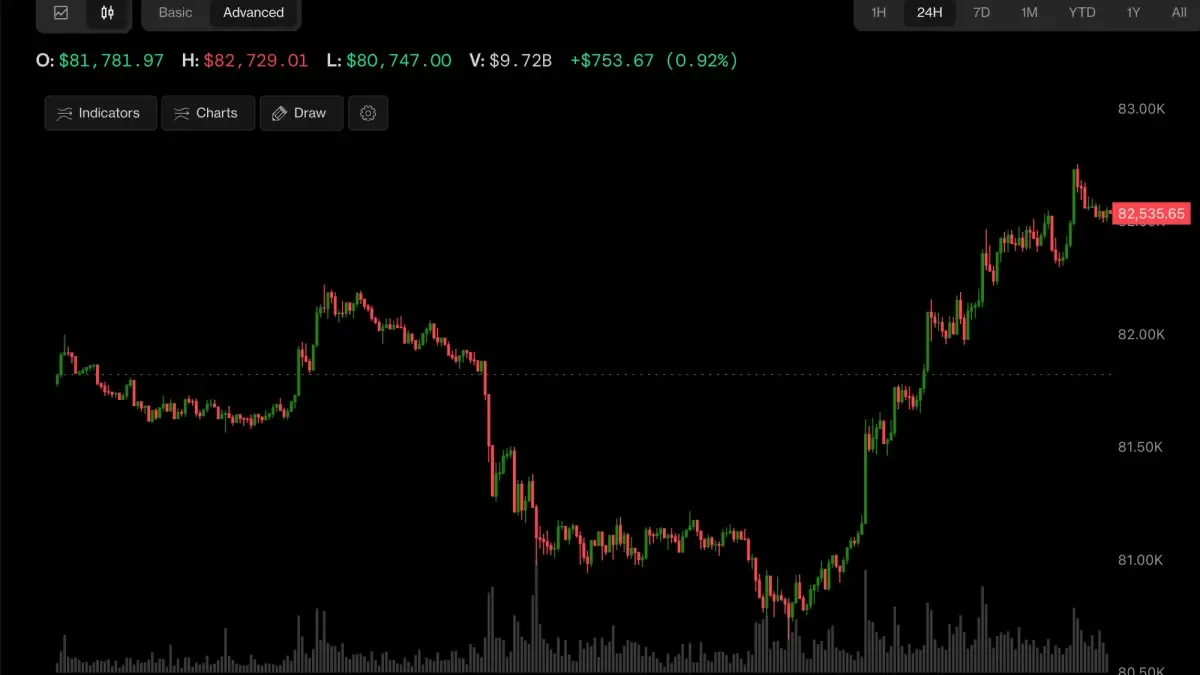
Bitcoin, Korea’s Kospi and Nasdaq futures rally as China GDP beats estimates
Bitcoin, Nasdaq futures and Asian stocks rally as stronger-than-expected China GDP and falling oil prices lift risk appetite.
Deutsche Bank targets Asia crypto custody expansion in 2027 as German launch nears
The service will initially support bitcoin, ether and the stablecoins USDC, EURC and EURAU, with the bank managing clients’ wallets and private keys.

Qubic freezes chain after attacker drains 1.4K wallets with weak seeds
Layer-1 blockchain network Qubic halted operations Sunday after an attacker reportedly exploited weakly generated wallet seeds to drain approximately $1.4 million from more than 1,400 accounts, according to the project. In a statement on X, Qubic said the network was halted at tick 85,371,949, where it remains paused at the time of writing. Qubic said the vulnerability affected wallet seeds generated using any browser on an iPhone or iPad, Safari on a Mac until Oct. 18, 2026, or the Qubic iOS app before July 2025, leading to 2.94 trillion Qubit (QU) stolen. “87.1% of the drained funds never left the Qubic network and remain frozen in place,” said Qubic. “The remaining 12.9% was sent to MEXC, whose team froze the receiving account within about an hour.” The Qubic theft is the latest in a series of attacks tied to weak wallet seeds. In July, Coldcard disclosed that attackers had stolen funds from wallets whose seeds were weakened by a firmware bug. Similar flaws affected Trust Wallet’s browser extension and the Libbitcoin Explorer tool in 2023.

Canada needs more permanent solutions to its housing problem
Recent tax rebates have brought buyers back to the market, but their expiry threatens to undo that progress

SEC tokenized stock framework faces issuer pushback as Broadcom, Verizon object to OKX-ICE listing
Eight more companies objected to trading on the planned OKX-ICE venue, while Nasdaq has separately said it would opt out under the SEC’s framework.
0 comments
No comments yet. Be the first to share your thoughts!