Study explores airborne DNA to help solve burglaries - Xinhua
This story deserves to be shared
Send it to someone who'd care, or post it on your networks.
CANBERRA, Oct. 18 (Xinhua) -- Forensic scientists are exploring environmental DNA (eDNA), including airborne traces left by intruders in residential burglaries, as a new tool to help solve criminal cases lacking biological evidence. The study, led by Oslo University Hospital in Norway with collaborators at Flinders University in Australia, evaluated the possibility of finding viable evidence from 391 eDNA samples collected from air, dust and surfaces during simulated 15-minute residential burglaries, according to a statement released recently by Flinders University. The research found evidence of human intruder eDNA from air samples collected under controlled conditions, although recovery varied depending on factors including air temperatures, humidity, dust and existing household DNA. Researchers said the brief nature of burglaries, offenders' efforts to avoid detection and the difficulty of identifying where DNA traces were deposited may result in limited or absent biological evidence.
This article is an excerpt. To read the full content, visit the original source. Xinhua
Related articles
Students Take on Airborne Field Research with NASA - NASA Science (.gov)
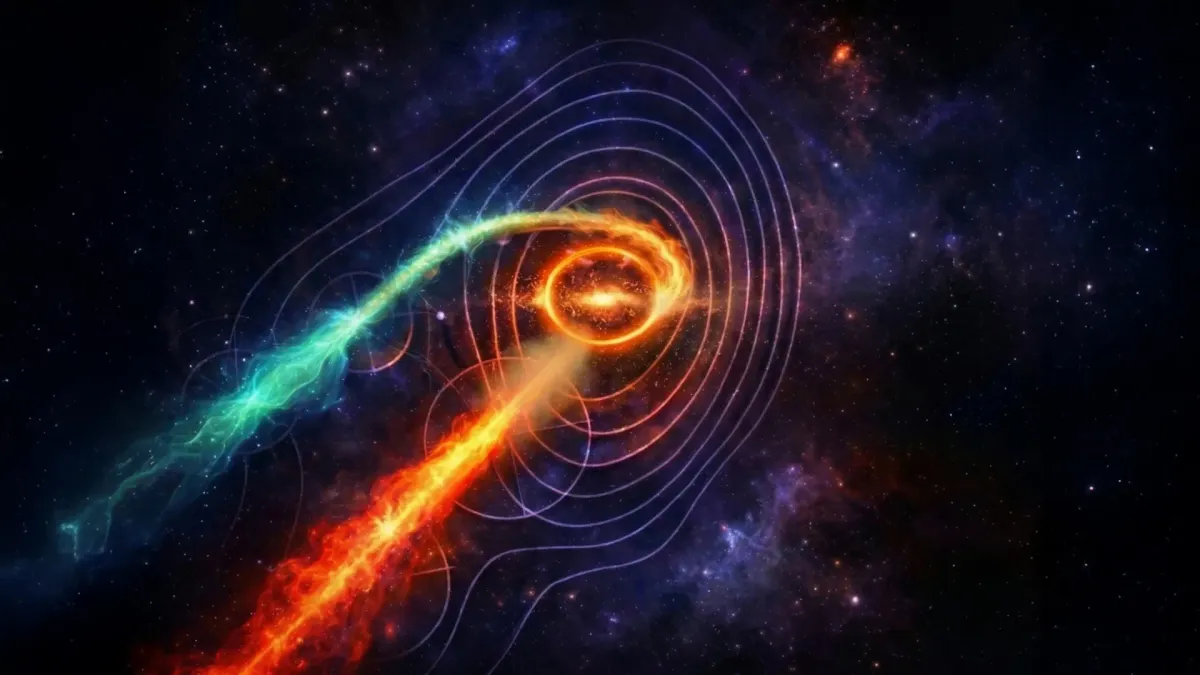
Two monster black holes could collide in just 100 years - Science Daily
Supermassive black holes are thought to exist at the centers of nearly all large galaxies. These enormous objects can weigh millions or even billions of times as much as the Sun, but scientists still do not fully understand how they grow to such extraordinary sizes. Pulling in (accreting) gas from their surroundings is one way they gain mass, although this process alone may be too slow to explain the largest examples. Merging with other massive black holes could provide the missing explanation. Galaxy collisions are common throughout the universe, making it likely that their central black holes also eventually come together. As two galaxies merge, their black holes are expected to move closer, begin orbiting one another, and gradually spiral inward until they combine into a single object.
NASA satellite can monitor most of world’s irrigation canals, study finds - Technology Org
Irrigation canals form a sort of circulatory system for global agriculture. Across the world, millions of kilometers of
0 comments
No comments yet. Be the first to share your thoughts!