NASA satellite can monitor most of world’s irrigation canals, study finds - Technology Org
This story deserves to be shared
Send it to someone who'd care, or post it on your networks.
Irrigation canals form a sort of circulatory system for global agriculture. Across the world, millions of kilometers of
This article is an excerpt. To read the full content, visit the original source. Technology Org
Related articles

Magic mushroom ingredient takes the fight out of aggressive fish - Science Daily
Psilocybin, the psychedelic substance found in more than 200 species of mushrooms, appears to have an unexpected effect on aggressive fish. Most mushrooms containing this compound belong to the gilled mushroom genus Psilocybe. In mammals, psilocybin interacts with serotonin receptors in the brain, influencing emotions and behaviors such as mood, appetite, and aggression. However, scientists still know relatively little about how the substance affects social interactions among animals. To investigate this question, researchers in Canada examined the effects of psilocybin on the amphibious mangrove rivulus fish (Kryptolebias marmoratus). Their findings, published in Frontiers in Behavioral Neuroscience, suggest that even a brief exposure to a low dose can significantly reduce aggressive behavior without disrupting normal social interactions.

Astronomers spot a black hole tearing apart a star 3,500 light-years off-center - Interesting Engineering
Can a dying star reveal the location of a black hole that has otherwise gone unnoticed? Turns out, it can. Astronomers have now traced a stellar destruction event to a massive black hole about 3,500 light-years from the center of its host galaxy. This discovery offers a rare look at a so-called wandering black hole and raises a further question: how did it end up so far from home?
Japan to launch world-first mission to collect samples from Martian moon - The Guardian
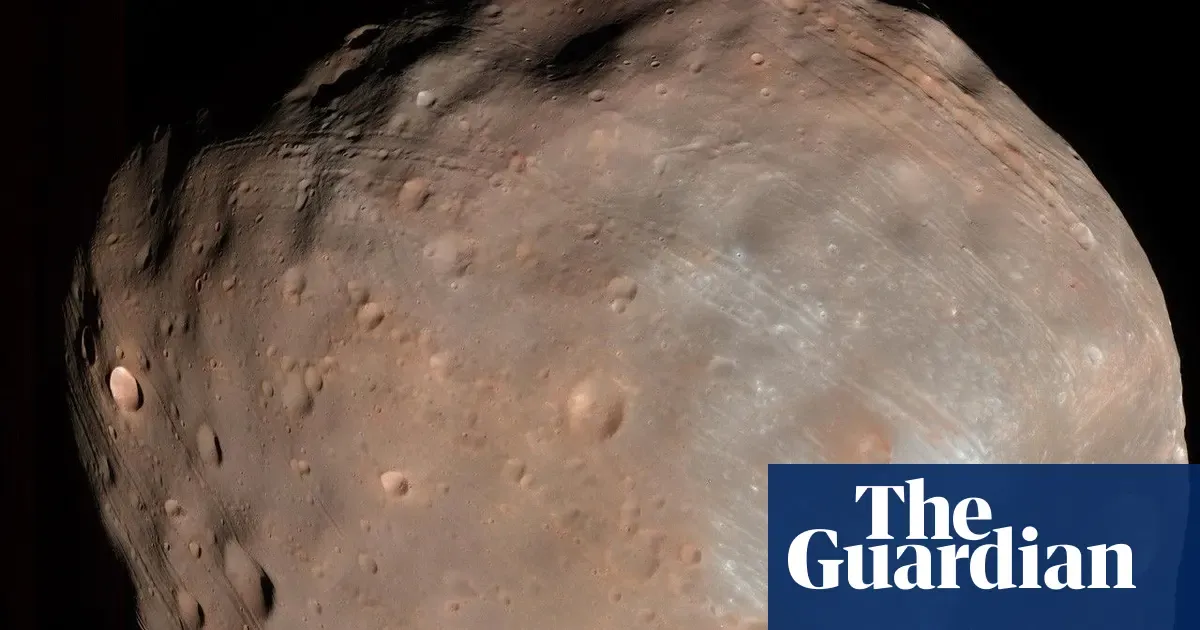
Japan is to launch a spacecraft on the world’s first mission to bring back samples from Phobos, one of the two small, potato-shaped moons orbiting Mars. Scientists hope the mission, which is expected to take five years, will provide clues to how Phobos and its smaller sibling Deimos formed, and hopefully even shed light on the origins of life in the solar system. The Japan Aerospace Exploration Agency (Jaxa) is aiming to launch the spacecraft on Tuesday on a new Japanese mainstay H3 rocket. Yasuhiro Kawakatsu, the project manager for the Martian Moons eXploration (MMX) mission, said samples from Phobos would provide useful data for scientists to consider using a Martian moon as a base for a future manned mission to the planet. The US, China and others are hoping to send astronauts to Mars. “Despite their potential importance, Martian moons have never been fully investigated,” Kawakatsu said. “They are known as the most important unclimbed mountains in the solar system.”Japan is leading an international mission, which includes equipment and communications support from Nasa and other national space agencies.
0 comments
No comments yet. Be the first to share your thoughts!