Two monster black holes could collide in just 100 years - Science Daily
This story deserves to be shared
Send it to someone who'd care, or post it on your networks.
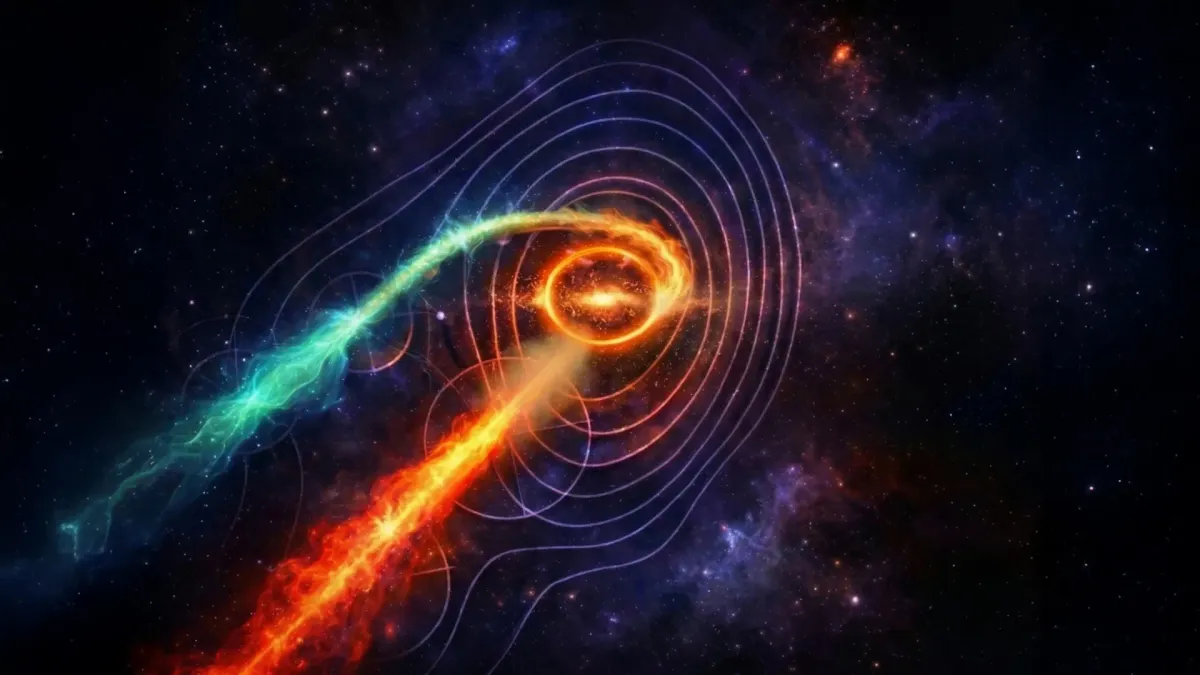
Supermassive black holes are thought to exist at the centers of nearly all large galaxies. These enormous objects can weigh millions or even billions of times as much as the Sun, but scientists still do not fully understand how they grow to such extraordinary sizes. Pulling in (accreting) gas from their surroundings is one way they gain mass, although this process alone may be too slow to explain the largest examples. Merging with other massive black holes could provide the missing explanation.
Galaxy collisions are common throughout the universe, making it likely that their central black holes also eventually come together. As two galaxies merge, their black holes are expected to move closer, begin orbiting one another, and gradually spiral inward until they combine into a single object.
This article is an excerpt. To read the full content, visit the original source. Science Daily
Related articles
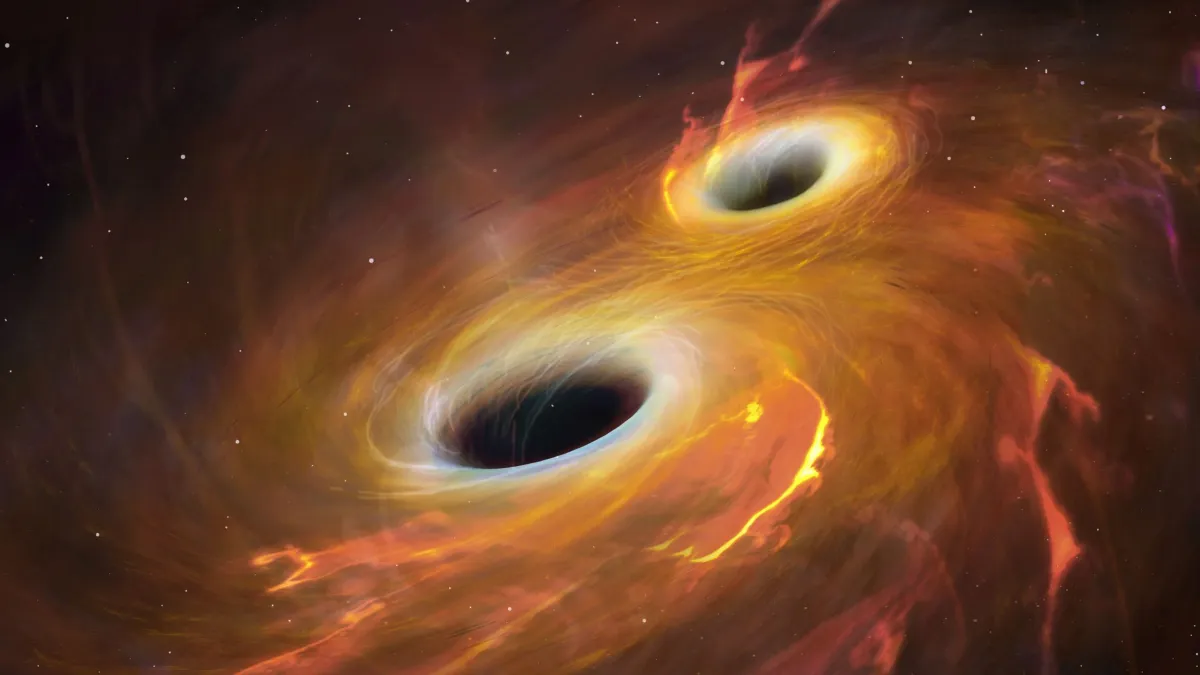
Physicists Simulated What Might Happen When Two Wormholes Collide, And Things Got Weird - ScienceAlert
An artist's impression of two black holes colliding. Interacting wormholes could produce a similar gravitational wave signature. (Mark Garlick/Science Photo Library RF/Getty Images) Like the surface of an ocean, the fabric of the Universe is constantly rippling with an infinitude of gravitational waves, propagating outward across the cosmos. We can count, in triple digits, the number of these ripples we've detected to date – and most of them have been linked to collisions between black holes, the densest objects in the Universe. But how do we know that every collision attributed to black holes is what it looks like? And what of the gravitational wave signatures we are yet to detect? What if there's something else out there that can make the Universe sing? What if colliding wormholes can make a similar splash – and how would we recognize it when we find it? For one particular kind of wormhole, at least, new simulations suggest collisions would be profoundly strange – and could leave distinctive signatures in the fabric of spacetime. According to a preprint authored by physicist Nikita M.
As climate extremes collide, attribution science evolves - Canada's National Observer
As Climate Extremes Collide, Attribution Science Evolves - Inside Climate News
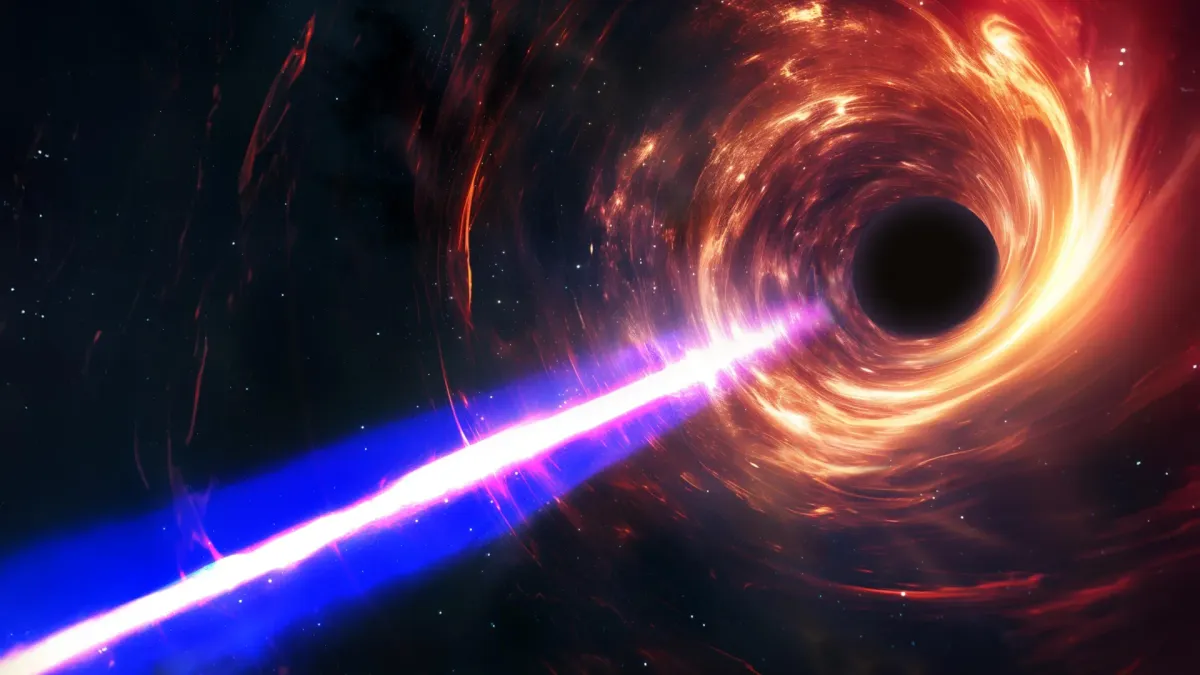
Black holes of every size follow the same surprising rule - Science Daily
An international team of astronomers co-led by an IAS scholar has identified what appears to be a universal rule governing one of the most dramatic behaviors of black holes: the production of powerful jets. The researchers found that black holes can launch jets at the same critical stage of their feeding cycle, regardless of their size. That includes "stellar-mass" black holes about ten times the mass of our sun as well as supermassive black holes that are millions of times heavier.
0 comments
No comments yet. Be the first to share your thoughts!