Spotlight on Angel Chang: International Day of Women & Girls in Science - Simon Fraser University
This story deserves to be shared
Send it to someone who'd care, or post it on your networks.
This article is an excerpt. To read the full content, visit the original source. Simon Fraser University
Related articles
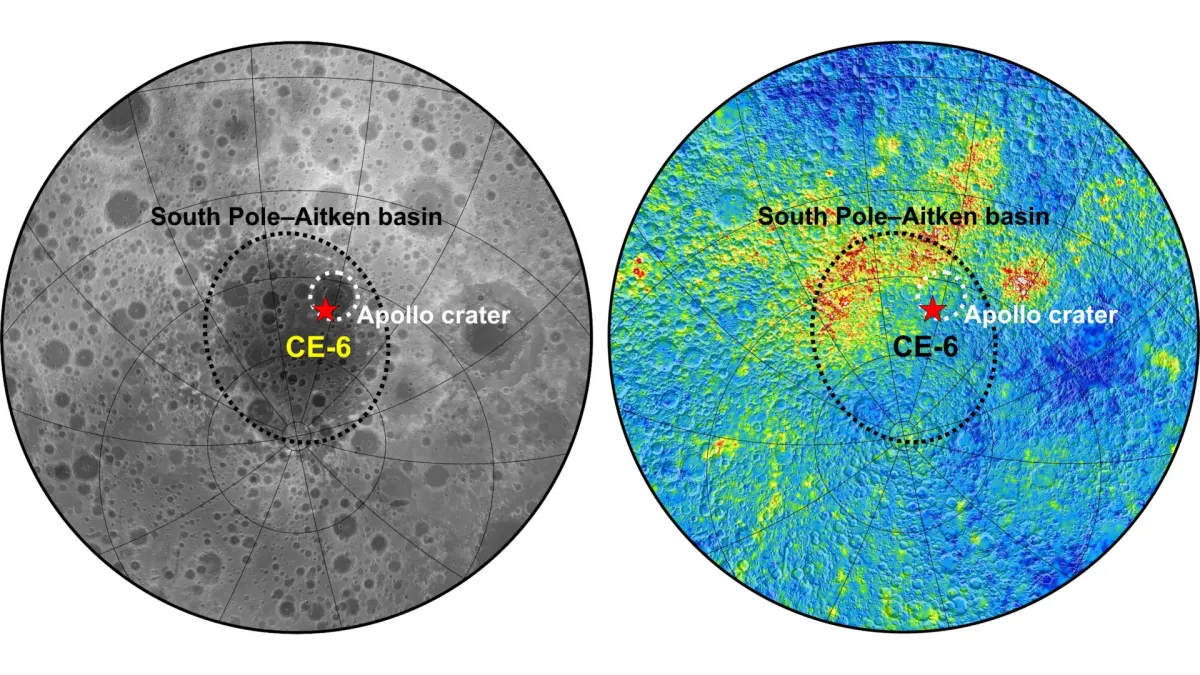
Chang’e-6 lunar soil contains a surprising magnetic time capsule - Science Daily
The Moon no longer generates a global magnetic field, but traces of its ancient magnetism remain locked inside lunar rocks and soil. By studying the magnetic minerals preserved in these materials, scientists can reconstruct how the Moon's magnetic environment changed over time. Researchers analyzing metallic iron inside impact glass from Chang'e-6 lunar soil have now identified face-centered cubic γ-Fe for the first time in natural lunar samples.
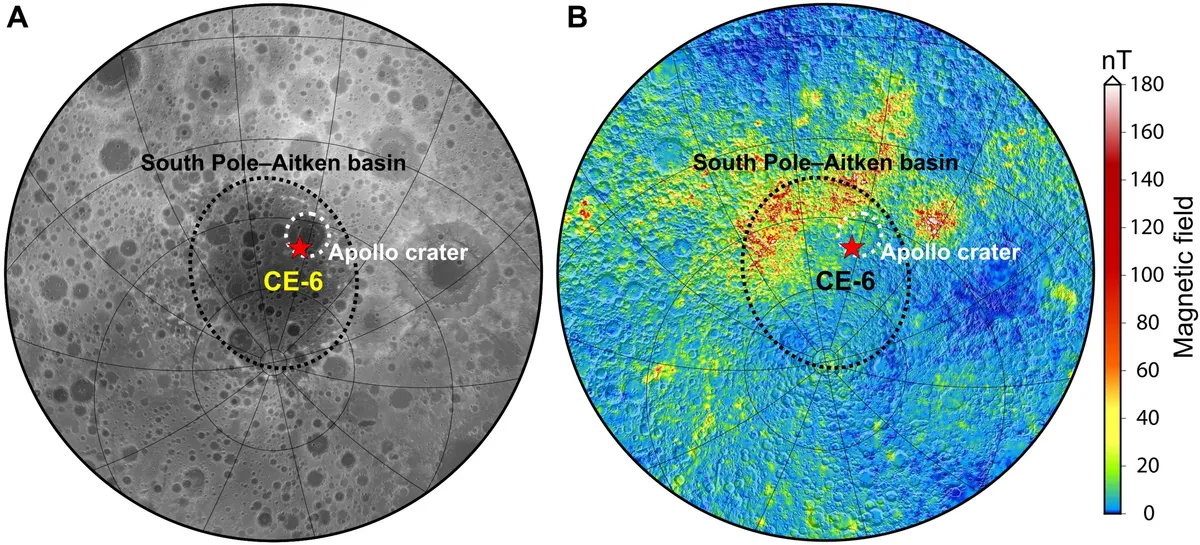
Scientists find lunar 'magnetic fossil' in Chang'e-6 samples - Phys.org
Lunar topography and magnetic anomalies. Credit: Li Long The moon no longer has a global magnetic field, but lunar rocks and soils still contain records of ancient magnetism. Studying the magnetic minerals in these samples can help scientists understand how the moon's magnetic field evolved over time.
Tiny worm brains reveal surprising sex differences beyond neural wiring - Interesting Engineering
With 302 neurons, 200 of them in their heads, hermaphrodite female roundworms reveal surprising sex-specific differences in the nervous system and how these differences influence behavior, reproduction, and aging. Researchers at Northeastern University compared brain activity in male and hermaphroditic Caenorhabditis elegans, a microscopic worm widely used in biological research to understand how sex wires males and female nervous systems differently.
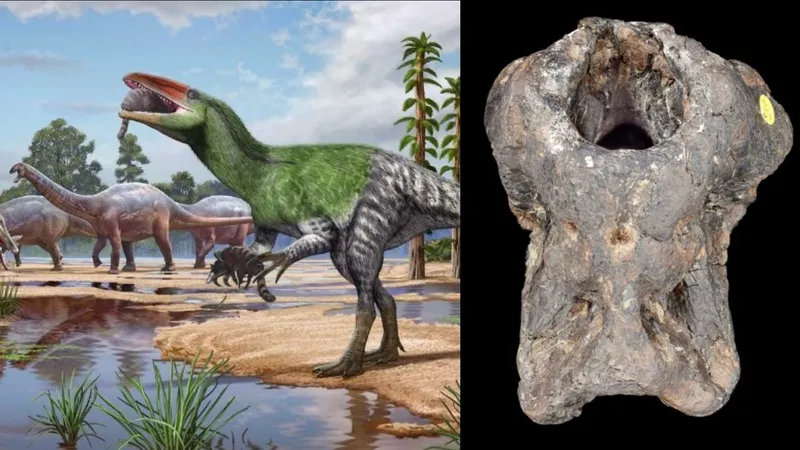
New dinosaur species identified from fossil stashed in drawer for a century - EarthSky
Artist’s concept of the new dinosaur species Invictibellatrix amberina, along with the fossil from which it was identified. The fossil had been sitting in a drawer for 100 years, until researchers pulled it out and became curious. Image via Sergey Krasovskiy and Pedro Salas/ Natural History Museum London. You deserve a daily dose of good news. For the latest in science and the night sky, subscribe to EarthSky’s free daily newsletter.
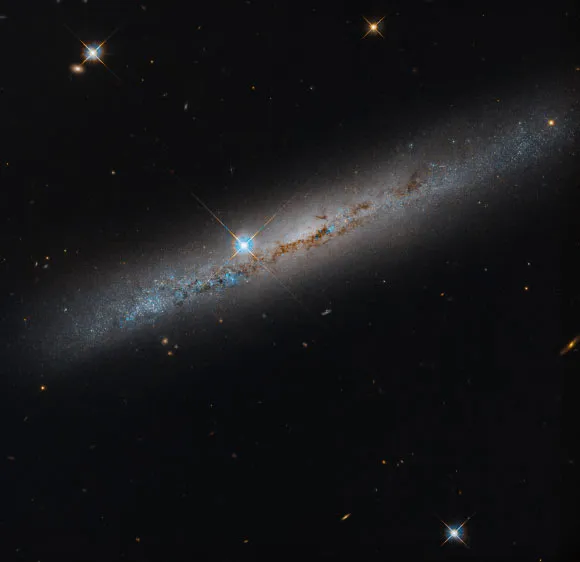
Hubble Space Telescope Spots Dusty Spiral Galaxy: NGC 1827 - Sci.News
Astronomers using the NASA/ESA Hubble Space Telescope have captured a new view of NGC 1827, an intermediate spiral galaxy seen edge-on in the constellation Columba. This Hubble image shows the edge-on, intermediate spiral galaxy NGC 1827. Image credit: NASA / ESA / Michael Jones, California Institute of Technology / Gladys Kober, NASA / Catholic University of America.
Ancient Nubian temple faience workshop reveals links between craft production and royal power - Phys.org
Archaeologists have discovered a faience workshop at a major temple complex in the ancient Nubian capital of Napata, showing how the rulers of ancient Kush used specialized craft production to reinforce royal power.
0 comments
No comments yet. Be the first to share your thoughts!