Solana’s Alpenglow, its biggest network overhaul since 2020, goes live Wednesday
This story deserves to be shared
Send it to someone who'd care, or post it on your networks.

Skip to main contentCrypto NewsOct 21, 2026, 12:35 a.m. EDT2 min readSolana’s Alpenglow, its biggest network overhaul since 2020, goes live Wednesday. (CoinDesk)SummarySolana’s Alpenglow upgrade is expected to reduce transaction finality to about 150 milliseconds from roughly six seconds by moving validator voting off-chain. Faster finality could make trading and payments feel more like those on centralized exchanges, while validator costs are expected to fall by about 60 percent. The upgrade is scheduled to activate Wednesday after six test-network restarts and a failed migration that was later successfully completed. Solana transactions could soon become irreversible in just 150 milliseconds, or roughly 40 times faster than today, as the network switches on its Alpenglow upgrade on Wednesday. The upgrade changes how validators, the computers that process transactions and vote on which ones are valid, agree with each other. Today, every validator writes its votes straight onto the blockchain like any other transaction, and a payment isn’t locked in until enough of them stack up — which takes about six seconds.
This article is an excerpt. To read the full content, visit the original source. CoinDesk
Related articles

BlackRock files for third Bitcoin ETF, still no Solana or XRP
BlackRock, the world’s largest asset manager, is looking to expand its crypto fund lineup with a Bitcoin exchange-traded fund (ETF) that offers limited downside protection in exchange for capped gains. The world’s largest asset manager on Monday filed a preliminary prospectus with the US Securities and Exchange Commission for the iShares Bitcoin Managed Protection ETF (PBIT). The proposed ETF would use options linked to BlackRock’s iShares Bitcoin Trust ETF (IBIT) rather than holding Bitcoin (BTC) directly, according to the preliminary prospectus filed with the US Securities and Exchange Commission (SEC). IBIT is the world’s largest spot Bitcoin ETF by assets. It holds Bitcoin directly and gives investors exposure through brokerage accounts. The fund had $65.7 billion in net assets as of Monday, according to BlackRock. BlackRock also runs the iShares Ethereum Trust ETF (ETHA), a spot Ether fund with $8 billion in net assets. The asset manager has yet to launch US spot ETFs tracking other cryptocurrencies such as Solana or XRP. ETF Store president Nate Geraci questioned BlackRock’s continued absence from the market for spot ETFs tracking other cryptocurrencies.

Solana treasury firm SkyAI sells all SOL holdings, launches $201M buyback
SkyAI, formerly Sharps Technology, has sold its entire Solana (SOL) treasury and launched a tender offer to repurchase up to $201.3 million in shares and warrants, reversing its cryptocurrency accumulation strategy. The company held approximately $223.8 million in cash as of Oct. 16 after liquidating its SOL holdings, according to a filing with the US Securities and Exchange Commission on Monday. The tender offer allows shareholders and warrant holders to sell their securities directly back to SkyAI at a fixed price. It covers up to 95% of each class of the company’s outstanding shares and warrants, funded entirely by cash on hand. The company said the tender offer is no longer tied to SOL’s price, a condition it had initially planned to include when announcing the buyback on Oct. 11. SkyAI intends to continue developing a financial platform combining stablecoin infrastructure on Solana with artificial intelligence. SkyAI shares closed Monday at $2.79, up 5.3% on the day, according to Yahoo Finance data. The stock has gained approximately 65% over the past month but remains down about 41% over the past year.

Solana shows resilience, but some areas need continued observation, Fidelity says
Solana has had no reported mainnet outages in two years, but concentrations in stake, hosting and client software should be monitored, according to a report. Solana has made significant progress in terms of network health across resilience, economic security and performance indicators, according to a Fidelity report. The layer-1 blockchain has had no reported mainnet outages in two years, but concentrations in stake, hosting and client software could pose an outage threat, according to the report by Fidelity’s Center for Applied Technology (FCAT). The report said economic security was supported by substantial staking participation and incentives that reward validator performance. Low latency, expanded capacity and inexpensive transactions also support practical use at scale. Related: Solana Foundation hires ex-Binance CMO and payments exec as new partnerships expandTo be sure, the Fidelity report noted that several areas surrounding decentralization and resilience warrant continued observation, including stake concentration among a small number of validator identities and operators. Cointelegraph reported on Aug.

Solana’s Liu says Shanghai event postponed over registration surge
The Solana Accelerate event in Shanghai was postponed after pre-registration exceeded the event cap set by local authorities, according to Lily Liu, president of the Solana Foundation. Event registration quadrupled overnight following publicity for the event, Liu wrote in a Friday X post, adding that organizers decided to postpone the event to “comply with local requirements.”Earlier on Friday, X users claimed that the event was “abruptly suspended” as law enforcement officers were stationed at the venue. In October 2025, a Solana event in Shenzhen was also cut short due to venue capacity and public-safety concerns, Solana’s Chinese-language community account announced then on X. Shanghai was scheduled to open Solana’s four-city Accelerate China tour, followed by Hangzhou on Sunday, Shenzhen on Tuesday and Beijing on Thursday, according to the event’s website. The postponement followed Solana executives’ promotion of a new Shanghai office earlier this week. China prohibits a range of crypto-related services, including token fundraising, trading and mining.
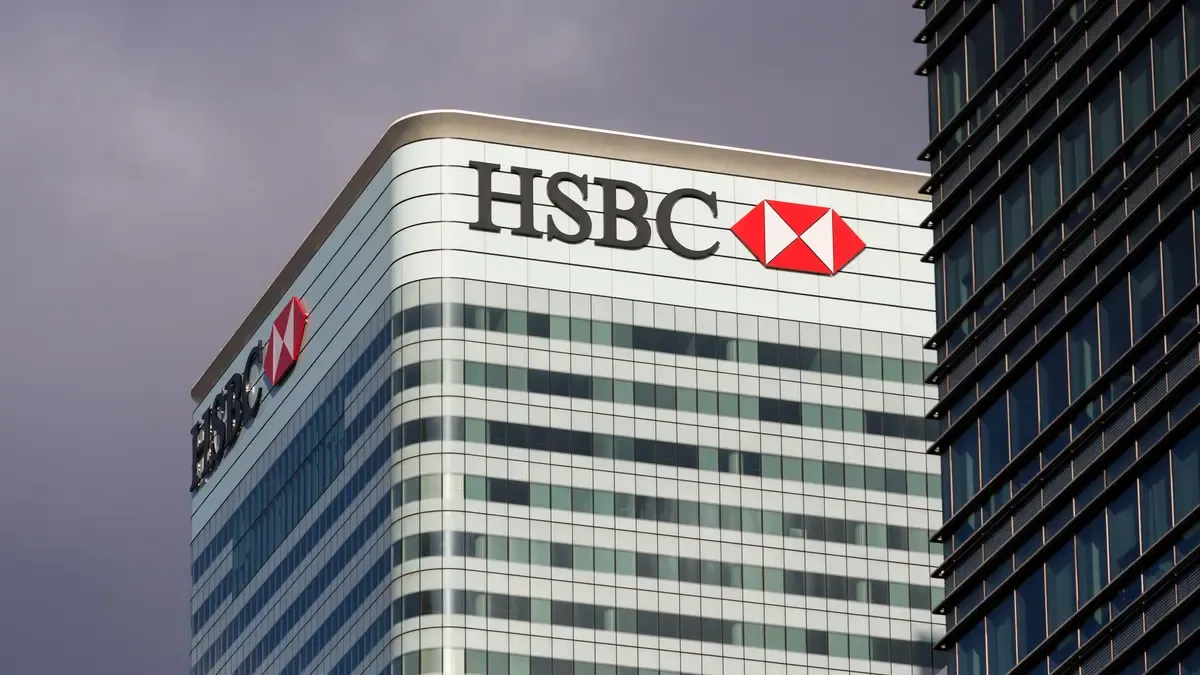
Ripple brings Wall Street into 24/7 stock bets, but HSBC warns markets are still thin
Oct 21, 2026, 1:25 a.m. EDT3 min readRipple brings Wall Street into 24/7 stock bets, but HSBC warns markets are still thin. (Steve Heap/Shutterstock)SummaryRipple Prime now allows institutional clients to trade swaps tied to more than 100 stock, commodity and currency markets around the clock, using its RLUSD stablecoin as collateral. HSBC called the offering “evolutionary, not revolutionary,” warning that limited liquidity could constrain large trades and initially favor market makers, proprietary traders and hedge funds. The risks of weekend trading surfaced when nearly $52 million in leveraged chip-stock positions were liquidated within 10 minutes while the underlying shares were not trading. Ripple is giving institutions a way to bet on stocks, gold and oil over the weekend through its brokerage business, but HSBC says thin trading could limit how much money follows them in. Daragh Maher, head of digital assets research at HSBC, called the launch an “evolutionary, not revolutionary” step in a note to clients on Monday, a copy of which was shared with CoinDesk.

Tech giants rush to block 8 eMudhra certs that could enable fake sites
Tech giants have deployed emergency blocks against eight vulnerable digital certificates that could allow attackers to impersonate legitimate websites. By Tuesday, browser developers and other major technology companies had deployed protections against eight intermediate certificates issued by India-based certificate authority eMudhra Limited after discovering that their private keys were insufficiently secure. Mozilla cryptography engineer Dennis Jackson wrote in an incident report that Mozilla independently recovered the private keys when it first received notice of the flaw on Saturday, confirming that the key-generation process was “flawed” and “trivial to exploit.” An attacker who intercepts a user’s connection could use fraudulent certificates to impersonate a legitimate website and potentially read or alter the information exchanged, according to Mozilla. While many companies quickly blocked the affected certificates, the threat remains for applications and systems that don’t receive those blocks automatically.
0 comments
No comments yet. Be the first to share your thoughts!